

A fleet management GPS tracker is a small device in each of your vehicles that reports its location over the cellular network to an app on your phone or computer. For a business running 2 to 10 cars, vans or trucks, it answers the questions you ask every day: where is everyone, how did the day go, and is anything wrong with my trucks?
The industry talks a lot about AI, dash cams and enterprise dashboards. Most small fleets don't need any of that to get real value. They need a live map, trip history, the right alerts, basic engine health, and a setup that doesn't require a technician or a multi-year contract.
This guide covers how a fleet GPS tracker works, the features that actually matter at your size, what you can skip, how to roll it out across your vehicles in an afternoon, and what it really costs.
What should a small fleet look for in a GPS tracker? Live location, a year of trip history with replay, geofence and after-hours alerts, driving alerts, engine codes, unplug alerts, and one dashboard with separate logins for your team. Plug-in OBD-II trackers suit most cars, vans and pickups; battery trackers cover trailers and equipment. Look for no-contract plans you can scale one vehicle at a time.
What Is a Fleet Management GPS Tracker?
A fleet management GPS tracker is a device that combines a GPS receiver with a cellular connection, so it can work out where a vehicle is and send that location to an online dashboard in real time. Paired with fleet software, it turns raw location data into trip logs, alerts and reports a business owner can act on.
Here's what happens every time one of your trucks moves:
- The tracker finds its position using signals from GPS satellites.
- It sends that position over a cellular network, along with speed, ignition status and, on plug-in models, engine data.
- The app turns it into something useful: a dot on a live map, a saved trip, or an alert when something happens that you said you wanted to know about.
That last step is where trackers differ the most. Two devices can find a location equally well and still give you very different days, depending on how fast the map refreshes, which alerts you can set, and how easy the app is for the person actually using it. For more on the mechanics, see our explainer on how real-time GPS tracking works.
Fleet GPS Tracking in 2026: Where Things Stand
GPS tracking is no longer an early-adopter tool. Verizon Connect's 2026 Fleet Technology Trends Report found GPS fleet tracking adoption at 80% among surveyed fleets, and 44% of GPS tracking users reported improved productivity. The same survey found nearly half of fleets now use AI-enabled video, up from 36% in 2023.
One caveat worth knowing: industry surveys like this lean heavily toward larger fleets, many with hundreds of vehicles. The headline trends (AI video, predictive analytics, EV planning) mostly reflect what big operations are buying. A plumbing business with four vans has a different job to do, and a different budget to do it with.
The Features That Matter for a Small Fleet
If you run 2 to 10 vehicles, these are the features that earn their keep week after week. Everything else is nice to have.
| Feature | What it does | Why it matters at your size |
|---|---|---|
| Live tracking | Shows every vehicle on one map, updating while it moves | Answer "when will the tech get here?" without calling the driver |
| Trip history and replay | Saves every trip with stops, drive time and idle time | Settle billing questions and verify job-site arrival times |
| Geofences and curfews | Alerts when a vehicle enters or leaves a zone, or moves after hours | Know when a truck reaches a job site or moves at 1 a.m. |
| Driving alerts | Flags speeding, harsh braking and hard acceleration | Coach drivers with facts instead of hunches |
| Engine codes, battery and fuel | Reads check-engine codes and battery voltage through the OBD-II port | Catch a problem before a van dies at a customer's house |
| Unplug and tamper alerts | Alerts the moment a tracker is pulled | Theft protection, and an honest signal if a tracker is removed |
| Team logins and shared links | Separate logins and live links for anyone you choose | Your office manager dispatches; a customer sees the van coming |
| Reports and API | Trip and mileage reports for any date range, plus data access for your own systems | Mileage records for taxes and invoices without manual logs |
Refresh speed deserves a closer look, because it's the spec most brands bury. Many trackers update every minute or longer unless you pay for a higher tier. ShadowGPS updates every 5 seconds while a vehicle is moving, on every plan, so the map your dispatcher sees matches where the van actually is.
That's the setup ShadowAuto was built around. It plugs into the OBD-II port under the dash, draws power from your truck, and puts every truck on one dashboard alongside the family car if you want it there.
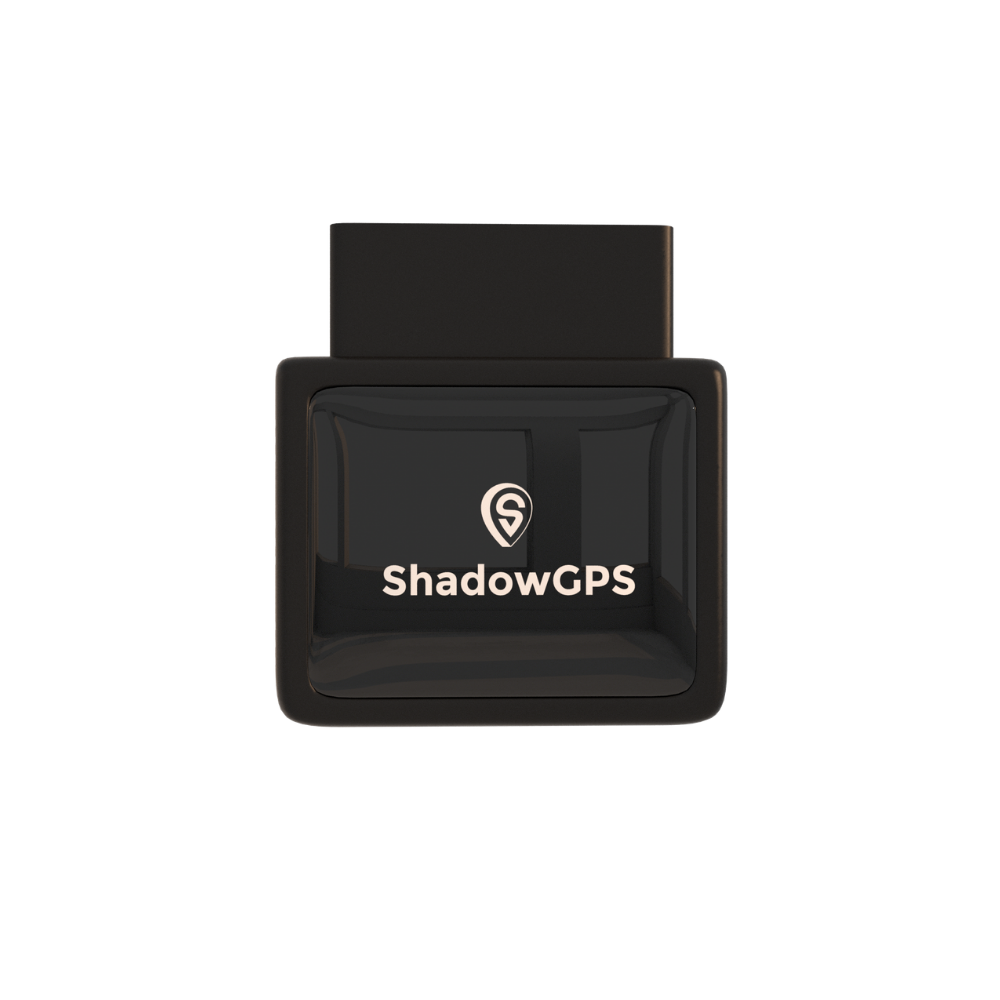
ShadowAuto
- Engine codes, battery health and fuel level in the app
- Geofence, curfew, driving and unplug alerts
- One dashboard, extra logins for your team


Best for: service vans, pickups, delivery cars and Turo vehicles, anywhere you want diagnostics and nothing to charge.
OBD-II, Battery or Hardwired: Which Tracker Fits Each Vehicle?
Most small fleets end up with a mix. The right tracker depends on what you're tracking, not on which one sounds more advanced.
| Type | How it's powered | Setup | Best for | Trade-off |
|---|---|---|---|---|
| OBD-II plug-in | Your car or truck's OBD-II port | Plug it in, about 2 minutes, no tools | Cars, vans and light trucks built after 1996 | Sits in plain view under the dash |
| Battery-powered | Rechargeable battery | Magnet-mount or place it, about 2 minutes | Trailers, equipment, older trucks, a backup tracker | Needs a recharge every couple of weeks |
| Hardwired | Spliced into the electrical system | Usually needs a technician | Large fleets that want trackers out of reach | Cost, downtime, and harder to move between vehicles |
For trailers, mowers, generators and anything without an OBD-II port, a battery tracker does the job. ShadowTrack runs up to 15 days per charge on standard settings and drops into a weatherproof magnetic case for the underside of a trailer. Our battery vs. OBD tracker guide for fleets goes deeper on mixing the two.
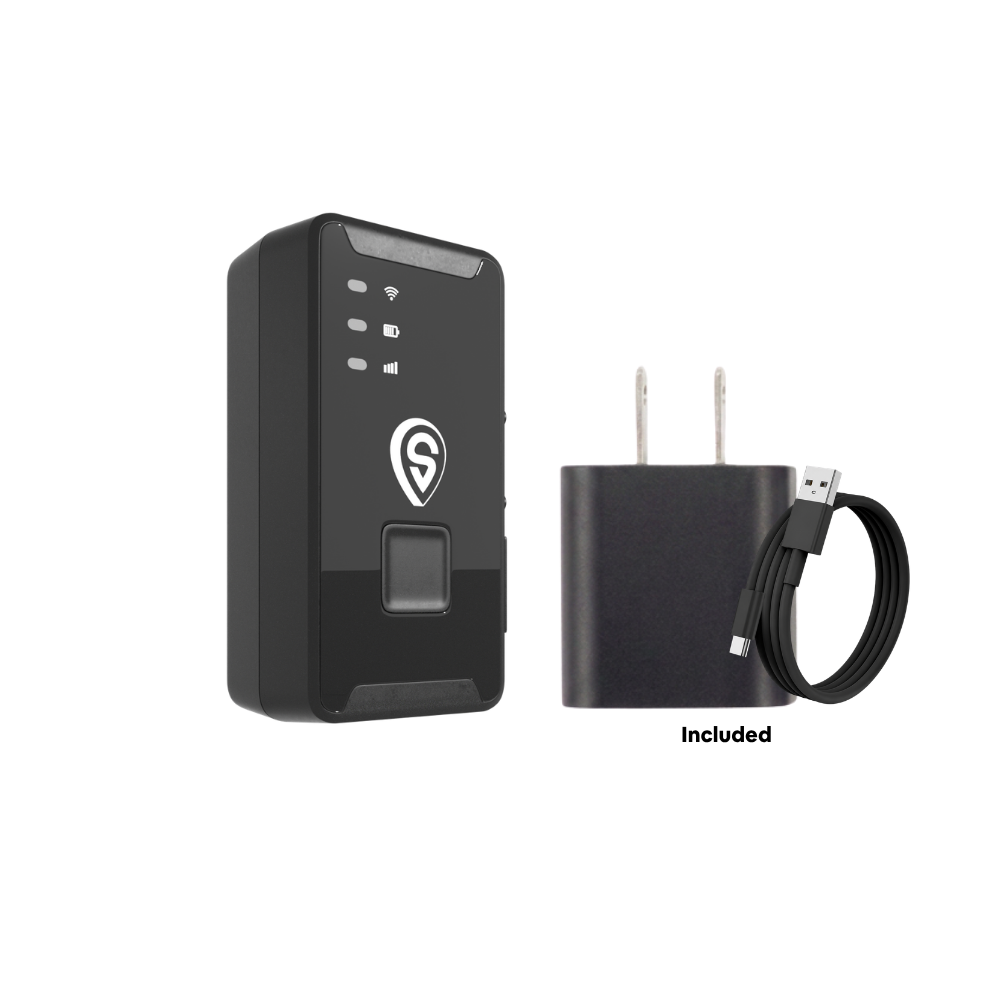
ShadowTrack
- Up to 15 days per charge on standard settings
- Movement and geofence alerts for equipment
- Moves between trailers and job sites, no wiring
Best for: trailers, mowers, generators and other gear without an OBD-II port, or a second tracker hidden in a work truck.
What a Small Fleet Probably Doesn't Need
Plenty of fleet software is built for operations with hundreds of trucks. Before you pay for features, check whether these apply to you:
- An ELD for hours of service. If you run commercial motor vehicles that fall under federal hours-of-service rules, you need a registered electronic logging device. A GPS tracker is not an ELD. Check the FMCSA's ELD rules to see whether your vehicles are covered. Most service vans and pickups under the weight thresholds are not.
- AI dash cams in every cab. Useful for large fleets fighting insurance claims. For a few local vans, driving alerts and trip history usually cover the same ground.
- Separate route optimization software. Worth it for 20 delivery stops a day. Overkill for five jobs.
- Multi-year contracts. If a provider needs one to give you a fair price, that's a sign the product is built for someone else.
The test is simple: if a feature doesn't change a decision you make in a normal week, you don't need to pay for it yet.
Fleet Tracker Options Compared
| Option | Built for | Setup | Contract | Typical pricing |
|---|---|---|---|---|
| Enterprise fleet platforms | Large and regulated fleets | Often technician-fitted | Annual or multi-year agreements are common | Usually quote-based |
| Consumer plug-in trackers (e.g. Bouncie) | One or two personal cars | Plug it in | None | Low monthly fee, slower refresh |
| ShadowTrack (battery) | Trailers, equipment, backup tracking | Magnet-mount or place it | None, ever | $12-$15/mo, or $10-$13/mo at 4+ trackers |
| ShadowAuto (OBD-II) | Families, Turo hosts and 2-10+ vehicle businesses | Plug it in, no tools | None, ever | $12-$15/mo, or $10-$13/mo at 4+ trackers |
Competitor details are general and change often. Check each provider's current terms before you buy.
How to Roll Out GPS Tracking Across Your Fleet
You can have a small fleet live in an afternoon. Here's the order that saves the most back-and-forth:
- List every vehicle and asset. Note which have an OBD-II port and which need a battery tracker. Here's how to find your OBD-II port in 30 seconds.
- Tell your drivers before day one. Explain what you'll see and why: job times, safety, theft protection. It heads off the "are you watching me?" conversation.
- Plug in and name each tracker after the van or truck it's in ("Van 2, Mike") so the map makes sense at a glance.
- Draw geofences around your shop, yard and regular job sites.
- Set curfews and alerts for after-hours movement, speeding and unplugging. Send them to whoever will actually act on them.
- Add logins for your office manager or dispatcher.
- Review one week of trips before changing anything. Patterns show up fast.
On the legal side, tracking vehicles your business owns is broadly allowed in the U.S., but rules on notice and consent vary by state. Our guide to GPS tracking laws for employee vehicles covers the details. This isn't legal advice, so check with an attorney if your situation is unusual.
Service and trades
Plumbers, HVAC, electricians and landscaping crews use geofences to log job-site arrivals and trip history to back up invoices.
Delivery and work vans
Share a live link so customers see the van coming, and use trip replay to sort out "you never showed up" calls. See our work van guide.
Turo hosts with 3+ cars
One dashboard for every rental, curfew alerts between bookings, and engine codes before the next guest. More on our Turo host page.
What a Fleet Management GPS Tracker Costs
With ShadowGPS, you pay once for each tracker ($69.90) and then a plan per tracker. Volume pricing starts at four trackers. No contract, ever. Month-to-month, or prepay and save.
| Billing | 1-3 trackers | 4-10 trackers |
|---|---|---|
| Monthly | $15/mo per tracker | $13/mo per tracker |
| Quarterly | $13/mo per tracker | $11/mo per tracker |
| Annual | $12/mo per tracker | $10/mo per tracker |
| 2-year | $9/mo per tracker | $8/mo per tracker |
USD pricing as of October 2026. Running 11 or more vehicles? Contact us for fleet pricing.
For a full breakdown of what fleet tracking costs across providers, including hardware and hidden fees, read how much GPS tracking really costs for a small fleet. If you're still choosing between providers, our guide for fleets with 3-10 vehicles walks through the decision.
Frequently Asked Questions
What does a fleet management GPS tracker do?
It shows where each vehicle is in real time, saves every trip, and sends alerts for things like after-hours movement, speeding, leaving a job site or a tracker being unplugged. Plug-in OBD-II models also read engine codes and battery health.
Is there a monthly fee for fleet GPS tracking?
Yes, for any real-time cellular tracker. ShadowGPS is $69.90 per tracker, then $12-$15/mo per tracker, or $10-$13/mo once you have four or more. No contract, ever. Month-to-month, or prepay and save.
Does a fleet GPS tracker need a SIM card?
It needs cellular service, but you don't buy or swap a SIM. ShadowAuto and ShadowTrack ship with one inside and switch between major networks on their own.
Is it hard to set up GPS tracking on company vehicles?
No. An OBD-II tracker plugs into the port under the dash in about two minutes with no tools or wiring. Battery trackers magnet-mount or tuck away just as fast. No technician or downtime needed.
Can a GPS tracker replace an ELD?
No. If your vehicles fall under federal hours-of-service rules, you need an FMCSA-registered electronic logging device. A GPS tracker handles location, trips and alerts, and many small service fleets aren't required to run ELDs at all.
Can I legally track my company's vehicles?
Tracking vehicles your business owns is generally allowed in the U.S., but some states have notice or consent rules, especially for employee-owned vehicles. Tell drivers up front and check your state's rules. This isn't legal advice.
How many vehicles can I track on one account?
As many as you need. Work trucks, trailers and the family car can sit side by side on one dashboard, and you can add separate logins for anyone who helps run your vehicles.
Will a plug-in tracker drain my truck's battery?
No. ShadowAuto draws a small amount of power through the OBD-II port, the same way it powers itself with nothing to charge. The app also shows battery voltage, so a weak battery shows up on your phone first.
What's the best fleet GPS tracker for a small business?
The best fit is a tracker your team will actually use: fast live updates, simple alerts, engine data, team logins and no long contract. For most 2-10 vehicle fleets, that means OBD-II trackers in each vehicle and battery trackers on trailers and equipment.
Put every truck on one map this week.
Plug it in, see it move, cancel any time. No contract, ever.
Pricing as of October 2026. Industry figures from Verizon Connect's 2026 Fleet Technology Trends Report. Some links on this page are affiliate links, and ShadowGPS may earn a commission at no cost to you. This article is general guidance, not legal advice.

