

Your jet ski spends far more time parked than it does on the water. It sits on a trailer in the driveway, on a rack at the marina, or tied to a dock behind the rental house, often for days at a time with nobody looking at it. A GPS tracker for jet ski owners fills that gap: it tells you where your PWC is right now, and it pings your phone the moment it moves when it shouldn't.
This guide covers how jet ski trackers actually work on and off the water, which features matter (and which are marketing), the best places to hide one, and a simple three-layer plan that pairs a tracker with the locks you probably already own. We also compare the trackers PWC owners shortlist most often, so you can pick one with confidence.
The best GPS tracker for a jet ski is a battery-powered cellular tracker hidden inside a dry storage compartment, with a second tracker on the trailer. Look for live updates, geofence and movement alerts, weather resistance, and no long-term contract. For most owners who ride on lakes and near the coast, a cellular tracker like ShadowTrack is the right fit. If you regularly ride offshore beyond cell coverage, add a satellite tracker.
Why Jet Skis and PWCs Are Such Easy Targets
Personal watercraft are light, valuable, and usually parked on a trailer that anyone with a hitch ball can tow away. That combination makes them the most stolen type of watercraft in the U.S., year after year.
Here's what the National Insurance Crime Bureau (NICB) found in its most recent watercraft-specific theft breakdown:
- Most stolen type: personal watercraft topped the list with 1,292 thefts in 2021.
- Lowest recovery rate: only 37% of stolen PWCs were recovered, the worst of any watercraft type.
- Seasonal spike: watercraft thefts peaked in July (606) and bottomed out in February (233).
- Hot spots: Florida (791) and California (671) led the nation.
- Speed matters: 30% of recovered watercraft were found within a day, and 54% within a week.
That last point is the whole case for a tracker. Recovery is a race against time, and the owners who get their ski back usually know where it is within hours, not weeks. NICB's earlier reports add more context: the Yamaha WaveRunner was the single most stolen watercraft in 2019, and Independence Day was the holiday with the most watercraft thefts that year (NICB 2019 report).
The trailer is the weak link. According to BoatUS, more than half of all stolen boats are taken while sitting on a trailer. A jet ski on a single trailer is about the easiest version of that.
How a GPS Tracker for Jet Ski Owners Actually Works
A jet ski GPS tracker does two jobs. It figures out its own position from GPS satellites, then sends that position to your phone over a network. Which network it uses decides where it works, how fast it updates, and what you pay each month.
Cellular GPS trackers (best for most owners)
Cellular trackers send location over LTE or LTE-M networks, the same towers your phone uses. They update quickly, cost the least to run, and work anywhere your phone has signal: your driveway, the marina, the boat ramp, and most lakes and near-shore water. This is where the vast majority of PWC thefts happen, which is why a cellular tracker is the right first tracker for almost everyone.
Satellite GPS trackers (for offshore riders)
Satellite trackers send location through a satellite network instead of cell towers, so they keep reporting far offshore or in remote areas with no coverage. The tradeoff is slower updates (minutes, not seconds), bigger hardware, and usually a higher monthly fee. They make sense if you ride open ocean or remote coastline regularly.
Bluetooth tags like AirTag (a backup, not a tracker)
Bluetooth tags don't have GPS or a cellular connection. They only show a location when a nearby phone on the same network passes within range. On a busy marina, that can work. On a quiet storage lot or a dark highway at 2 a.m., it often won't. Anti-stalking alerts can also tell a thief a tag is traveling with them. We break this down in our post on GPS vs AirTag vs RF trackers.
Factory security systems
Many newer skis ship with some theft protection: Sea-Doo's coded D.E.S.S. key, Yamaha's remote security system on select WaveRunners, and lanyard-based start systems. These help stop someone from riding your ski away. They do nothing once a thief hooks up the trailer and drives off, and they can't tell you where your ski went. Treat them as a deterrent layer, not a locator.
Can I plug a car GPS tracker into my jet ski?
No. Plug-in trackers like ShadowAuto use the standard OBD-II port found in cars and trucks. Jet skis from Sea-Doo, Yamaha, and Kawasaki use their own diagnostic connectors, not a standard OBD-II port, so a plug-in car tracker won't fit. A battery-powered tracker is the simple, no-tools option for a PWC.
What to Look for in a Jet Ski GPS Tracker
Most trackers look similar on a product page. These are the specs that actually separate a good PWC tracker from a frustrating one.
1. Water and weather resistance
Spray, rain, humidity, and the occasional splash into a storage bin are a given on a PWC. Look for a weatherproof or IP-rated housing, and remember that ratings like IP67 describe short immersion, not life in a flooded hull. The smart move is to keep any tracker inside a dry compartment rather than exposed on the deck.
2. Network coverage where you ride and park
Think about where your ski sits most of the year, not just where you ride. If it lives on a trailer at home and rides on a lake with cell signal, cellular is the right call. If you run 20 miles offshore every weekend, add satellite.
3. Update speed
When a trailer is moving at highway speed, a tracker that updates every three minutes can leave you a mile or more behind. Faster updates give you, or the police, a precise, current location instead of a guess.
4. Battery life you can live with
Jet skis don't offer an easy, standard power source for a tracker, so most owners go battery-powered. Longer battery life means fewer charging trips, but very long battery claims usually come with slower updates. Pick a tracker with a battery you'll actually keep topped up, and set a recurring reminder.
A practical charging routine
- During riding season, top it off every one to two weeks along with your other gear.
- Turn on low-battery alerts in the app so you're never caught out.
- In the off-season, keep the tracker on the ski while it's stored. Off-season storage is exactly when thefts go unnoticed.
5. Alerts that work while you sleep
Live tracking is useful after something happens. Alerts are what tell you something is happening. Geofence alerts (when your ski leaves a set area like your driveway or marina slip) and movement alerts are the features that turn a tracker into an early warning system. Our guide to setting up geofence alerts for overnight theft walks through it step by step.
6. A clear monthly fee with no lock-in
Almost every real-time tracker has a monthly fee, because it pays for the cellular or satellite data. That's normal. What to watch for is a two-year contract hiding behind the lowest advertised price. A month-to-month plan lets you keep tracking during riding season and storage without being locked in. Wondering why trackers need a data plan at all? See does your GPS tracker need a SIM card.
Our Pick for Jet Skis and PWCs: ShadowTrack
ShadowTrack (Battery-Powered GPS Tracker)
We built ShadowTrack for exactly the kind of property a jet ski is: valuable, portable, and without a standard plug for a tracker. It updates every 5 seconds while moving, so if your ski and trailer get towed out of the driveway at night, you see the route as it happens, not a dot that's several minutes old. There are no tools and no wiring. Charge it, drop it into a dry storage compartment, and you're set in under two minutes.
It runs on multi-carrier LTE-M, which covers the places PWC thefts actually happen: home, marinas, ramps, storage lots, and the highway in between. The app gives you live tracking, a trip timeline, trip replay, geofence alerts, and Share Location, so you can send a live link to a riding buddy or the police. And the monthly fee comes with no contract, ever: month-to-month, or prepay and save.
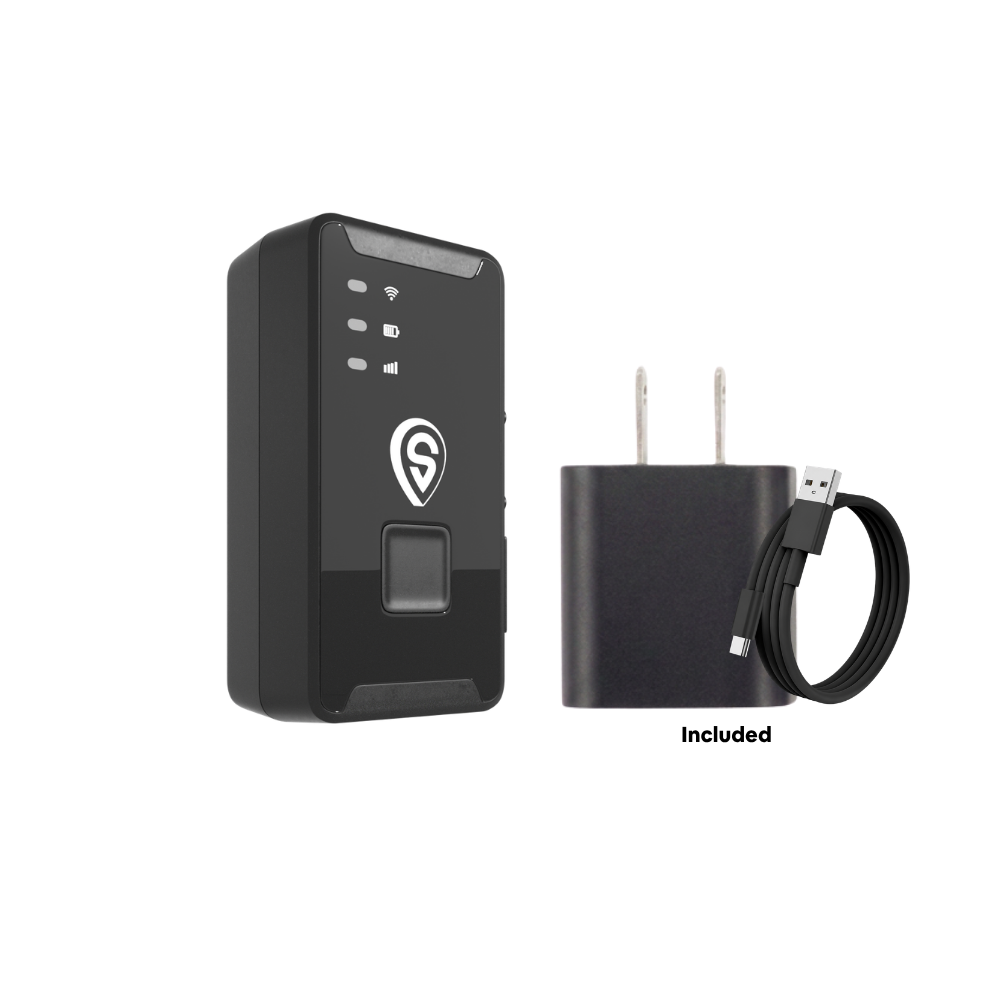
ShadowTrack
- Live location that updates while your PWC is moving
- Geofence alerts for your driveway, slip, or storage lot
- Weatherproof, fits in a glovebox or storage bin

Pros
- Fast live updates while moving, standard on every plan
- No tools, no wiring, ready in under two minutes
- Small enough to hide in a glovebox or storage bin
- No contract: keep it for riding season, pause in winter if you want
- Same app works for your car, truck, or trailer trackers
Cons
- Cellular only, so no reporting far offshore beyond coverage
- Weatherproof, not built to sit submerged in bilge water
- Needs a recharge roughly every two weeks
Best for: individual owners and families who keep one or two skis on a trailer, at a marina, or at a lake house, and want to know where their PWC is at any moment without wiring anything.
Other Jet Ski GPS Trackers Worth Knowing
No single GPS tracker for PWCs suits every rider. Here's an honest look at the other trackers PWC owners shortlist most, including where each one is strong and where it falls short.
1. SPOT Trace
SPOT Trace reports over a satellite network instead of cell towers, which makes it the go-to for riders who run far offshore or keep a ski in remote areas with no signal. It's a useful second layer alongside a cellular tracker for serious open-water riders.
Pros
- Works beyond cellular coverage
- Long-running battery options
Cons
- Updates measured in minutes, not seconds
- Satellite service plan required
- Needs a clear view of the sky to report


Best for: offshore and remote-coast riders who need reporting where phones don't work.
2. LandAirSea 54
The LandAirSea 54 is a long-running name in battery trackers, with a magnetic mount and a waterproof housing. It's a common pick for boats and PWCs, and the brand is known for its Made in USA positioning.
Pros
- Waterproof housing with built-in magnets
- Established brand with lots of marine users
Cons
- Fastest updates sit on the priciest plan tiers
- Best monthly rate typically requires a long-term commitment
- Magnets won't hold on a fiberglass hull

Best for: owners who want a long-standing brand and are fine choosing a plan tier for update speed.
3. Monimoto 9
Monimoto comes from the motorcycle world and is built around theft alarms rather than constant tracking. It sleeps until it senses movement, then alerts you and starts reporting location. That behavior suits a ski that sits on a trailer all week.
Pros
- Motion-triggered alarm design
- Sealed, water-resistant housing
- Long battery life between charges
Cons
- Built for theft alerts, not everyday trip history
- Check current subscription terms before buying

Best for: owners who mainly want an alarm when a stored ski moves.
4. Cube GPS Tracker
Cube markets its tracker directly to jet ski owners and highlights an IP67 rating for marine use. Battery life varies widely with the update settings you choose.
Pros
- IP67-rated housing
- Small and easy to tuck away
Cons
- Battery drops quickly on frequent update settings
- Plan options vary, so compare total yearly cost

Best for: riders who want a small sealed tracker and don't mind tuning battery settings.
5. Tracki
Tracki is a small, universal tracker sold for everything from luggage to pets to vehicles. It's flexible and widely available, with several update-speed tiers.
Pros
- Very small and light
- Flexible update-interval options
Cons
- Lowest monthly rate is tied to a two-year plan
- Battery runs down in days at faster settings
- Check the model's water rating for marine use
Best for: people who want one general-purpose tracker to move between items.
6. Apple AirTag
An AirTag isn't a GPS tracker, but it's a reasonable low-cost backup hidden somewhere a thief won't look. It works best in busy areas where lots of iPhones pass by, and poorly in quiet storage lots or rural roads.
Pros
- No monthly fee
- Tiny and easy to hide as a second layer
Cons
- No GPS or cellular, depends on nearby iPhones
- Anti-stalking alerts can tip off a thief
- No geofence or live route while moving

Best for: a hidden second layer next to a real GPS tracker, never as your only one. More on why in why AirTags fall short as vehicle trackers.
Jet Ski GPS Tracker Comparison Table
Here's how each GPS tracker for jet ski use stacks up on the things that matter most on a PWC.
| Tracker | Network | Update speed | Water protection | Power | Contract |
|---|---|---|---|---|---|
| SPOT Trace | Satellite | Minutes | Rugged, weather-resistant | Battery or wired | Service plan required |
| LandAirSea 54 | Cellular | Minutes to seconds, by plan tier | Waterproof housing | Battery | Best rate on long-term plan |
| Monimoto 9 | Cellular (LTE-M) | Reports when motion detected | Sealed | Battery | Check current terms |
| Cube GPS Tracker | Cellular | Adjustable | IP67 | Battery | Varies by plan |
| Tracki | Cellular | Tiered, faster costs more | Varies by model | Battery | Lowest rate on 2-year plan |
| Apple AirTag | Bluetooth (nearby iPhones) | Only when an iPhone passes | Water-resistant | Coin battery | None (no data plan) |
| ShadowGPS ShadowTrack | Cellular (multi-carrier LTE-M) | Every 5 sec while moving | Weatherproof | Rechargeable, ~15 days | None, ever |
Competitor specs and plan terms change often. Check each manufacturer's current listing before buying.
Where to Hide a GPS Tracker on a Jet Ski
The best spot is dry, out of sight, away from engine heat, and not buried under metal. Jet ski hulls are fiberglass or composite, which GPS and cellular signals pass through easily, so a tracker tucked inside a compartment still reports well.
The best hiding spots, ranked
- Front storage bin (bow storage): the most space and the driest spot on most skis. Tuck the tracker inside a small dry bag and push it to the back or into a corner under your gear.
- Glovebox or handlebar storage: easy to reach for charging. It's also where a thief might look first, so hide it under a liner or inside a pouch.
- Under-seat storage tub: on skis that have one, this is out of sight and hard to search quickly.
- Inside a cooler mount or accessory box: works well on fishing and touring models with add-on storage.
Spots to avoid
- The engine compartment: heat, vibration, and fuel vapors are a bad match for a lithium battery.
- Low in the hull or near the bilge: standing water collects here, and most trackers aren't built to sit submerged.
- Exposed on the deck or handlebars: a visible tracker is the first thing a thief removes.
- Stuck to the hull with a magnet: magnets need steel, and a PWC hull isn't steel. Save magnetic mounts for the trailer.
| Location | Dry? | Hidden? | Easy to charge? | Verdict |
|---|---|---|---|---|
| Front storage bin | Yes | Yes | Yes | Best overall |
| Glovebox | Mostly | Somewhat | Very | Good, hide it well |
| Under-seat storage | Yes | Yes | Moderate | Great if your ski has it |
| Engine compartment | No | Yes | No | Avoid |
| Trailer frame | Use a weatherproof case | Yes | Moderate | Best second tracker spot |
Don't Forget the Trailer: Use Two Trackers
Thieves often separate a ski from its trailer, either to sell them separately or to ditch an easily recognized trailer. If your only tracker is on the trailer, you can end up recovering an empty trailer. If it's only on the ski, a stolen trailer slips away. Tracking both covers each scenario.
The trailer is a good place for a magnetic mount because the frame is steel. A weatherproof magnetic case snaps onto the inside of a frame rail or behind the winch post, out of sight from someone standing next to it.
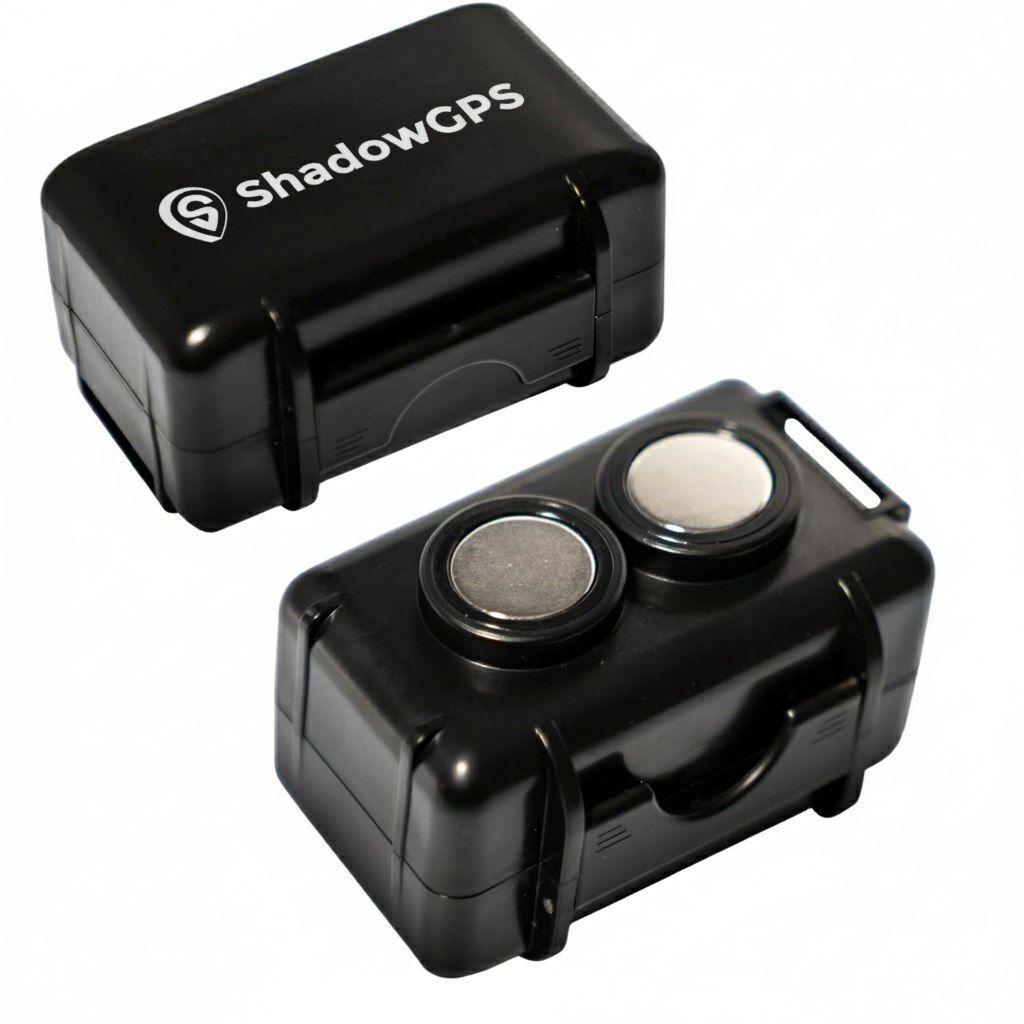
Magnetic Mount Weatherproof GPS Case
- Neodymium magnet holds tight to a steel trailer frame
- Weatherproof housing for road spray and rain
Your tow truck is part of the setup, too
If you tow with your own truck or SUV, it's worth tracking as well, especially at crowded boat ramps and lake-town parking lots where both sit unattended for hours. ShadowAuto plugs into your truck's OBD-II port in seconds and powers itself from your truck, so there's nothing to charge.
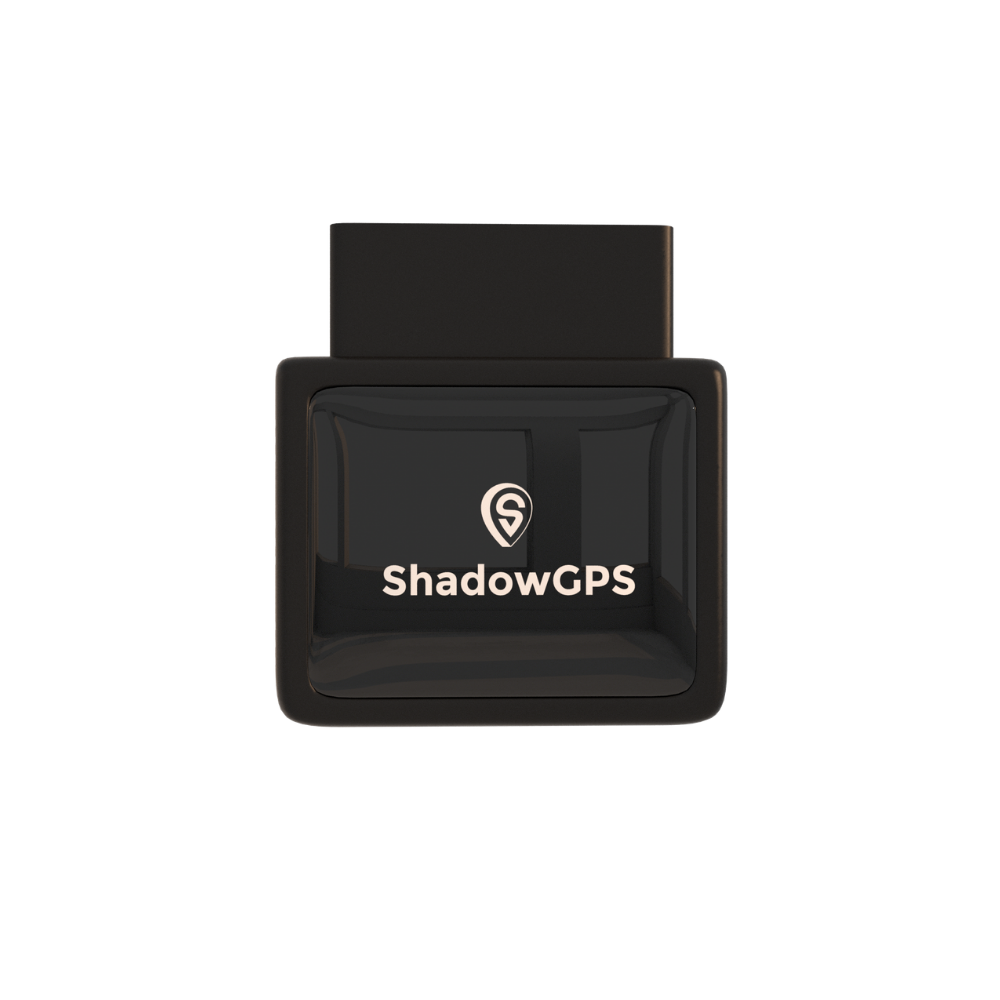
ShadowAuto
- Plug it in, no tools, under two minutes
- Trip timeline and trip replay
- Car Alarm and vehicle diagnostics
The 3-Layer PWC Protection Plan
A tracker works best as one part of a simple system. We think about jet ski security in three layers: make it slow to steal, know the moment it moves, and be able to find it fast.
Layer 1: Deter
Coupler lock on the trailer, wheel lock or boot, a cable lock from ski to trailer, and your factory key or lanyard kept with you. Every extra minute a thief needs makes your ski a worse target.
Layer 2: Detect
A geofence around your driveway, slip, or storage lot, plus movement alerts on your phone. This is what turns a morning discovery into a 2 a.m. heads-up.
Layer 3: Recover
Live tracking, trip replay, and a shareable location link you can hand to police. Write down your Hull Identification Number (HIN) and registration now so the report goes in fast.
Layer 1 checklist: physical deterrents
- Trailer coupler lock: a cotter pin stops nothing. A real coupler lock blocks a hitch ball from going in.
- Wheel lock or boot: makes it much harder to tow even if the coupler lock is beaten.
- Ski-to-trailer cable or padlock: PersonalWatercraft.com recommends padlocking the craft to the trailer in theft-prone areas so it can't simply be lifted off.
- Hitch pin lock while towing: keeps your trailer attached to your truck at gas stations and ramps.
- Cover and position: a cover hides the model, and parking the trailer tongue-in against a wall or garage blocks easy hookups.
- Take the key or lanyard: Sea-Doo's coded key and similar systems only help if the key isn't left on board.
How an overnight alert plays out (example)
Here's a typical sequence for an owner using geofence alerts. Say your ski sits on its trailer in the driveway with a tracker in the bow storage and a second on the trailer frame.
- 2:14 a.m.: your phone shows a geofence alert. Your ski has left the driveway zone.
- 2:15 a.m.: you open the app and see it moving down your street, not parked in the next driveway. You call 911 and report a theft in progress.
- 2:17 a.m.: you share a live location link with the dispatcher, so officers see where the trailer is heading rather than where it was.
- Later: if the thief drops the trailer and moves the ski, the second tracker keeps reporting separately.
This is why update speed and alerts matter more than any single spec on a box. The faster you know, the shorter the chase.
What to Do If Your Jet Ski Is Stolen
- Don't chase it yourself. Confronting a thief isn't worth the risk. Let police handle the recovery.
- Call 911 and report the theft. Share the live location and the direction it's moving.
- Give officers your HIN, registration number, make, model, color, and trailer details. A stolen report gets your ski into national databases.
- Share a live location link with the responding officer so they can follow along in real time.
- Save trip replay history. Screenshots of the route help police and support your claim.
- Call your insurance company as soon as the police report is filed.
- Watch local listings. Stolen skis and parts sometimes show up for sale nearby.
Many of these steps match what we recommend for stolen cars, covered in more detail in our stolen vehicle recovery steps guide.
Is it legal to put a GPS tracker on my jet ski?
Yes. In the U.S., you can track property you own, including your own jet ski, trailer, and tow vehicle. If you rent skis to others, tell renters in your rental agreement that the watercraft is tracked. Tracking property you don't own, or using a tracker to follow a person without consent, can break state law. This isn't legal advice, so check your state's rules if your situation is unusual.
Who Needs a GPS Tracker for PWCs?
The single-ski owner
Your ski sits on a trailer in the driveway or a storage lot for most of the year. One tracker on the ski, one on the trailer, and a geofence covers you.
Families with two skis
Track both skis and the trailer in one app, and share a live location with whoever's out riding so you know when they're heading back.
Small rental operators (2 to 5+ skis)
See every ski on one map, set geofences around your riding area, and get alerts if a ski leaves the lot after hours. Trip history helps settle disputes.
If you also own a boat, the same approach works there. See our boat GPS tracker guide for boat-specific placement tips.
Jet Ski GPS Tracker FAQ
Is there a monthly fee for a jet ski GPS tracker?
Almost always, yes. Real-time trackers need a cellular or satellite data plan to send location to your phone. With ShadowGPS, plans run $9 to $15 per month with no contract: month-to-month, or prepay and save. Bluetooth tags like AirTag have no fee, but they also don't have GPS or live tracking.
Does a jet ski GPS tracker need a SIM card?
Cellular trackers use a built-in SIM to send data, but you don't buy or insert one yourself. ShadowTrack ships with connectivity included, so you just charge it, activate it in the app, and place it on your ski.
Can you put a GPS tracker on a jet ski?
Yes. Any make works, including Sea-Doo, Yamaha WaveRunner, and Kawasaki Jet Ski. The easiest option is a battery-powered tracker hidden in a dry storage compartment, which needs no tools or wiring.
Do jet ski GPS trackers work on the water?
Cellular trackers work anywhere there's cell coverage, which includes most lakes, rivers, and near-shore coastal water. Far offshore, they stop reporting until you're back in range. If you ride beyond cell coverage often, pair a cellular tracker with a satellite tracker.
Where is the best place to hide a GPS tracker on a jet ski?
The front storage bin is best for most skis: it's dry, roomy, and out of sight. The glovebox and under-seat storage also work. Avoid the engine compartment and the low bilge area, and put a second tracker on the trailer frame.
Will an AirTag work as a jet ski tracker?
Only as a backup. AirTags rely on nearby iPhones to report location, so they work in busy places and struggle in quiet storage lots or on empty roads. They also can't send geofence or movement alerts, and a thief's iPhone may warn them the tag is traveling with them.
Do jet skis have an OBD-II port for a plug-in tracker?
No. Jet skis use manufacturer-specific diagnostic connectors, not the standard OBD-II port found in cars and trucks. Use a battery-powered tracker on the ski, and save a plug-in tracker like ShadowAuto for your tow vehicle.
How long does a jet ski GPS tracker battery last?
It depends on the tracker and how often it reports. ShadowTrack lasts up to about 15 days per charge. Some trackers claim months, usually by reporting far less often. For a deeper look, see our guide to how long GPS tracker batteries last.
Is a jet ski GPS tracker waterproof?
Ratings vary. Some trackers are IP67 or IP68 sealed, and others, including ShadowTrack, are weatherproof. Either way, keep your tracker inside a dry compartment, ideally in a small dry bag, rather than exposed to spray or sitting in bilge water.
Can a GPS tracker lower my jet ski insurance?
Some insurers offer discounts for anti-theft devices on boats and PWCs, but it varies by company and policy. Ask your insurer directly what qualifies before you count on a discount.
What happens if I cancel my tracker plan?
With ShadowGPS there's no contract, so you can cancel any time. Many owners keep tracking year-round, since off-season storage is when a missing ski is least likely to be noticed quickly.
Know where your jet ski is. Every 5 seconds.
Charge it, tuck it in, see it move, cancel any time. No contract, ever.
This guide reflects pricing, specifications, and theft data published as of October 2026. Theft figures come from the National Insurance Crime Bureau's most recent watercraft-specific reports. Subscription pricing and features are subject to change by each manufacturer. Some links are affiliate links; we may earn a commission at no extra cost to you. Nothing here is legal advice.
