
IoT fleet management sounds like something only a logistics company with 500 trucks would need. It isn't. If you've ever checked your phone wondering whether your teen made it to work okay, or whether a Turo guest is really where they said they'd be, you already want what IoT fleet management delivers: a live answer to "where is my car right now?"
Strip away the jargon and IoT fleet tracking is simple. A small connected tracker in your car or truck sends its location and status over the cellular network to an app on your phone. It's the same technology big fleets run on, sized for the one car that matters to you, or the two to five trucks that keep your business moving.
This guide covers how it works, what it collects, what it really costs, and how to get it running in an afternoon. No enterprise sales pitch, no 40-page demo.
IoT fleet management is the use of internet-connected trackers and sensors in your cars or trucks to send live location, trip and engine data over cellular networks to a cloud app. You see where every car is, get instant alerts, and catch problems early. For 1 to 5 vehicles, a plug-in OBD-II tracker and a phone app is all you need.
What Is IoT Fleet Management?
IoT stands for the Internet of Things: everyday objects that connect to the internet and report on themselves. A smart thermostat is IoT. So is a GPS tracker in your truck.
IoT fleet management means connecting your vehicles so they report their own location, movement and health, then using that information to make better calls. And "fleet" doesn't have to mean dozens. One family car is a fleet of one.
Enterprise platforms bolt on dispatch boards, fuel cards, cameras and compliance logs. For an owner, it boils down to three questions:
- Where is it? Live location, trip history and arrival alerts.
- How is it being driven? Speed, harsh braking and after-hours use.
- Is it healthy? Engine codes and battery voltage before a breakdown.
IoT fleet management vs. IoT fleet tracking vs. GPS tracking
These three terms get used interchangeably, but they're layers of the same thing:
- GPS tracking: a receiver works out its position from satellites. On its own, it knows where it is but can't tell anyone.
- IoT fleet tracking: GPS plus a cellular connection, so that position reaches your phone live.
- IoT fleet management: tracking plus the tools on top, like alerts, trip replay, geofences, engine codes, reports and shared access for family or crew.
Want the deeper technical version? Our guide on how real-time GPS tracking works walks through the satellite side step by step.
How IoT Fleet Tracking Works: The 4-Layer Stack
Every IoT fleet tracking system, from a single-car setup to a 10,000-truck operation, runs on the same four layers:
- The tracker in your car or truck reads GPS position and vehicle data.
- Cellular connectivity, often LTE-M, carries that data off your car or truck.
- Cloud servers store it, process it and check it against your alert rules.
- Your app or web dashboard shows the live map, trips and alerts.
Layer 1: The tracker (the "thing" in Internet of Things)
Most cars and light trucks sold in the US since the 1996 model year have an OBD-II port under the dashboard. An OBD-II tracker plugs straight into it, draws power from your car, and can read engine data. No tools, no wiring.
Battery-powered trackers do the same job without the port. They hide on a trailer, a piece of equipment, or an older vehicle, and you recharge them every week or two.
What's inside a typical tracker
- GPS receiver for position.
- Accelerometer to sense harsh braking, sharp turns and impacts.
- Cellular modem to send data.
- OBD-II interface (plug-in models) for engine codes and battery voltage.
Layer 2: Connectivity (why LTE-M matters)
LTE-M is a slice of the 4G LTE network built specifically for IoT devices. It uses little power, reaches into parking garages better than older networks, and is designed to stay supported for years.
That last point matters more than it sounds. When US carriers shut down 3G in 2022, a lot of older trackers simply stopped working. Buying a tracker on a current network protects you from a repeat.
ShadowGPS trackers run on multi-carrier LTE-M across Verizon, AT&T and T-Mobile in the US, with roaming in 188 countries and 99.9% network uptime.
Does an IoT tracker need a SIM card?
It needs a cellular connection, but with most consumer trackers that's built in and covered by the plan. You don't buy a SIM or add a phone line. We break this down fully in does your GPS tracker need a SIM card?
Layer 3: The cloud
Once data lands on the servers, software compares every update with the rules you set. Did your car leave the "home" zone at 2 a.m.? Did a work truck go over 80 mph? Did someone unplug the tracker?
When a rule trips, the cloud pushes an alert to your phone within moments. This is the "management" part of IoT fleet management: the system watches so you don't have to.
Layer 4: The app, and why refresh rate matters
Your app is where all of this becomes useful: a live map, a trip timeline, trip replay and alerts. The single spec that most shapes how "live" it feels is the refresh rate, meaning how often a moving tracker reports its position.
Plenty of trackers report every one to three minutes on their base plan. At highway speed, your car covers a mile or more in that gap. ShadowGPS trackers update every 5 seconds while moving, on every plan, so the dot on your map is where your car actually is.
What Data Does an IoT Fleet Tracker Collect?
Here's what a typical IoT fleet tracking setup records, and what each data point actually does for you:
| Data point | What it tells you | Why it matters to you |
|---|---|---|
| Live location | Where your car or truck is right now | Fast answers when you're worried, or when it's taken |
| Trip history & replay | Every route, stop and arrival time | Settles mileage disputes, confirms safe arrivals |
| Speed & harsh events | Speeding, hard braking, sharp turns | Coaching for teen drivers and crews |
| Ignition & idle time | When it started, stopped and sat running | Spots after-hours use and wasted fuel |
| Engine codes & battery | Check-engine faults and voltage | Fix small problems before they strand you |
| Geofence entries/exits | Arrivals and departures from zones you set | Home, school, job site or Turo pickup alerts |
| Tamper & unplug alerts | Someone moved or disconnected the tracker | An early warning that something's wrong |
What it doesn't collect: a GPS tracker doesn't record audio, read messages or capture video. Video only enters the picture if you add a separate dash cam.
Who Needs IoT Fleet Management? (Hint: Not Just Big Fleets)
Almost every page ranking for this topic is written for a corporate fleet manager. But most people who benefit look a lot more like one of these three:
Parents of teen drivers
Per mile driven, drivers aged 16 to 19 have a fatal crash rate almost three times that of drivers 20 and older (CDC). Speed alerts and trip replay turn "how was the drive?" into a real conversation.
Turo & rental hosts
Know where each car is during a trip, confirm mileage at return, and have a clean record if a guest disputes anything. See our Turo host page.
Owner-operators with 2 to 5+ trucks
See which truck is closest to the next job, catch after-hours use, and get engine codes before a breakdown costs you a day.
Your one-car "fleet": plug it in and you're done
For a family car, a teen's first car, a Turo listing or a work truck, an OBD-II tracker is the simplest IoT fleet management setup there is. You find the port under the dash, plug the tracker in, and open the app. Most people are tracking in under two minutes.
ShadowAuto is built for exactly this. It runs off your car's power, so there's nothing to charge, and it reads engine codes so a check-engine light comes with an explanation on your phone.
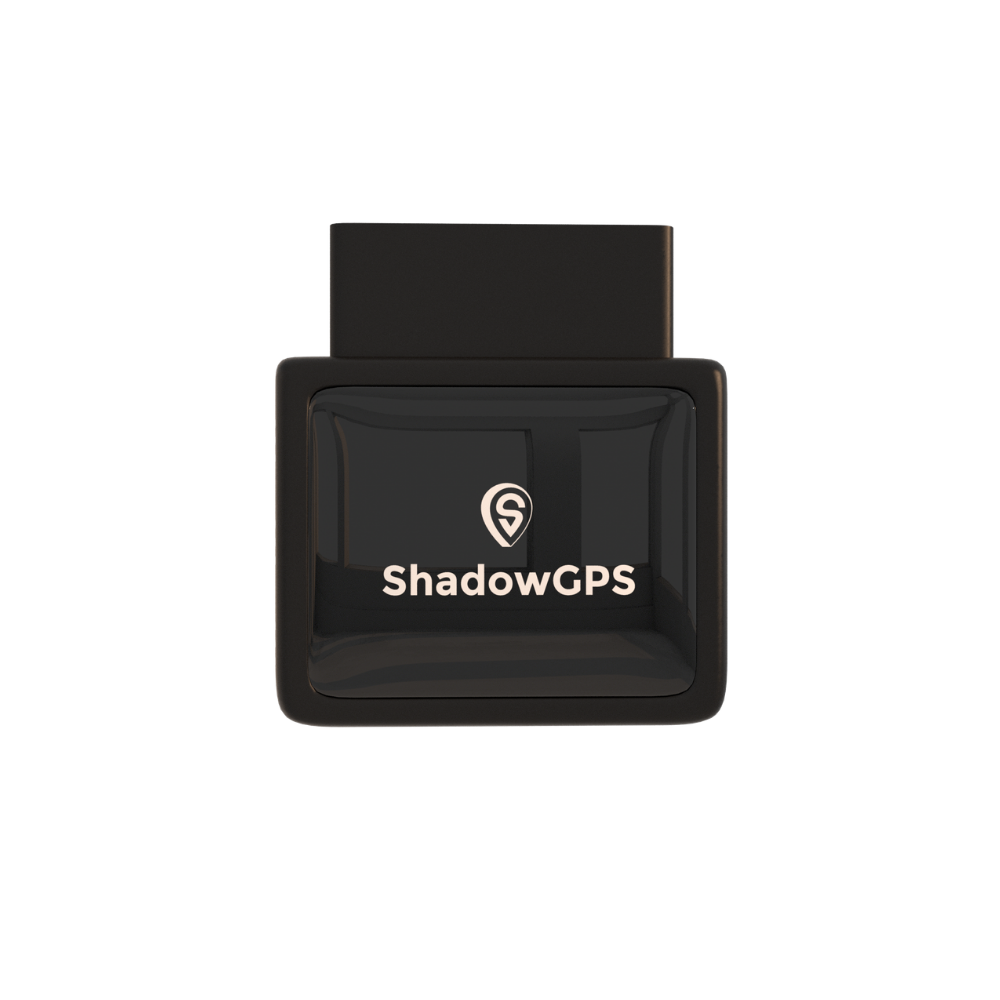
ShadowAuto
- Plugs in under 2 minutes, no tools
- Live tracking, trip timeline & trip replay
- Car Alarm alerts & engine codes on your phone


Trailers, equipment and anything without an OBD port
Not everything you own has a port under the dash. Trailers, mowers, generators, boats and classic cars need a tracker that brings its own power. That's the job of a battery tracker.
ShadowTrack hides inside its weatherproof magnetic case, lasts up to about 15 days per charge, and reports into the same app as ShadowAuto, so a small business sees trucks and trailers on one map.
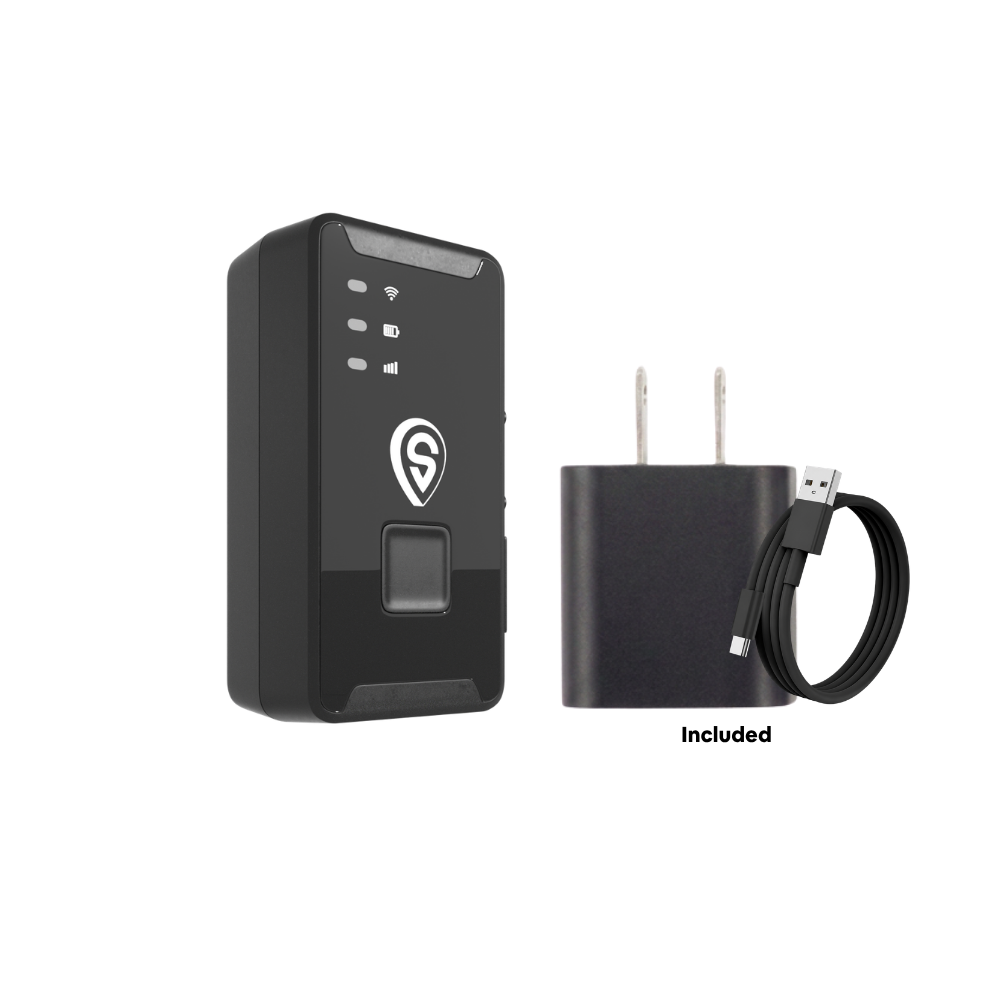
ShadowTrack
- Up to ~15 days per charge
- Weatherproof magnetic case
- Same app as ShadowAuto, one map for everything
Best for: ShadowAuto for any car or truck you drive regularly. ShadowTrack for anything without a port, or anything you'd rather keep out of sight. Still deciding? Compare them side by side in OBD2 vs. battery-powered GPS tracker.
9 Benefits of IoT Fleet Management for Families and Small Fleets
1. Peace of mind in two seconds
Open the app, see the car, get on with your day. For parents and hosts, that one glance replaces a lot of "are you there yet?" texts.
2. A faster response if your car is stolen
Thefts are falling, but they haven't gone away. The NICB counted 659,880 vehicle thefts in 2025, down 23.2% from 850,708 in 2024. That's still roughly one every 48 seconds, and California alone accounted for more than 20% of the national total.
A live location, a tamper alert and a Car Alarm notification give police a real place to go instead of a description. If the worst happens, our stolen vehicle recovery steps lay out exactly what to do first.
3. Safer driving habits
Speed and harsh-braking alerts aren't about catching anyone out. They give you specific moments to talk about, which works far better with a teen or a new hire than general warnings.
4. Engine problems caught early
OBD-II trackers read the same fault codes a mechanic's scanner does. You'll know whether that check-engine light means "loose gas cap" or "book a shop visit." More in our guide to reading engine diagnostics remotely.
5. No more unauthorized trips
After-hours and geofence alerts tell you when a work truck moves on a Sunday or a rental leaves its agreed area.
6. Clean mileage and trip records
Trip history gives you an accurate log for mileage records, reimbursements, Turo disputes and customer billing, without anyone filling in a paper logbook.
7. Smarter dispatch for small businesses
When a customer calls, you can see which truck is closest. That's a real edge when you're competing with bigger operators.
8. Less idling and wasted fuel
Idle-time data shows which trucks sit running at job sites. Small habit changes add up across a few vehicles.
9. Answers for your insurer
Some insurers ask about anti-theft devices each year. Ask yours whether a GPS tracker qualifies for a discount on your policy.
IoT Fleet Tracking Hardware: Which Type Fits?
Not every tracker is built for the same job. Here's how the main types of IoT fleet tracking hardware compare:
| Type | How it connects | Power | Setup | Best for | Watch-outs |
|---|---|---|---|---|---|
| OBD-II plug-in tracker | Cellular (LTE-M / 4G) | Your car's OBD port | Plug in, under 2 min | Cars, trucks, Turo, small fleets | Needs an OBD-II port |
| Battery tracker | Cellular | Rechargeable | Magnet-mount or hide | Trailers, equipment, classics | Recharge every week or two |
| Hardwired tracker | Cellular | Wired to your vehicle | Professional wiring | Large commercial fleets | Harder to move between vehicles |
| Bluetooth tag (AirTag, Tile) | Nearby phones | Coin battery | Drop in | Keys, bags, luggage | Not live GPS; only updates near other phones |
| Enterprise platform | Cellular + cameras | Hardwired | Pro setup, sales process | ELD-regulated fleets | Often sold on annual or multi-year terms |
| ShadowAuto + ShadowTrack | Multi-carrier LTE-M | OBD port or rechargeable | Under 2 min, no tools | 1 car up to small fleets | No contract, ever |
If you're weighing a Bluetooth tag for your car, read why AirTags fall short for cars first.
How Popular IoT Trackers Compare
For owners and small fleets, these are the trackers most people shortlist. The big differences are refresh rate on the base plan and whether you're locked into a contract.
| Tracker | Form factor | Refresh while moving | Monthly fee | Contract |
|---|---|---|---|---|
| Bouncie | OBD-II only | 15 sec | $9.00 to $9.65 | None |
| Tracki | Battery | 10 sec to 1 hr, by tier | $9.95 to $30 | 2 years for best rate |
| LandAirSea | Battery & OBD-II | 3 min to 3 sec, by tier | $9.95 to $49.95 | 2 years for best rate |
| BrickHouse | Battery & OBD-II | Tiered by plan | $17.99 to $34.99 | None |
| ShadowGPS (ShadowAuto / ShadowTrack) | OBD-II & battery | 5 sec on every plan | $8 to $15 | None, ever |
Competitor details reflect published plans as of August 2026 and can change. Check each brand for current pricing.
How to Set Up IoT Fleet Tracking in 5 Steps
You can go from zero to a working IoT fleet tracking setup in one afternoon:
- Write down what you're tracking and why. One goal per vehicle keeps things simple: "teen's Civic, safe arrivals" or "Turo RAV4, location during trips."
- Match the tracker to each car or truck. OBD-II for cars and trucks you drive, battery for trailers, equipment and anything without a port.
- Plug it in. The OBD-II port is usually under the steering column. Can't spot it? Use our 30-second OBD2 port finder.
- Set three alerts, not thirty. Start with a home or school geofence, a speed alert and an after-hours alert. Our geofence setup guide shows how.
- Tell your drivers and review weekly. Let family or crew know the tracker is there and why, then check trips once a week and adjust alerts.
What Does IoT Fleet Management Cost for 1 to 5 Vehicles?
Enterprise platforms usually quote per vehicle after a sales call. Consumer trackers are more transparent: a one-time device price plus a monthly fee. Here's exactly what ShadowGPS charges per tracker, per month:
| Plan term | 1 to 3 trackers | 4 to 10 trackers |
|---|---|---|
| Month-to-month | $15/mo | $13/mo |
| Quarterly | $13/mo | $11/mo |
| Annual | $12/mo | $10/mo |
| 2-year prepay | $9/mo | $8/mo |
Each tracker is $69.90. There's no contract, ever: go month-to-month, or prepay and save.
Example: a Turo host with three cars on month-to-month plans pays $45/mo for service plus $209.70 once for the trackers, and can cancel any time. A five-truck contractor on month-to-month pays $13 per truck, or $65/mo. See the full pricing page, or our breakdown of what GPS tracking costs a small fleet in 2026.
Common IoT Fleet Management Challenges (and Simple Fixes)
Cellular dead zones
No cellular tracker can report where there's no signal. Many trackers store location points and upload them once they reconnect. If you regularly drive deep backcountry, ask about this before you buy, and choose a multi-carrier network.
Data security
Your location history is personal. Buy from an established brand, use a strong unique password, keep the app updated, and only share access with people who need it.
Battery drain on cars that sit
Plug-in trackers draw a small amount of power. Cars driven regularly won't notice, but a car parked for weeks is a better fit for a battery tracker like ShadowTrack.
Alert overload
Thirty alerts a day trains you to ignore all of them. Start with three, then add more only when you miss something.
Driver pushback
Trust comes from being upfront. Tell drivers what's tracked, when and why. Our guide on telling your crew about GPS trackers includes the exact conversation.
Is IoT fleet tracking legal?
In the US, it's generally legal to track a car or truck you own or lease. Parents tracking a car they own, and businesses tracking company vehicles, are on solid ground in most states. Some states, including California under Penal Code 637.7, restrict putting a tracker on a vehicle you don't own without consent.
If employees drive your vehicles, tell them in writing. And if you run commercial trucks over 10,001 pounds across state lines, check the FMCSA ELD rule: a GPS tracker isn't an electronic logging device. This is general information, not legal advice. For state-by-state detail, see is GPS tracking legal for employee vehicles?
The SAFE Check: 4 Questions Before You Buy
Use this quick framework to compare any IoT fleet tracking product, from a $30 tag to an enterprise platform:
- S, Speed: How often does it update while moving, and is that on the base plan or an upgrade?
- A, Access: Is there a phone app and a web dashboard? Can you share live location with family or crew?
- F, Fees: What's the monthly fee, is there a contract, and how do you cancel?
- E, Easy: Can you plug it in yourself, or does it need professional wiring?
If a product can't give you a clear answer to all four in a couple of minutes, keep looking.
Where IoT Fleet Management Is Heading
The market is growing fast. Technavio valued the IoT fleet management market at $10.50 billion in 2025 and forecasts 16.9% annual growth through 2030. Estimates vary between research firms, but they all point the same direction.
A few trends worth watching, even for a one-car owner:
- AI summaries. Expect apps that answer plain questions like "where did the truck stop yesterday?" instead of making you dig through reports.
- EV data. Charge level and range are becoming standard data points alongside location.
- Longer-life networks. LTE-M and newer 5G IoT standards are designed to avoid another 3G-style shutdown.
- Simpler hardware. Plug-in and battery trackers keep closing the gap with hardwired systems, so small fleets get big-fleet visibility without the wiring.
Key takeaways
- IoT fleet management connects your cars or trucks to the internet so they report location, driving and engine health to an app.
- It works in four layers: tracker, cellular connectivity (often LTE-M), cloud, and your app.
- It isn't just for big fleets. Parents, Turo hosts and 2 to 5 vehicle businesses get the same core benefits.
- Refresh rate, fees and contract terms separate good trackers from frustrating ones.
- An OBD-II plug-in tracker is the simplest start: plug it in, open the app, set three alerts.
IoT Fleet Management FAQs
Is there a monthly fee for IoT fleet tracking?
Yes. Every live cellular tracker needs a data plan, so expect a monthly fee. ShadowGPS plans run $8 to $15 per tracker per month depending on term and how many trackers you have. No contract, ever: month-to-month, or prepay and save.
Does an IoT GPS tracker need a SIM card?
It needs a cellular connection, but on most consumer trackers that's built in and covered by your plan. You don't buy a separate SIM or add a phone line.
Is it hard to set up an IoT fleet tracker?
Not with a plug-in tracker. You plug it into the OBD-II port under your dashboard, download the app and pair it. Most people finish in under two minutes, with no tools or wiring.
What is IoT fleet management in simple terms?
It's using connected trackers in your cars or trucks to see where they are, how they're being driven and whether they're healthy, all from an app. It works for one car or a hundred.
How is IoT used in fleet management?
The most common uses are live location tracking, trip history, theft and tamper alerts, geofencing, speed and driving alerts, engine fault codes, idle-time reports and maintenance reminders.
Do I need IoT fleet management for just one car?
You don't need an enterprise platform, but the core features are just as useful for one car. A single OBD-II tracker gives you live location, trip replay, theft alerts and engine codes without any fleet software.
How fast does an IoT fleet tracker update?
It depends on the tracker and plan. Many base plans update every one to three minutes, while faster trackers report every few seconds while moving. Check whether fast updates are standard or a paid upgrade.
Will an OBD-II tracker drain my car battery?
Plug-in trackers draw a small amount of power. A car driven regularly won't notice. If your car sits unused for weeks at a time, a battery tracker is the better fit.
Does IoT fleet tracking work without cell service?
A cellular tracker can't send live updates without signal. Many store location points and upload them when they reconnect. For true backcountry coverage, satellite devices are the alternative.
Can I cancel my tracking plan any time?
With ShadowGPS, yes. There's no contract on any plan, and every purchase is covered by a 30-day money-back guarantee. Other brands vary, so read the cancellation terms before you buy.
Plug it in. See it move. Cancel any time.
ShadowAuto plugs into your car or truck in under two minutes. ShadowTrack covers everything else. No contract, ever: month-to-month, or prepay and save.
Pricing as of October 2026. Sources: NICB 2025 Vehicle Theft Report, CDC Risk Factors for Teen Drivers, Technavio IoT Fleet Management Market. Some links are affiliate links, and we may earn a commission at no extra cost to you. This article is general information, not legal advice.

