

Yes, a GPS tracker can lower your car insurance, but usually only one slice of it: the comprehensive (theft) part of your premium, and only if your insurer offers an anti-theft or vehicle recovery discount. The bigger, slower payoff comes from what tracking changes on the road: safer habits, fewer claims, and a much better shot at getting your car back.
That is the honest version most "GPS tracking slashes premiums" articles skip. Below, we break down exactly where a tracker can move your insurance bill, where it can't, how it makes driving safer for a teen, a family car, a Turo rental, or a small fleet, and the word-for-word questions to ask your insurer before you count on a discount.
Does a GPS tracker lower insurance? It can. Many insurers offer an anti-theft or vehicle recovery discount on comprehensive coverage, and more than a dozen states require insurers to offer one for qualifying devices. Insurer driving programs (usage-based insurance) are separate and use the insurer's own app or plug-in. The most reliable savings come from fewer claims over time, so treat any discount as a bonus, not the reason to buy.
How your insurance premium is built (and where a tracker fits)
Before you can save with a GPS tracker, it helps to know what you are actually paying for. A typical personal auto policy is a bundle of coverages, and each one is priced on a different risk.
| Coverage | What it pays for | Can a GPS tracker affect it? |
|---|---|---|
| Liability | Damage or injury you cause to others | Indirectly, through a cleaner claims history |
| Collision | Damage to your car in a crash | Indirectly, through safer driving and fewer claims |
| Comprehensive | Theft, vandalism, weather, fire | Directly, via anti-theft or recovery discounts |
| Usage-based programs | A rate based on how and how much you drive | Only with the insurer's own app or plug-in |
Here's the catch: comprehensive is often the smaller part of the bill. So a percentage discount on it moves the total less than the headline number suggests, which is exactly why insurers (and we) say to ask before you assume.
3 real ways a GPS tracker can lower what you pay
1. An anti-theft or vehicle recovery discount
This is the direct one. Insurers price comprehensive coverage partly on the odds your car gets stolen and never comes back, so a device that helps police find it can earn a discount.
Some states make this mandatory. According to the National Association of Mutual Insurance Companies, states including Florida, Illinois, Massachusetts, New York, and Texas have laws giving drivers comprehensive discounts for anti-theft devices. The fine print matters, though: Florida's statute, for example, covers anti-theft devices or vehicle recovery systems that are built in at the factory or approved by the state insurance office.
Voluntary discounts vary widely by company. Insurify reports GEICO's anti-theft discount can reach up to 23%, while other carriers offer less or only count certain device types. Many will ask for proof that the tracker is in your car, especially if you added it after you bought the car.
2. Fewer and smaller claims over time
This is the lever that actually compounds. Your claims history is one of the biggest factors in what you pay at renewal, and every theft claim you avoid, or shrink because your car was found quickly, protects that record.
Car theft is not a rare event. The National Insurance Crime Bureau counted 659,880 vehicle thefts in 2025, roughly one every 48 seconds. When your tracker shows you where your car is right now, you hand police a live location instead of a description and a guess. We covered what to do in that moment in our stolen-car recovery steps guide.
3. Better records when something goes wrong
Trip history is quiet evidence. When there is a crash, a disputed rental, or a question about where a work truck was, a timestamped trip timeline answers it in seconds.
That matters most for small business owners and Turo hosts, who often face more paperwork at claim time. It also helps if you ever need to show police or a court where your car went, which we explain in how GPS data helps build stronger cases against auto thieves.
What a GPS tracker does not do for your insurance
A lot of content online blurs two different things together. Your own GPS tracker and your insurer's driving program are separate, and knowing the difference saves you from a disappointing phone call.
Insurer driving programs use their own tools
Programs like Progressive Snapshot, State Farm Drive Safe & Save, and Allstate Drivewise price your policy on how you drive. In general, they score you with the insurer's own app or plug-in, not with data from a tracker you bought yourself.
They can be worth it. Progressive says drivers who save with Snapshot save an average of $328 a year. But some programs, Snapshot included, can raise your rate if you score poorly, while others, like Drivewise, say they never raise rates. Read the terms before you enroll.
So which do you need? Many people end up with both, for different jobs. Here's how they compare side by side.
| Option | Who sees the data | Can it raise your rate? | Live location for you | Helps with theft | Contract |
|---|---|---|---|---|---|
| Insurer driving program (UBI) | Your insurer | Some programs, yes | No | Limited | Tied to your policy |
| Built-in connected car service | Automaker and service provider | No | Varies by plan | Often, with paid plan | Varies |
| Bluetooth tag (AirTag, Tile) | You | No | Only near other phones | Limited, no live GPS | None |
| Enterprise fleet platform | Your company | No | Yes | Yes | Often annual or multi-year |
| ShadowAuto / ShadowTrack | You | No | Yes, live in the app | Yes, alerts + live map | None, ever |
Program features change often. Check your insurer's current terms and your state's rules before enrolling or buying anything for a discount.
How GPS tracking makes driving safer
Insurance savings follow safety, not the other way around. Here's where knowing exactly where your car is, and what it has been doing, changes outcomes for the people who actually drive it.
Teen drivers: the highest-risk years
The numbers are sobering. Per mile driven, teens ages 16 to 19 have a fatal crash rate almost three times as high as drivers 20 and older, and the risk is highest in the first months after getting licensed, according to the CDC. Night driving is especially risky.
A tracker does not drive the car, but it gives you calm, factual conversations instead of guesses. A geofence alert tells you they made it to school or practice. Trip replay lets you review a drive together. Pair that with the CDC's free Parent-Teen Driving Agreement and you have house rules that both sides can see. Our teen driver guide for parents goes deeper.
Theft: catching it early
The fastest recovery starts with knowing something is wrong. A Car Alarm or tamper alert on your phone the moment someone messes with your car, plus a live map, beats finding an empty parking spot the next morning.
Geofences add a second layer: draw a boundary around your driveway or lot and get pinged if your car leaves it overnight. Here's how to set up geofence alerts that catch overnight theft.
Vehicle health: fewer breakdowns on the highway
A well-kept car is a safer car. With an OBD-II tracker, engine codes show up in the app, so a check engine light becomes a specific problem you can price out instead of a mystery.
See how it works in reading engine diagnostics remotely.
Small fleets: accountability without a back office
If you run two to five work trucks or vans, you don't need an enterprise platform to manage risk. Trip timelines show after-hours use and route patterns, and live location lets you answer a customer's "where's my tech?" in seconds.
That documented, consistent picture is also what a commercial insurer wants to see when you talk renewal. For picking the right setup, see choosing fleet GPS tracking for 3 to 10 vehicles.
Parent of a new driver
Arrival alerts for school and work, trip replay for honest conversations, and certainty about where the family car is tonight.
Turo or rental host
Live location between trips, trip history for disputes, and alerts if a car leaves an agreed area. See our Turo tracker guide.
Owner of 2-5 work vehicles
One app for every truck, after-hours use you can actually see, and records ready for your commercial insurer.
ShadowAuto vs. ShadowTrack: which fits your goal?
Plug it in, or hide it
For most car and truck owners, ShadowAuto is the simple choice. It plugs into the OBD-II port under your dash in under two minutes, with no tools and no installer, and it runs on your car's power, so there is nothing to charge. Your car shows up on the map and updates every 5 seconds while it's moving, so you always know where it is.
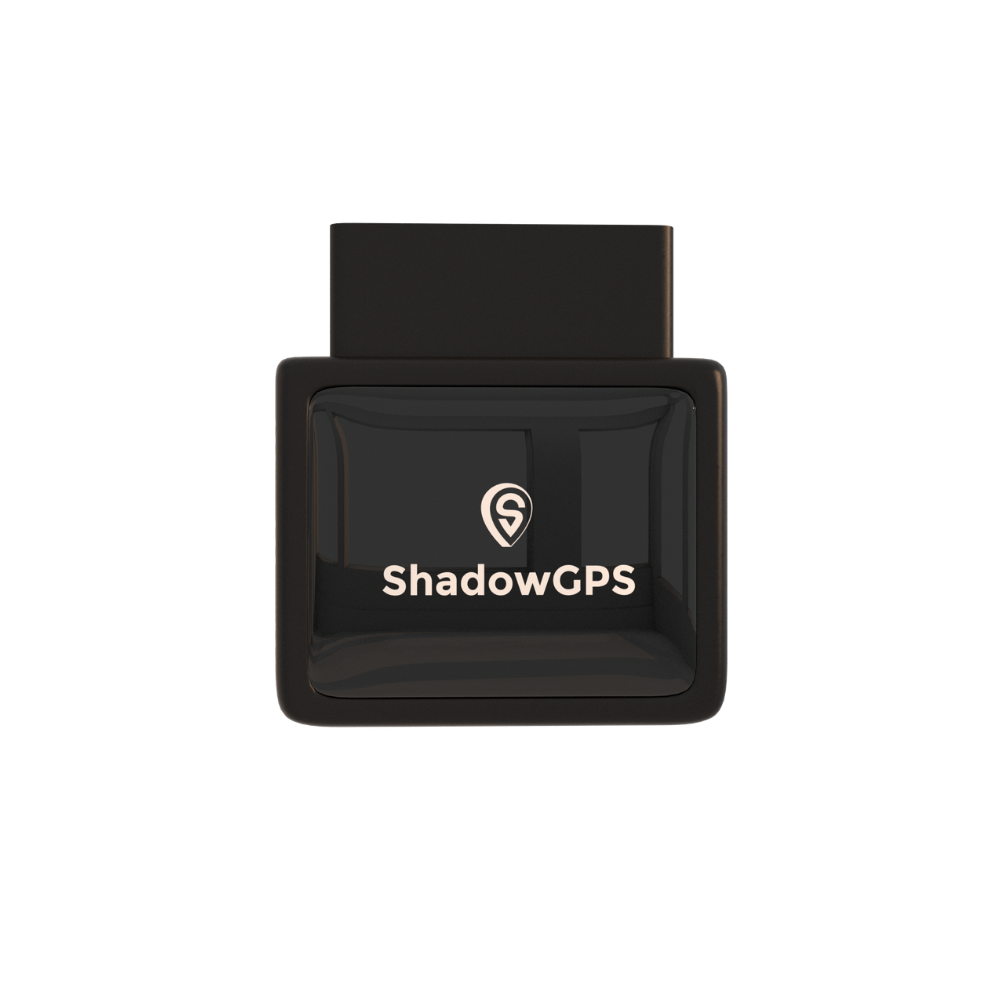
ShadowAuto
- Car Alarm and tamper alerts on your phone
- Engine codes and vehicle health in the app
- Trip timeline and trip replay


If your car's OBD-II port is hard to reach, or you want to protect a trailer, equipment, or a second car without plugging anything in, ShadowTrack is the portable option. It's battery-powered, rides in a weatherproof magnetic case, and hides almost anywhere.
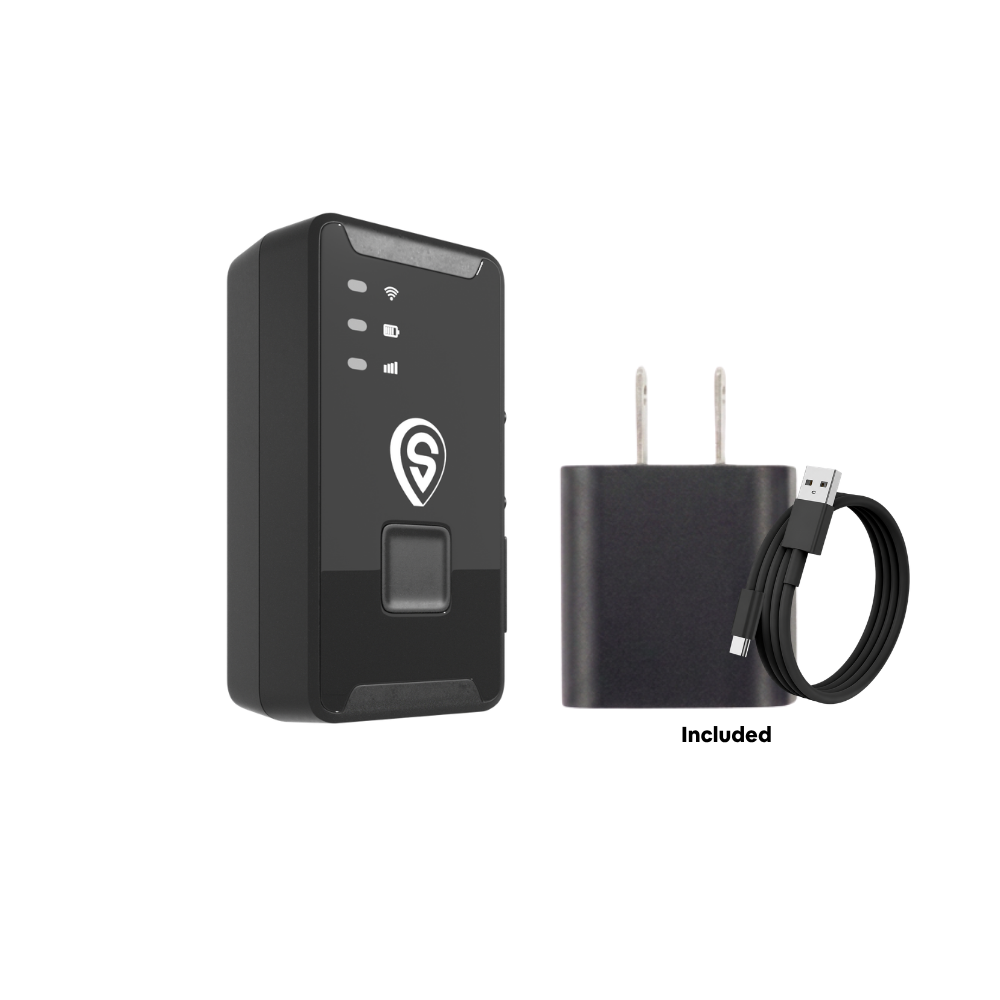
ShadowTrack
- Up to about 15 days per charge
- Weatherproof magnetic case, hides anywhere
- Live tracking, geofences and trip replay
Best for: ShadowAuto if you want a set-and-forget tracker in your everyday car or truck. ShadowTrack if you need to hide it, move it, or track something without an OBD-II port. Not sure where your port is? Find your OBD2 port in 30 seconds.
How to ask your insurer for a GPS tracker discount
A five-minute call is the only way to know for sure. Follow these steps in order.
- Check that you carry comprehensive coverage. Anti-theft discounts apply to comprehensive. If you only carry liability, there is nothing for this discount to reduce.
- Ask the exact question. "Do you offer an anti-theft or vehicle recovery discount for an aftermarket GPS tracker that I added myself?"
- Ask what counts. Some insurers only credit devices built in at the factory, certain brands, or systems that disable the engine. Get the qualifying list.
- Ask what proof they need. Usually a receipt, a photo, or an app screenshot showing the tracker active on your car.
- Ask about their driving program separately. If you are a careful driver, a usage-based program may save more. Ask whether it can raise your rate.
- Recheck at every renewal. Discounts and rules change. One of the questions we hear from customers is that their insurer asks for this kind of information each year, so keep your proof handy.
A simple way to estimate your discount
Look at your declarations page and find the comprehensive line, not the total. Multiply it by the discount your insurer quotes. For example, a 10% discount on a $300-a-year comprehensive charge is about $30 a year. That's why we'd never tell you to buy a tracker for the discount alone: buy it for knowing where your car is, and count the discount as a bonus.
Track what you own, and be upfront about it
Tracking a car you own is legal across the U.S., including the family car your teen drives. For business vehicles, tell your drivers and put it in writing, since rules on employee tracking vary by state. Never put a tracker on a car you don't own or have permission to track. See our guides on employee vehicle tracking laws and telling your crew about trackers.
Is a GPS tracker worth it for insurance alone?
Here's our straight answer: probably not, if insurance is the only reason. The discount is real for some drivers and zero for others, depending on your insurer, your state, and your coverage.
But that is not why people plug one in. They do it because a teen just got a license, because a truck sits on a dark street overnight, or because a rental car is somewhere across town right now. Certainty is the product. A lower comprehensive line is a nice side effect.
- Worth it if: you carry comprehensive, your insurer offers a recovery discount, and you want live tracking anyway.
- Worth it if: you have a new driver in the house, a car on a high-theft list, or vehicles that earn you money.
- Skip the expectation if: you carry liability only, or your insurer only credits factory-built systems.
FAQs
Does a GPS tracker lower car insurance?
It can. Many insurers offer an anti-theft or vehicle recovery discount on comprehensive coverage, and some states require insurers to offer one for qualifying devices. The discount applies to the theft part of your premium, so ask your insurer what qualifies before you count on it.
Is there a monthly fee for a ShadowGPS tracker?
Yes. The tracker is $69.90, and the monthly fee is $12-$15, or $10-$13 per tracker with 4 or more. No contract. Month-to-month, or prepay and save, and you can cancel any time.
Does a GPS tracker need a SIM card?
A live GPS tracker needs a cellular connection to send its location to your phone. With ShadowGPS, connectivity comes built in with your plan, so there's no SIM card to buy or set up. Here's the full SIM card explainer.
Is it hard to plug in a GPS tracker?
No. ShadowAuto plugs into your car's OBD-II port, usually under the steering wheel, in under two minutes with no tools. ShadowTrack is battery-powered, so you just place it or attach it with its magnetic case.
Which insurance companies give discounts for GPS trackers?
Many major insurers list an anti-theft discount, but what qualifies varies by company and state. Some only credit factory-built systems or engine-disabling devices. Call your insurer, ask specifically about an aftermarket GPS tracker, and ask what proof they need.
Does my insurance company see my GPS tracker data?
Not unless you share it. Your ShadowGPS trip history lives in your account. Insurer driving programs like Snapshot or Drivewise are different: they use the insurer's own app or plug-in, and the insurer sees that data by design.
Can tracking my driving raise my insurance?
Your own tracker can't, because your insurer doesn't get its data. Some insurer driving programs can raise your rate if you score poorly, while others say they only ever lower it. Read the program terms before you enroll.
How does GPS tracking improve safety?
It turns guesses into facts. Arrival alerts confirm a teen got where they were going, trip replay supports honest conversations about driving, theft alerts let you act right away, and engine codes help you fix problems before they leave you stranded.
Does GPS fleet tracking lower commercial auto insurance?
It can help. Commercial insurers look at claims history, theft risk, and how vehicles are used, and trip records give you documentation to support your renewal. Ask your agent whether they offer credits for vehicle tracking and what reports they want to see.
Will a GPS tracker help if my car is stolen?
Yes. A live location gives police something concrete to act on. Call 911 first, share the live location with officers, and don't try to recover the car yourself.
Know where your car is. Always.
Plug it in, see it move, cancel any time. No contract, ever.
Pricing as of October 2026. Insurance discounts, program terms, and state rules change and vary by insurer, so confirm details with your insurance company. This article is general information, not insurance or legal advice. Statistics: CDC (teen driver risk), NICB (2025 vehicle thefts), NAMIC and Florida Statutes §627.0653 (state anti-theft discount laws), Insurify (GEICO discount), Progressive (Snapshot savings). Some links are affiliate links, and we may earn a commission at no extra cost to you.

