

Should you get a wireless or a hardwired GPS tracker? For most people with one car or truck that matters, the honest answer is neither in its pure form. A plug-in OBD-II tracker gives you the always-on power of a hardwired tracker with none of the wiring, and a battery tracker is the right pick when your car has no port, or you want a second, hidden layer.
That third option is the one most wireless vs hardwired GPS tracker guides skip, and it's the one that fits a parent handing a teen the keys, a Turo host with a car in someone else's hands, or anyone who just wants to know where their car is tonight. Below, we break down how each type actually works, where each one wins, what nobody tells you about battery drain and warranties, and a simple way to pick in under a minute.
Wireless (battery) GPS trackers run on their own rechargeable battery, move between cars, and hide almost anywhere, but you have to charge them. Hardwired GPS trackers are spliced into your car's wiring for constant power, but need a technician and stay with one car. Plug-in OBD-II trackers sit in between: car-powered, never charged, and plugged in by you in under 2 minutes. For a daily-driven car or truck, start with plug-in. For trailers, equipment, older cars, or a backup tracker, go battery.
First, a naming problem: "wireless" doesn't mean what you think
Every GPS tracker for your car is wireless in one sense. They all get a position from GPS satellites and send it to your phone over a cellular network. When people say "wireless tracker," they mean something narrower: a tracker that doesn't take power from your car.
So the real question behind wireless vs hardwired is simple. Where does the tracker get its power? That one answer decides how you set it up, how often it can report, where you can hide it, and how much you'll fiddle with it later. There are three answers, not two.
Battery-powered (wireless)
Carries its own rechargeable battery. Nothing connects to your car. Often magnet-mounted or tucked out of sight.
Plug-in (OBD-II)
Plugs into the diagnostic port under your dash that every US car and light truck has had since 1996. Powered by your car, no wires cut.
Hardwired
Connected directly to your car's power, ground, and ignition wires, usually behind the dash or near the fuse box. Needs a technician.
What is a wireless (battery-powered) GPS tracker?
A battery-powered GPS tracker is a self-contained device with its own GPS chip, cellular modem, and rechargeable battery. You charge it, place it, and it reports to your phone until the battery needs topping up.
Because it needs nothing from your car, it works on things that have no port or no power at all: trailers, boats, equipment, motorcycles, classic cars, and cars with a port in an awkward spot. It also moves in seconds from your car to your spouse's truck.
How long does the battery really last?
This is where claims get slippery. Battery life depends almost entirely on how often the tracker reports. Some long-standby trackers advertise months or even years, but they get there by checking in rarely, sometimes once a day, which isn't much help if you're trying to see where your car is heading right now.
Fast updates and long battery life pull in opposite directions. A tracker that reports often while moving and sleeps while parked is the practical middle ground. That's the approach ShadowTrack takes: it updates rapidly while your car is on the move and lasts up to about 15 days per charge.
Where a battery tracker is the right call
- Trailers, campers, and equipment that have no OBD-II port or ignition power.
- Classic or stored cars where you don't want anything touching original wiring.
- A second, hidden tracker that keeps reporting even if a thief finds and pulls your main one.
- Short-term needs, like a road trip, a car loaned to a friend, or a seasonal vehicle.
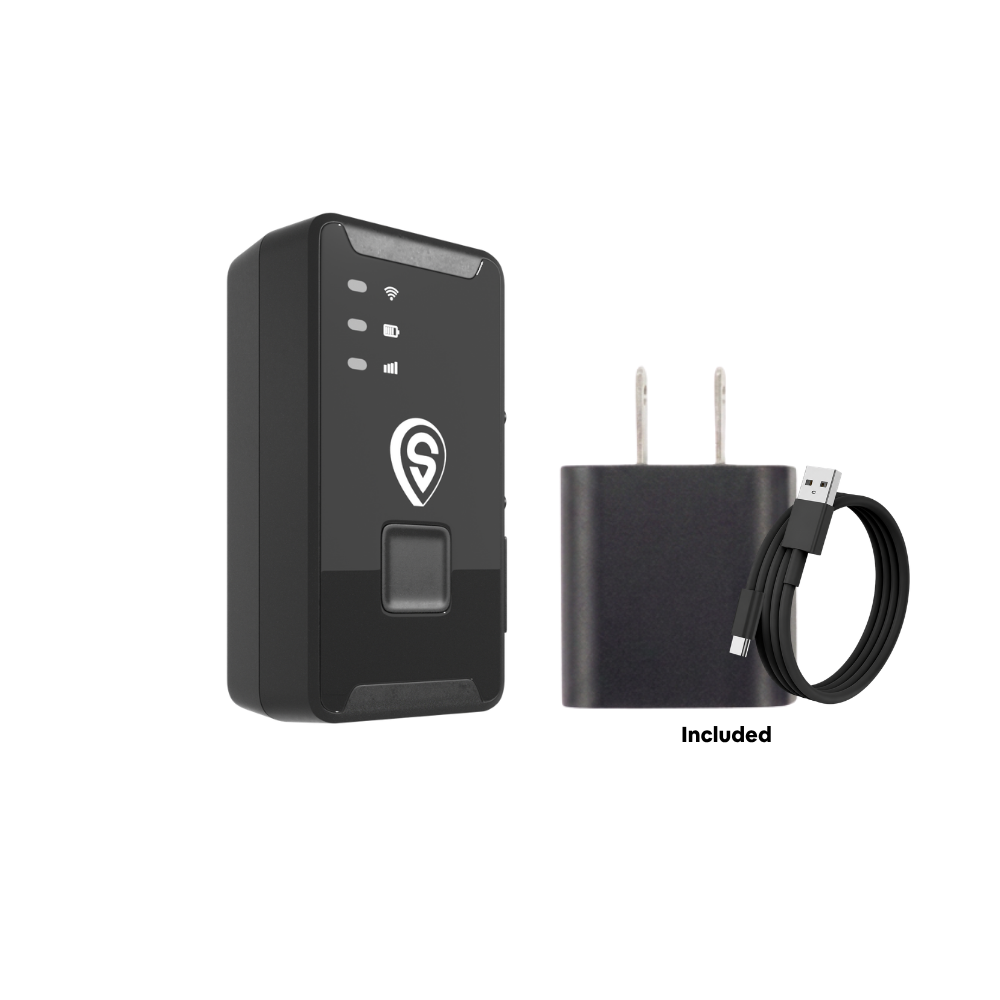
ShadowTrack
- Up to about 15 days per charge, rechargeable
- Weatherproof magnetic case, hides almost anywhere
- Live map, trip timeline, and trip replay in the app


What is a hardwired GPS tracker?
A hardwired GPS tracker connects straight to your car's electrical system, typically three wires: constant power, ground, and ignition. The ignition wire lets it know whether your car is running or parked, and the constant power means it never needs charging.
Most hardwired trackers also carry a small backup battery, so they can keep reporting for a short time if someone cuts the power. Because the tracker can be buried deep behind trim panels, it's hard to find in a hurry.
The trade-off: it's a wiring job
Unless you're comfortable wiring in a car stereo or remote starter, you'll pay a technician to do it, and you'll schedule time without your car. Once it's in, it stays with that one car. Moving it later means another wiring job.
That's why hardwired trackers dominate large commercial fleets, where each truck is tracked for years and a shop wires in hundreds at a time. For one family car, it's often more commitment than the job needs.
Where hardwired still makes sense
- Cars without a usable OBD-II port, or ports already taken by other equipment.
- Heavy equipment and commercial trucks that need extra wired inputs like PTO or door sensors.
- Long-term ownership where you're sure the tracker will never move to another car.
If you're running a fleet and weighing this in more depth, our guide to battery-powered vs hardwired GPS trackers for commercial vehicles goes deeper on the business side.
The option most guides skip: plug-in OBD-II trackers
A plug-in tracker is technically wired, because it draws power from your car. But it uses a port that's already there. You find the OBD-II port under your dash, plug the tracker in, and you're done. No splicing, no technician, no appointment.
You get the best parts of both worlds. Like a hardwired tracker, it's always powered, so there's nothing to charge and it can report constantly. Like a battery tracker, you set it up yourself in under 2 minutes and can unplug it when you sell or return your car.
Not sure where your port is? It's usually within a foot or two of the steering column. Here's how to find your OBD-II port in 30 seconds.
What the port adds beyond location
Because the OBD-II port is your car's diagnostic connection, a plug-in tracker can also read engine codes. When a check engine light pops on in your teen's car, you can see the code on your phone instead of guessing. Plug-in trackers also know when your car starts, which makes Car Alarm and movement alerts more useful.
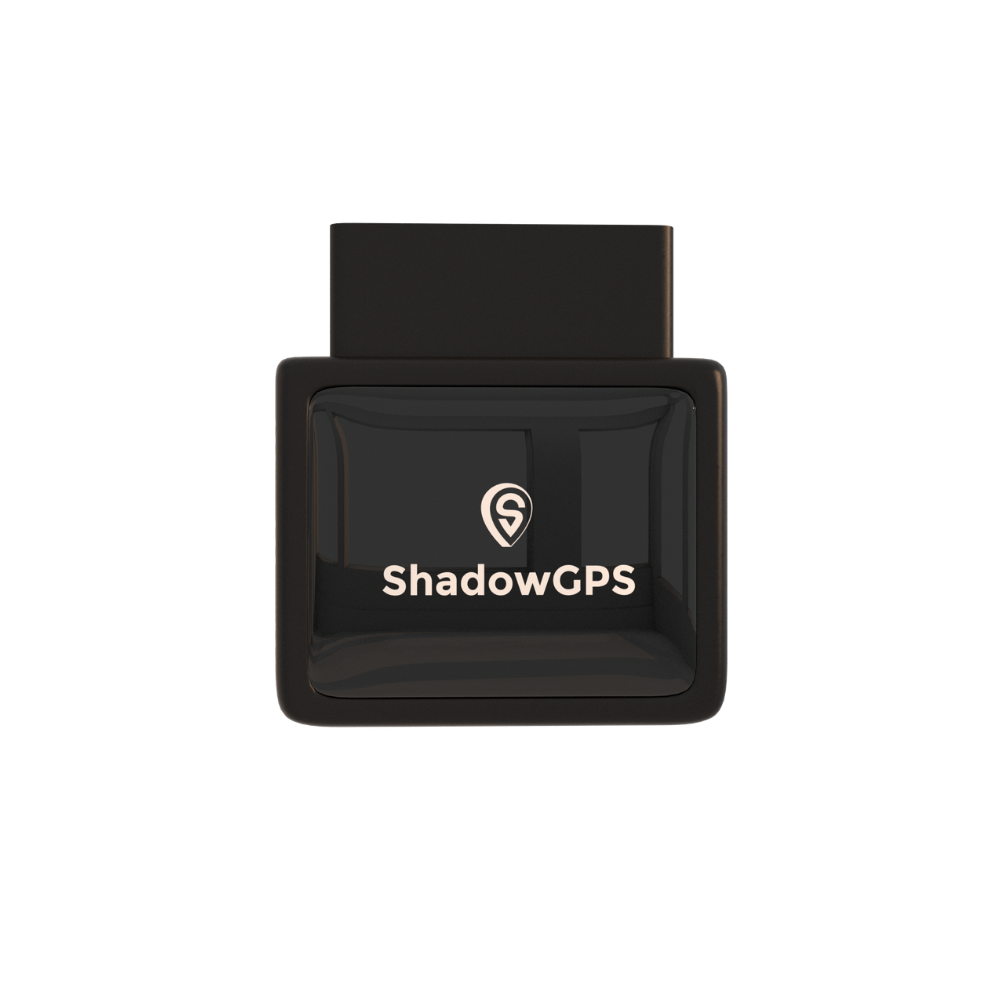
ShadowAuto
- Powered by your car, never needs charging
- Plug it in yourself in under 2 minutes, no tools
- Car Alarm, engine codes, and trip replay
Best for: a daily-driven family car, a teen driver's first car, a Turo rental, or a small group of work trucks.
Wireless vs hardwired vs plug-in: side-by-side

Here's how the three power types compare on the things that actually change your day-to-day experience.
| Factor | Battery (wireless) | Hardwired | Plug-in (OBD-II) |
|---|---|---|---|
| Power source | Own rechargeable battery | Your car's wiring | Your car's OBD-II port |
| Setup | Charge, place, done | Technician, 1 to 3 hours typical | Plug in yourself, under 2 min |
| Charging needed | Yes | No | No |
| Move to another car | Seconds | Another wiring job | Seconds |
| Works without a port or power | Yes | Needs power wires | Needs an OBD-II port |
| Hard for a thief to find | Very, if hidden well | Very | Moderate (port location is known) |
| Engine codes | No | Some models | Yes |
| Touches original wiring | No | Yes | No |
| Safe for leased or rental cars | Yes | Check your lease first | Yes, unplug on return |
| ShadowTrack (battery) | Up to about 15 days per charge | No wiring | Updates every 5 sec while moving |
| ShadowAuto (plug-in) | Car-powered, never charged | No wiring | Updates every 5 sec while moving |
Setup times for hardwired trackers vary by car and shop. Ask for a written quote before booking.
Pros and cons of each type
Wireless GPS tracker pros and cons
The most flexible option, and the only one that works on things with no power to give.
Pros
- Nothing connects to your car, so no risk to wiring or battery
- Hides almost anywhere, with no telltale wires
- Moves between cars, trailers, and equipment
Cons
- You have to remember to charge it
- Long-standby models often report slowly to save battery
- No engine codes or ignition data
Hardwired GPS tracker pros and cons
The most permanent option, built for years in one car.
Pros
- Constant power, nothing to charge
- Can be buried deep behind trim, hard to find fast
- Extra wired inputs for commercial equipment
Cons
- Needs a technician and time without your car
- Splices into original wiring
- Stuck with one car unless you pay to move it
Plug-in OBD-II tracker pros and cons
The simplest always-on option for most daily-driven cars and trucks.
Pros
- Car-powered and never charged
- Plug it in yourself, unplug it when you sell
- Reads engine codes and knows when your car starts
Cons
- Port location is well known, so easier to spot
- Needs an OBD-II port (no help for trailers)
- Can sit in the way of your knees in some cars (an extension cable fixes it)
Which one fits your situation?
Skip the spec sheets. Start with what you're tracking and why.
Teen driver's first car
Plug-in. Always on, nothing to charge, and engine codes tell you when that dash light is serious. See our teen driver guide.
Family car or truck
Plug-in, plus a hidden battery tracker if theft is your main worry.
Turo or rental host
Plug-in for every trip, with a battery tracker tucked away as backup. Our Turo page covers host setups.
2 to 5 work trucks
Plug-in on each truck. You can move trackers between trucks yourself as the lineup changes.
Trailer, boat, or equipment
Battery. No port, no ignition, no problem. Magnet-mount it in a weatherproof case.
Classic or stored car
Battery. Nothing touches original wiring, and nothing draws on a battery that sits for months.
5 questions to decide in under a minute
Answer these in order. The first "yes" that clearly applies usually settles it.
1. Does what you're tracking have an OBD-II port?
If it's a car or light truck built for the US market from 1996 on, it almost certainly does. If it's a trailer, boat, ATV, or equipment, it doesn't. No port points you to battery.
2. Will the tracker stay with one car for years?
If yes, plug-in and hardwired both work. If you might move it, or you plan to sell or return your car, plug-in or battery keeps you flexible.
3. Are you willing to charge it every couple of weeks?
Be honest. If charging is the kind of task you'll forget, pick a car-powered tracker. A dead tracker tells you nothing.
4. Is theft your top concern?
Then think in layers, not in one perfect hiding spot. A plug-in tracker for everyday tracking plus a battery tracker hidden somewhere a thief won't check is more resilient than any single device.
5. Do you need anything beyond location?
If engine codes or knowing exactly when your car starts matter to you, choose plug-in. If you just need to see where an asset is, battery is enough.
What nobody tells you before you buy
These are the questions we hear most from people choosing between tracker types, and the honest answers.
Will a tracker drain my car battery?
A battery-powered tracker can't, because it never touches your car's battery. Plug-in and hardwired trackers do draw a small amount of power, and most drop into a low-power mode when your car is parked.
A healthy battery in a car driven most days handles that easily. If your car sits for weeks at a time, or its battery is already getting weak, a battery-powered tracker is the safer choice for that car. You can read more in our guide on how long GPS tracker batteries last.
Will it void my car's warranty?
Adding an aftermarket accessory doesn't automatically void your warranty. Under the federal Magnuson-Moss Warranty Act, the Federal Trade Commission says a dealer or manufacturer has to show that the aftermarket part actually caused the problem before denying a claim.
Where it gets risky is a sloppy wiring job. If a hardwired tracker is spliced in poorly and damages something, that specific repair can be denied. A plug-in or battery tracker avoids the question entirely, because nothing is cut or spliced.
Leased car? Rental? Track only what you're responsible for.
Many leases restrict permanent modifications, so a hardwired tracker can be a problem at turn-in. A plug-in or battery tracker comes out in seconds. As a rule, it's generally legal to track a car you own, but tracking a car you don't own, or a person without consent, can break state law. Check your state's rules, and see our guide on GPS tracking laws for employee vehicles if you track work trucks.
Can a thief find and pull it?
Any tracker can be found by someone with enough time. The real question is how fast. A plug-in tracker sits where thieves know to look, which is exactly why it helps to pair it with a tamper alert that pings you the moment it's unplugged.
A hardwired tracker buried behind the dash, or a battery tracker hidden in a spot only you know, takes much longer to find. That time is what gives you a chance to act. If you want to see this from the other side, our guide on how to find a tracker on your car shows where people look first.
How fast does each type actually update?
Power source shapes update speed more than most buyers realize. Car-powered trackers can report constantly. Battery trackers have to balance speed against battery life, and many slow down to once every few minutes, or less, to stretch a charge.
Ask any brand one plain question: how often does it update while my car is moving, on the plan I'm buying? If the fast refresh costs extra, factor that in.
Does it need a SIM card?
Every real-time GPS tracker needs a cellular connection to reach your phone, regardless of power type. With most modern trackers, including ShadowGPS, the connection is built in and covered by your plan, so there's no SIM for you to buy or swap. Here's the full SIM card explainer.
The two-tracker setup: why many owners use both
You don't have to choose just one. Commercial fleets have done this for years: car-powered trackers on the trucks, battery trackers on the trailers. The same idea works for one family car.
Use a plug-in tracker for everyday peace of mind: live location, trip history, Car Alarm, and engine codes. Then hide a battery tracker somewhere unexpected as a quiet backup. If someone finds and pulls the first one, the second keeps reporting.
- Everyday layer: ShadowAuto in the OBD-II port, always powered.
- Backup layer: ShadowTrack hidden in a magnetic case, charged every couple of weeks.
- One app: both show up side by side on your phone and on the web.
Car theft is down sharply, but it hasn't gone away. The National Insurance Crime Bureau counted 659,880 vehicles stolen in the US in 2025, about one every 48 seconds. A second layer is a small step toward knowing, not guessing.
Where do AirTags fit in?
Bluetooth tags like AirTag are sometimes lumped in with wireless GPS trackers, but they aren't GPS trackers. They rely on nearby phones to report their location, so updates depend on who happens to walk by, and they can alert the person driving that a tag is traveling with them.
They're great for keys and luggage. For your car, a real GPS tracker with its own cellular connection is the reliable choice. Our breakdown of GPS trackers vs AirTags for cars covers the details.
Frequently asked questions
Is there a monthly fee for a GPS tracker?
Real-time trackers of every power type need a monthly fee, because they use a cellular connection to reach your phone. ShadowGPS plans run $12-$15/mo, or $10-$13/mo per tracker for 4 or more. No contract. Month-to-month, or prepay and save.
Is a wireless or hardwired GPS tracker better for a car?
For a daily-driven car, a plug-in OBD-II tracker usually beats both. It's car-powered like a hardwired tracker, so there's nothing to charge, but you plug it in yourself with no wiring. Choose battery for cars without a port, stored cars, or a hidden backup. Choose hardwired only if you need it permanently wired into one car.
Is an OBD-II tracker considered hardwired?
Not really. Some brands call it "wired" because it draws power from your car, but it uses the existing diagnostic port rather than splicing into wires. You plug it in and unplug it yourself, with no tools and no technician.
Will a plug-in or hardwired tracker drain my car battery?
They draw a small amount of power and most go into a low-power mode when parked. A healthy battery in a regularly driven car handles it fine. If your car sits unused for weeks or has an aging battery, use a battery-powered tracker for that car instead.
Does a hardwired GPS tracker void my warranty?
Not automatically. Under the Magnuson-Moss Warranty Act, a manufacturer must show an aftermarket part caused a problem before denying coverage. A poor wiring job that damages something can still lead to a denied repair, which is one reason many owners prefer plug-in or battery trackers.
How long does a wireless GPS tracker battery last?
It depends on how often it reports. Trackers that check in rarely can last months, while trackers built for live updates last days to weeks. ShadowTrack lasts up to about 15 days per charge while still giving you live tracking when your car moves.
Which type is hardest for a thief to find?
A hardwired tracker buried behind trim or a battery tracker hidden in an unusual spot. Plug-in trackers are easier to spot because the port location is well known, so pair them with tamper alerts or a hidden backup tracker.
Can I move a GPS tracker between cars?
Yes, with battery and plug-in trackers. Unplug or unmount it and move it to your other car in seconds. Hardwired trackers need to be unwired and rewired, which usually means another technician visit.
Do GPS trackers work when my car is turned off?
Yes. Battery trackers run on their own power, and plug-in and hardwired trackers keep drawing a small amount of power while parked. That's what lets movement and Car Alarm alerts reach you when your car is parked overnight.
Is it legal to put a GPS tracker on my own car?
Generally yes in the US, when you own the car. Tracking a car you don't own, or tracking another adult without consent, can violate state law. Rules vary by state, so check yours before tracking a shared or work car.
Plug it in. See it move. Cancel any time.
ShadowAuto for the car you drive every day, ShadowTrack for everything else. No contract, ever, and a 30-day money-back guarantee.
Pricing checked September 2026 and subject to change. See current plans on our pricing page. Some links are affiliate links; we may earn a commission at no extra cost to you. This article is general information, not legal advice.

