

Most people buy their first GPS tracker for one reason: a car, a truck, or a teen driver they want to keep tabs on. Then something else goes missing, a kayak, a generator, a trailer left at a job site, and they realize the same small device could have answered that question too.
A GPS tracker isn't just a car accessory. Once it's plugged in or mounted somewhere, it can answer "where is it right now" for almost anything that moves, sits outside, or leaves your driveway more than you'd like. Below are ten real uses for a GPS tracker beyond your car, plus how to tell a tracker that's actually built for the job from one that only looks the part.
Beyond your car, a GPS tracker earns its keep on anything valuable that isn't always where you left it: boats, RVs, ATVs, trailers, equipment, a second household vehicle, storage-kept classics, and travel gear. The right pick for these depends on power source and connectivity: a battery-powered, weatherproof, cellular tracker like ShadowTrack works anywhere it can reach a cell signal, while a Bluetooth tag like an AirTag only works near someone else's phone.
How We Picked These Uses
Every use case below had to meet three tests: it's something people actually search for and ask ShadowGPS support about, it involves property the owner has every right to track, and a portable GPS tracker is genuinely a better fit for it than a phone-based app.
10 Practical Uses for a GPS Tracker Beyond Your Car

1. Boats and Personal Watercraft
A boat that's stolen from a marina or blown off a mooring during a storm is much harder to recover than a car, since there's no license-plate network watching for it. A magnetic, weatherproof tracker mounted below deck or inside a hatch keeps reporting a location even if the boat is moved miles offshore or trailered somewhere unexpected.
Best for: boat owners who store their vessel at a marina, on a lift, or on a trailer in the off-season. For more on this specific setup, see our guide to boat GPS trackers for staying safe at sea.
2. RVs, Campers, and Travel Trailers
RVs spend a lot of the year parked, at a storage lot, in a driveway, or at a campsite while the owners are off exploring on foot. That combination, expensive and often unattended, makes them a frequent target. A tracker with a long battery life means you're not recharging it every few days just because the RV hasn't moved.
Best for: RV owners who store their rig off-site or leave it parked for extended stretches between trips. Our personal tracking page covers device options for exactly this kind of seasonal, unattended asset.
3. ATVs, UTVs, and Snowmobiles
These get used seasonally, stored in a barn or shed the rest of the year, and hauled to trailheads or trails on a trailer. A hidden tracker inside the frame or under a seat gives you a location if one is taken from a trailhead parking lot or a storage unit, without adding any bulk or needing a battery upgrade to run it.
Best for: off-road and winter-sport owners who transport their equipment and store it away from home. If you're weighing a similar setup for a motorcycle, see why GPS tracking is essential for motorcycle security.
4. Utility, Cargo, and Equipment Trailers
Trailers rarely have their own ignition, VIN registration, or theft-recovery system, which makes them one of the easiest things to hitch up and drive away. A magnetic tracker mounted to the frame turns an otherwise untraceable trailer into something you can locate the same way you'd locate a car.
Best for: anyone who owns a cargo, utility, horse, or equipment trailer that sits unattended between uses. See how the same approach protects small businesses from thousands in lost assets.
5. Landscaping, Construction, and Rental Equipment
Mowers, generators, pressure washers, and small rental equipment move between job sites, get loaned to a crew member, or sit on a trailer overnight. A tracker doesn't just help you recover a stolen mower, it also answers the simpler, more common question: who has the pressure washer right now, and where's the trailer supposed to be. Movement history removes the guesswork and the finger-pointing.
Best for: landscaping crews, small contractors, and anyone renting out equipment they don't want to chase down. Our landscaping GPS tracking page and guide to GPS tracking for construction equipment and heavy machinery cover this in more depth.
6. Turo and Rental Cars Between Bookings
Turo hosts already know the value of tracking a car while it's out on a trip. A tracker keeps earning its place between bookings too: parked at an airport lot, dropped at a detail shop, or sitting at a partner's storage location while it's not listed. If the car changes hands more than once a month, that gap between rentals is exactly when a tracker's peace of mind matters most.
Best for: Turo and peer-to-peer rental hosts managing a car's whereabouts outside of active trips. See the best GPS tracker for Turo hosts for a closer look at this exact use case.
7. Classic Cars and Seasonal Vehicles in Storage
A vehicle that only comes out a few weekends a year and spends the rest of its life in a garage or storage facility is a prime target precisely because nobody's checking on it daily. A tracker that sips battery over long idle stretches, or one wired into the vehicle's own power, means you'll know the second it moves, even if you haven't opened that garage door in weeks.
Best for: classic car owners and anyone storing a seasonal vehicle off-site or in a shared facility. Our guide on protecting a classic car investment with GPS tracking walks through the specifics.
8. A Second Vehicle or a Teen Driver's Car
Households with more than one car often only think to track the one that gets driven daily. The second car, the one a teen driver takes to school and practice, or the one that sits in the driveway for a commuting spouse, deserves the same visibility. Plugging a tracker into that car answers the same questions parents already ask about a primary vehicle: did it arrive where it was supposed to, and is it still there.
Best for: multi-car households, especially with a newly licensed teen driver. See our guide for parents on what to know before handing over the keys.
9. Luggage and High-Value Travel Gear
A tracker slipped into a checked bag, a hard camera case, or a golf travel bag answers a very specific kind of anxiety: did it actually make the connecting flight, and is it on the right carousel. This matters most on international trips or multi-leg itineraries where a bag has more chances to get separated from you, and a cellular tracker keeps reporting even in an unfamiliar country's baggage system, not just near other travelers' phones.
Best for: frequent flyers, photographers, and anyone checking gear they can't afford to have vanish. Our guide for solo travelers covers personal-safety tracking for the trip itself.
10. Shared Equipment Among Neighbors or Crews
Anything that gets passed around, a wood chipper, a generator, a trailer several people share, tends to develop a "who had it last" problem. A tracker with movement history settles that instantly: open the app, see where it is and where it's been, and move on with your day. It's not about accusing anyone, it's about removing the guesswork that costs everyone time.
Best for: shared ownership situations, work crews, and neighbors who split the cost of expensive equipment. If trust with a crew is the concern, see how to introduce GPS trackers to a crew without losing their trust.
Cellular GPS Tracker vs. Bluetooth Tags (AirTag, Tile, SmartTag): Which Fits These Uses
Before picking a tracker for any of the uses above, it helps to understand the one distinction that matters most: how the tracker actually reports its location.
Bluetooth tags like the Apple AirTag, Tile, and Samsung SmartTag are inexpensive and require no monthly fee, but they don't have their own connection to a cell network. They rely on other people's phones passing nearby to relay a location, which works well in a city and poorly in a marina, a storage lot, a rural trailhead, or the cargo hold of a plane. A cellular tracker like ShadowTrack has its own connection, so it reports a location on its own, in places a Bluetooth network never reaches.
| Tracker | Connectivity | Works Without Nearby Phones | Monthly Fee | Weatherproof |
|---|---|---|---|---|
| ShadowGPS ShadowTrack | Cellular, updates every 5 sec while moving | Yes | $12–$15 | Yes, magnetic mount |
| Apple AirTag | Bluetooth (Find My network) | No | None | No |
| Tile | Bluetooth (Tile network) | No | None, or paid app tier | No |
| Samsung SmartTag | Bluetooth (SmartThings Find network) | No | None | No |
| SPOT Trace | Satellite | Yes | Requires an active service plan | Yes |
| LandAirSea Portable | Cellular, tiered refresh rates | Yes | Varies by plan, check current pricing | Yes |
A Bluetooth tag is a fine, low-cost backup for something that mostly stays near people, like luggage on a busy connecting flight. For anything that sits alone outdoors, offshore, off-grid, or away from foot traffic, a cellular tracker with its own connection is the one that will actually answer "where is it" when you need it to.
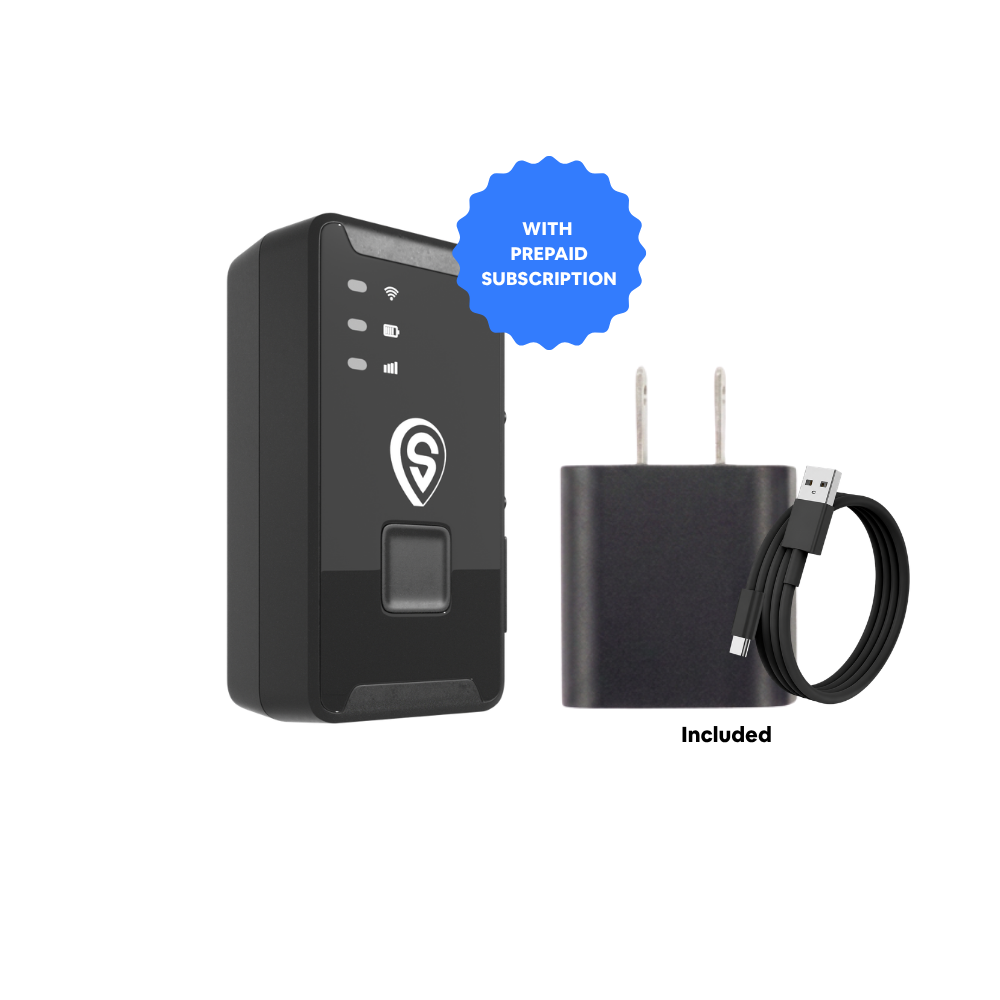
ShadowTrack
- Updates every 5 seconds while moving
- Weatherproof, magnetic mount, goes almost anywhere
- Up to ~15 days per charge


What to Look For in a GPS Tracker for Non-Vehicle Uses
Battery life
Anything that sits idle for weeks, a boat, a classic car, a stored trailer, needs a tracker built to last between charges, not one meant for daily driving.
Weatherproofing
Marinas, trailheads, and job sites expose a tracker to rain, dust, and temperature swings that a car's interior never sees.
Mounting method
A strong magnetic mount means you can move a single tracker between a boat, a trailer, and a piece of equipment as the season changes.
Frequently Asked Questions
Can I use a car GPS tracker on a boat, trailer, or piece of equipment?
Yes, as long as the tracker is battery-powered rather than one that plugs into a vehicle's OBD-II port. A magnetic, weatherproof tracker like ShadowTrack is built to mount on a boat hull, a trailer frame, or equipment without needing any wiring.
Does a GPS tracker work without a nearby phone or Wi-Fi?
A cellular GPS tracker reports its own location using its built-in cell connection, so it works anywhere there's cell coverage, whether or not another phone is nearby. Bluetooth tags like AirTag or Tile need a stranger's phone to pass close by to relay a location, which is why they struggle in marinas, storage lots, and rural areas.
Is an Apple AirTag good enough to track a trailer or boat?
An AirTag can work as a low-cost backup, but it depends entirely on another Apple device passing within Bluetooth range to update its location. In a marina, a rural storage lot, or offshore, that update can be delayed for hours or simply not happen, which is the main gap a cellular tracker closes.
How long does a portable GPS tracker's battery last?
ShadowTrack runs roughly 15 days on a single charge under normal use. Battery life on any tracker drops the more frequently it reports its location, so a tracker sitting on a stored boat or classic car will last longer between charges than one on a vehicle driven daily.
Can I move one GPS tracker between different items or vehicles?
Yes. A magnetic, battery-powered tracker like ShadowTrack is designed to move between a boat, a trailer, luggage, or seasonal equipment. Just rename the tracker in the app each time you move it so the location history stays easy to follow.
Is it legal to put a GPS tracker on my own boat, trailer, or equipment?
Tracking property you own outright is broadly legal in the United States. Questions get more complicated when the item is jointly owned, leased, or belongs to someone else, in which case it's worth checking your state's specific rules before placing a tracker on it.
Know where it is. Every 5 seconds.
Plug it in, see it move, cancel any time. No contract, ever.
This guide reflects pricing, specifications, and product availability published as of September 2026. Subscription pricing and features are subject to change by each manufacturer.

