

Two vans, a work truck, and a trailer that is never where the schedule says. Most owners do not start shopping for gps fleet tracking because they want dashboards. They start because they are tired of calling around to find where their own trucks went.
GPS fleet tracking closes that gap. A tracker rides in each of your fleet vehicles, and your phone shows where every one of them is right now, not twenty minutes ago. Fleet tracking is far simpler than the enterprise sales pages make it look.
This guide covers how gps fleet tracking works, the gps fleet tracking features worth paying for, what fleet tracking costs in 2026, the legal ground rules, and the fleet tracking solutions built for 2 to 20 vehicles instead of 200.
GPS fleet tracking is a system that reports the live location, speed, and trip history of every vehicle you own to one map on your phone. For a small vehicle fleet, the strongest fleet tracking setup in 2026 is a plug-in ShadowAuto for cars and light trucks, or a battery-powered ShadowTrack for trailers and equipment. Both update every 5 seconds while moving, run $12 to $15 a month, and carry no contract, ever.
What is GPS fleet tracking?
GPS fleet tracking is a technology that uses the global positioning system to monitor the real time location, speed, and route history of a vehicle fleet. A gps tracking device in each vehicle reads its position from satellites and sends it over cellular networks to your account.
That is what fleet tracking means in practice: dots on a map you own, updated fast enough to act on. The gps fleet tracking features above that, from vehicle maintenance to driver behavior alerts, all sit on one stream of real time location data.
How does gps fleet tracking work?
Four things happen, and gps fleet tracking finishes them in seconds.
- The tracking device gets a fix. Satellites give the fleet gps tracker its position, anywhere, in any weather.
- It reads the trip. Speed, stops, idle time, and on plug-in models, engine performance and fault codes.
- It sends the data. Cellular networks carry it to your account, which is why a fleet tracker needs a cellular plan.
- You see it on a map. Live vehicle location lands on a Google Maps style view, with trip timeline and replay behind it.
What a gps fleet tracking system shows you day to day
- Live mapping of your entire fleet on one screen.
- Trip timeline and trip replay, so a disputed arrival time ends with a timestamp.
- Geofences that alert you when a truck or asset leaves a yard or site.
- Driver behavior alerts for speeding, harsh braking, and rapid acceleration.
- Maintenance alerts tied to mileage and engine diagnostics, so vehicle maintenance beats a breakdown.
Fleet managers at big carriers call this real time tracking. At 2 to 20 vehicles you are the fleet manager, and the loop takes four minutes on mobile devices.
The 5 pillars of fleet management
Fleet managers organize the work around five pillars, and gps fleet tracking touches every one.
- Acquisition and lifecycle. Utilization shows which fleet vehicles earn their keep.
- Maintenance and repairs. Engine hours and fault codes drive the service schedule.
- Fuel management. Cut idle time and optimize routes: efficient routes reduce fuel costs without touching payroll.
- Driver management. Monitor driving behavior with facts, then coach.
- Compliance. Written policy, disclosure, clean records for insurers.
Fleet managers at enterprise scale need a fleet management platform with 400 modules. For owner-operators, one gps fleet tracking solution plus a spreadsheet is the entire fleet management system.
GPS fleet tracking features that actually matter
These are the gps fleet tracking features that earn their keep, the ones that make real time tracking real. Judge the gps tracking software on how fast the map moves, because good gps fleet tracking software wins on speed, not feature count.
Refresh rate: the fleet tracking spec that matters most
The spec people skip and then regret. A tracking device reporting every 3 minutes cannot catch a truck leaving the yard at 2am. ShadowGPS trackers update every 5 seconds while moving, standard on every plan.
Geofence and unauthorized use alerts
Geofences catch unauthorized vehicle use before it becomes a payroll conversation. Draw a shape around the yard, get an alert when anything crosses it.
Trip replay and automated reports
Replay reconstructs a day route by route, and automated reports turn it into proof of service when a customer disputes an invoice.
Driver behavior monitoring
Speeding, harsh braking, and rapid acceleration predict crashes and repair bills. Improve driver safety by sharing the gps tracking data with your crew rather than hiding it.
Vehicle health and engine diagnostics
Plug-in gps tracking devices read the same fault codes your mechanic does. Catching a check engine code from your phone is the difference between a scheduled fix and a tow.
Top GPS fleet tracking solutions for small fleets
These are the fleet tracking devices we build, matched to the job each does best. Both are vehicle tracking devices you set up yourself, no tools, and both carry the same gps fleet tracking features.
1. ShadowAuto: plug-in gps fleet tracking with diagnostics
ShadowAuto plugs into the OBD-II port on any 1996-or-newer car or light truck. It draws power from your truck, so nobody has to charge anything, and it reports vehicle location the moment the ignition turns.
That port also feeds it engine performance and fault codes, the better pick when vehicle maintenance is half your headache.
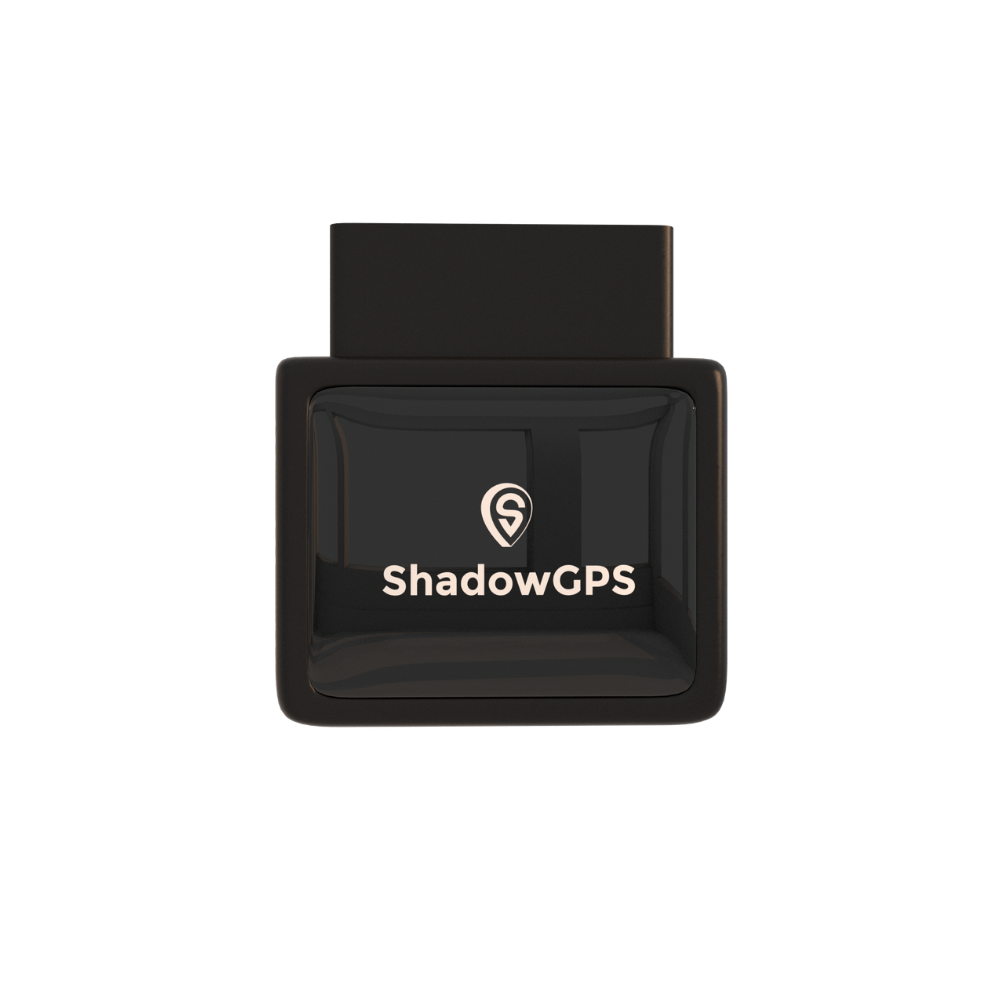
ShadowAuto
- Updates every 5 seconds while moving
- Trip timeline & trip replay
- Car Alarm & vehicle diagnostics


Pros
- Plug it in, under 2 minutes, no tools
- Never needs charging
- Engine codes and Car Alarm included
Cons
- Needs an OBD-II port, so 1996 and newer only
- Sits under the dash, so it is findable
- No use on trailers or equipment
2. ShadowTrack: portable fleet vehicle tracking anywhere
Not every asset has an OBD-II port. Trailers, generators, and construction equipment still walk off job sites. That is the gap ShadowTrack fills.
It is battery powered, magnet mounted, and weatherproof, so you can hide it and get about 15 days per charge. Most owners mix both gps tracking devices: ShadowAuto in the trucks, ShadowTrack for asset tracking on everything towed.
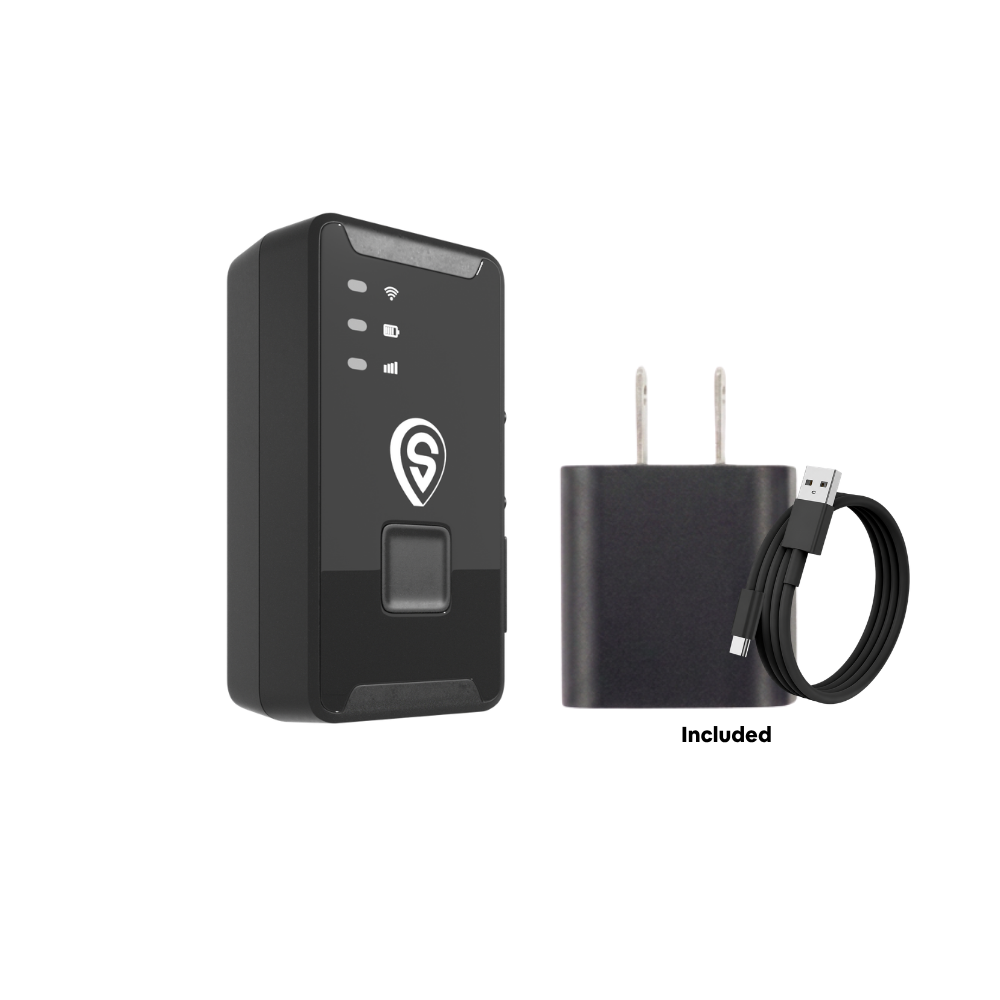
ShadowTrack
- Updates every 5 seconds while moving
- Weatherproof, magnetic mount
- Up to ~15 days per charge
Pros
- Works on trailers, equipment, and older trucks
- Hides where a thief will not check
- Moves between assets in seconds
Cons
- Needs a recharge roughly every 15 days
- No engine diagnostics or fault codes
- Placement matters for signal
3. Magnetic Mount Case: keep a tracker put
If a ShadowTrack rides on a trailer frame, this snap-on case keeps it there through weather and gravel roads.
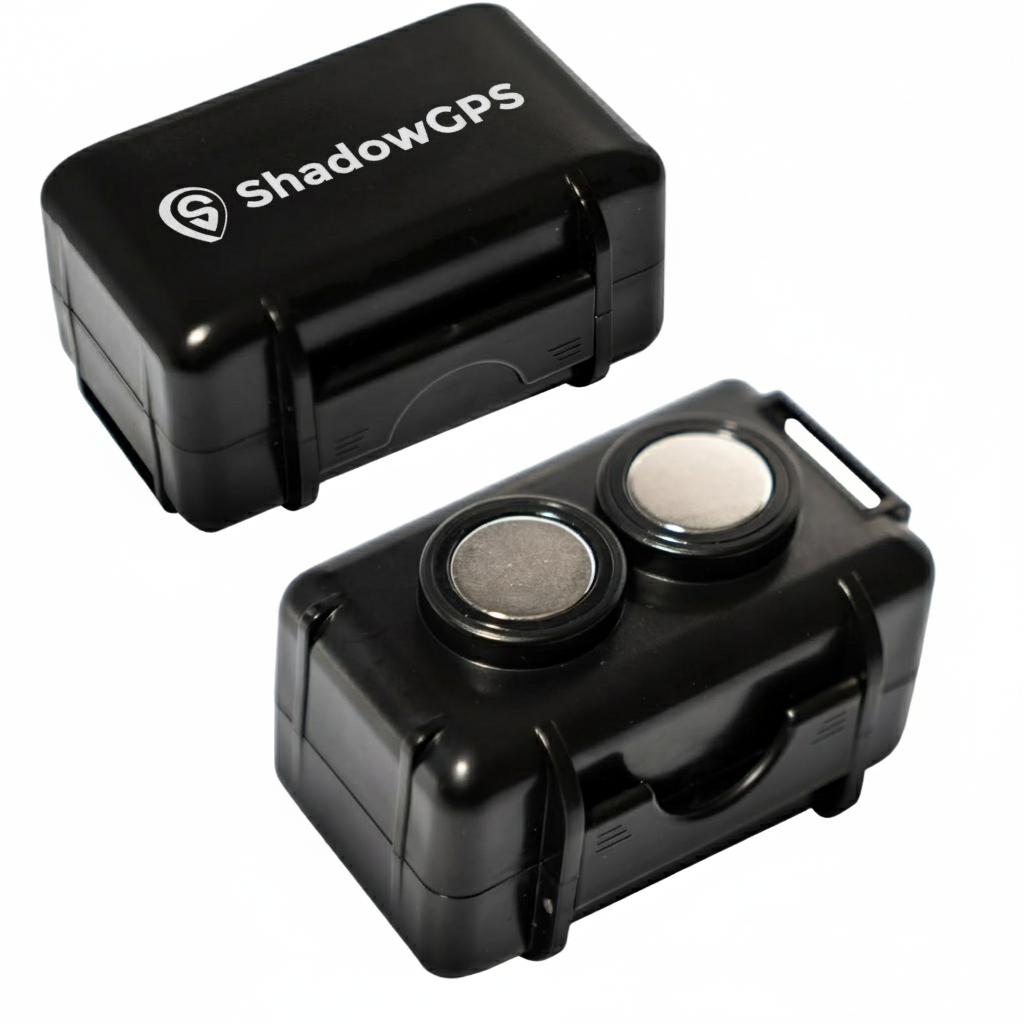
Magnetic Mount Weatherproof GPS Case & Key Holder
- Neodymium magnet mount
- Weatherproof housing
GPS fleet tracking comparison: what you pay for
Refresh rate and contract terms are where fleet tracking services differ most, and where fleet managers should start on any fleet tracking system. Here is how the main gps fleet tracking solutions line up in 2026.
| Option | Best for | Refresh rate | Monthly plan | Contract |
|---|---|---|---|---|
| ShadowAuto | Cars, vans, light trucks | 5 sec while moving | Plans $10-$13/mo (4+ trackers) or $12-$15/mo · No contract, ever. | None, ever |
| ShadowTrack | Trailers, equipment, mixed fleets | 5 sec while moving | Plans $10-$13/mo (4+ trackers) or $12-$15/mo · No contract, ever. | None, ever |
| Bouncie | OBD-only, budget first | 15 sec | $9.00–$9.65/mo | None |
| Spytec | Small fleets wanting add-ons | 60 sec, 5 sec on top tier | $25–$45/mo | None |
| LandAirSea | Long prepay commitments | 3 min to 3 sec by tier | $9.95–$49.95/mo | 2 years for best rate |
| Enterprise fleet management software | 50+ vehicles with ELD needs | Varies by plan | $20–$45+/vehicle | Often 1 to 3 years |
How much does fleet tracking cost?
Fleet tracking software is billed per vehicle per month; the tracker is a one-time cost. Most gps fleet tracking software runs $10 to $50 per vehicle monthly in 2026, and enterprise fleet management software passes $80 with video and compliance modules. Hardware runs about $70 for a plug-in tracking device, several hundred for hardwired gear.
ShadowGPS is $12 to $15 a month per tracker, device $69.90. There is a 14-day free trial and no contract, ever. Month to month, or prepay and save. Our small fleet gps tracking cost guide runs the two-year math.
The question everyone asks first
Is there a monthly fee? Yes. Every tracking device doing real time gps tracking needs a cellular plan, so any honest fleet tracking provider charges one. What matters is what comes attached: with ShadowGPS, no contract, no cancellation fee, no hidden line item. Cancel any time.
Is fleet tracking legal?
Yes, with conditions. Fleet tracking on vehicles your business owns is legal in all 50 states. The rules tighten around vehicles you do not own, and around how fleet managers tell the crew.
- What you can do. Track any car, truck, trailer, or equipment titled to you or your business.
- What you cannot do. Put a tracker on an employee's personal car, or any vehicle you do not own, without written permission.
- Disclose it in writing. California, New York, Connecticut, and Delaware require written notice before gps tracking begins. It is the right default everywhere.
- Off-duty tracking is the trap. If a truck goes home with a driver, say in the policy what is tracked and when. Our employee vehicle tracking law guide has the detail.
How to track a fleet of vehicles in one afternoon
1. Match the tracker to the asset
OBD-II port present, use ShadowAuto. No port, or it gets towed, use ShadowTrack. Mixed fleet, run both on one login for your entire fleet.
2. Plug it in
Find the OBD-II port under the dash and plug it in, under two minutes. Battery models need a clean magnetic surface.
3. Set two geofences first
Your yard and your busiest job site. Those two catch most after-hours movement.
4. Tell your crew, in writing
The fleet managers who keep trust explain why: proof of service, faster dispatch, fleet safety, backup on a disputed arrival time. Fleet tracking should simplify operations, not add a second job.
Who gps fleet tracking is really for
Service businesses
Plumbers, landscapers, and pest control crews with 2 to 10 trucks, where fleet operations live or die on dispatch knowing who is closest.
Contractors with equipment
Skid steers, trailers, and generators left on site overnight, where asset tracking is theft protection first.
Owner-operators and Turo hosts
One truck or a few rentals, where vehicle tracking is simply knowing where your property is right now.
Weighing fleet tracking solutions at that size? Our guide to fleet gps tracking with 3 to 10 vehicles goes deeper on fit.
Fleet tracking FAQ
Is there a monthly fee for gps fleet tracking?
Yes. A tracker needs a cellular plan to report in real time, so every fleet tracking provider charges monthly. ShadowGPS plans are $12 to $15 a month per tracker, with a 14-day free trial and no contract, ever.
Does a fleet tracking device need a SIM card?
It needs cellular service, but you never buy or fit a SIM. ShadowGPS trackers ship ready to report on multi-carrier LTE-M coverage. Full detail in does your GPS tracker need a SIM card.
How much does a fleet GPS tracker cost?
Hardware runs $70 to $500 per vehicle, and monthly fleet tracking services run $10 to $50 per vehicle. ShadowGPS trackers are $69.90, with plans at $12 to $15 a month.
What is the best fleet tracking system for a small fleet?
For 2 to 20 vehicles, the best gps fleet tracking system has the gps fleet tracking features that matter most: fast refresh, no contract, setup you finish yourself. Enterprise fleet management software is built for fleet managers running 50+ vehicles, and prices accordingly.
How can I track my fleet in real time?
Put a gps tracking device in each vehicle, add them to one account, open the live map on your phone. With a 5-second refresh, real time gps tracking means watching a truck move rather than replaying where it was.
What does fleet tracking mean?
Fleet tracking means using gps trackers to monitor the location, routes, and activity of vehicles a business owns, from one gps fleet tracking system instead of a phone tree.
Which gps fleet tracking features matter most?
For a small fleet: fast refresh, geofence alerts, trip replay, and diagnostics. Those four gps fleet tracking features cover theft, disputes, driver safety, and maintenance. Plan on one vehicle tracker per asset.
Will gps tracking help me reduce fuel costs?
It gives you the data to. Idle time, detours, and speeding show up plainly, and owners who optimize routes cut fuel costs without cutting jobs. Fuel consumption is a habit problem before it is a gps technology problem.
What happens to my data if I cancel?
Cancel any time, and the tracker is yours. Export any trip history you want before the billing period ends. There is a 30-day money-back guarantee on the hardware.
Know where every truck is, five seconds from now.
Plug it in, see it move, cancel any time. No contract, ever.
Pricing and specs current as of August 2026 and subject to change; confirm current pricing and battery specifications on the product page before purchase. Competitor pricing and refresh rates reflect publicly listed 2026 figures and vary by plan. Amazon links are affiliate links; ShadowGPS may earn a commission at no extra cost to you. Insurance discounts and savings vary by carrier and are not guaranteed. Legal guidance is general information, not legal advice; confirm the tracking laws in your state.

