

If you want to know where your car is right now, you need active GPS tracking. If you only need a record of where it went, a passive GPS tracker can do the job. That one difference, now versus later, decides almost everything else: the monthly fee, the battery life, and whether a tracker can actually help you get a stolen car back.
Most guides on active vs passive GPS tracking are written for warehouse managers and 500-truck fleets. This one is written for you: the parent handing a teenager the keys, the Turo host with a couple of cars on the platform, or the owner of a work truck and a trailer. We'll cover how each type works, what it really costs, where the labels get confusing, and how to choose in about two minutes.
Active GPS tracking sends your tracker's location over a cellular (or satellite) network as it moves, so you can watch it live on your phone and get instant alerts. Passive GPS tracking saves location to the device's own memory, and you only see the trip after you retrieve the tracker and download the data. Active usually has a monthly fee. Passive usually doesn't, but it can't warn you about anything or show you where your car is today.

What Is Active GPS Tracking?
Active GPS tracking, also called real-time GPS tracking or live tracking, means the tracker works out its position from GPS satellites and then immediately sends that position over a wireless network to a server. You open an app or a web dashboard and see a live dot moving on the map.
Because the data leaves the device right away, an active GPS tracker can do things a passive one never can. It can push alerts to your phone, watch a geofence, let you share a live location link, and show where your car or truck is while it's still moving.
How an active tracker works, step by step
- Get a fix. The GPS receiver locks onto at least four satellites and calculates latitude, longitude, speed and heading.
- Package it. A built-in cellular modem (today usually LTE-M or LTE Cat-1) wraps that position into a tiny data message.
- Send it. The message travels over a carrier network to the tracking company's cloud servers.
- Show it. Your app moves the dot, checks the update against your alert rules, and saves it to your trip history.
That loop takes seconds. How often it repeats is called the update interval or refresh rate, and it varies a lot. Some trackers report every few seconds while moving, others once a minute, and budget plans can stretch to every few minutes.
Types of active GPS trackers
Plug-in OBD-II trackers
These plug straight into the OBD-II port under your dashboard, which nearly every car and light truck sold in the US since 1996 has. They run on your car's power, so there's nothing to charge. Not sure where your port is? Here's how to find your OBD2 port in 30 seconds.
Battery-powered portable trackers
A rechargeable tracker you can drop in a glovebox, stick to a frame with a magnet, or tuck into a trailer. Great for anything without an OBD-II port, like trailers, boats, equipment and motorcycles. The trade-off is charging every week or two, depending on how often it moves.
Hardwired trackers
Wired directly into your car's electrical system. They're tucked out of sight and always powered, but they take real wiring work and aren't easy to move to another car.
Satellite trackers
Devices like the SPOT Trace send location over satellite networks instead of cell towers. They're useful for truly remote property, but most update far less often than cellular trackers.
What Is Passive GPS Tracking?
Passive GPS tracking uses the same satellites but skips the sending step. The device, usually called a GPS data logger, writes each position to internal memory or a microSD card and keeps it there.
To see where your car went, you physically retrieve the logger, connect it to a computer by USB (or pop out the memory card), and load the file into mapping software. You get a detailed breadcrumb trail of routes, stops and speeds, but only after the fact.
How a passive GPS logger works
- The logger wakes up when it senses motion and gets a satellite fix.
- It saves a position point every few seconds or minutes, depending on its settings.
- When your car stops moving, it goes back to sleep to save battery.
- Later, you collect it and download days or weeks of saved trips in one go.
Where passive tracking still makes sense
- Mileage and tax logs: if all you need is a record of business miles, a logger (or even a phone app) covers it.
- A work van that's home every night: if you can grab the device weekly, reviewing routes after the fact may be enough.
- Places with no cell coverage at all: a remote ranch road or backcountry property where an active cellular tracker would have nothing to connect to.
- One-time checks: a single road trip, a track day, or checking how a borrowed car was driven.
Notice what's missing from that list: anything where you'd want to act the moment something changes. That's the line between the two.
Active vs Passive GPS Tracker: Side-by-Side Comparison
Here's how the two tracking types compare on the things owners actually ask us about. We've also included Bluetooth tags, because a lot of people shopping for a "passive tracker" are really looking at one.
| Type | How it reports | Live location? | Instant alerts | Stolen car help | Monthly fee | Power | Needs cell service |
|---|---|---|---|---|---|---|---|
| Passive GPS logger | Saves to memory, you download later | No | No | Only after you get the device back | Usually none | Battery, weeks to months | No |
| Bluetooth tag (e.g. AirTag) | Pings nearby phones in a crowd network | Only when a phone passes nearby | Limited | Hit or miss | None | Coin cell, about a year | No (needs nearby phones) |
| Typical active tracker | Uploads over cellular | Yes, often every 15 sec to 5 min | Yes | Yes, while it's happening | Roughly $10 to $25/mo | Car power or battery | Yes (many buffer in dead zones) |
| ShadowAuto / ShadowTrack | Uploads over multi-carrier LTE-M | Yes, updates within seconds while moving | Yes: geofence, movement, Car Alarm | Yes: live location plus Share Location | $12 to $15/mo, no contract | ShadowAuto: car power. ShadowTrack: about 15 days per charge | Yes |
Typical ranges reflect common consumer plans as of September 2026 and vary by brand, plan and settings.
Pros and Cons of Each Tracking Type
Active GPS tracking
Pros
- See your car or truck live, from anywhere
- Instant alerts for movement, geofences and speed
- Useful during a theft, not just after it
- Trip history saves to the cloud automatically
- Share a live location with family or police
Cons
- Monthly fee for the cellular connection and app
- Needs cell coverage to report live
- Battery models need regular charging
Passive GPS tracking
Pros
- Usually no monthly fee
- Long battery life, often weeks or months
- Works with zero cell coverage
- Detailed route history for later review
Cons
- No live location, ever
- No alerts, so you find out after the fact
- You must physically retrieve the device
- If the car disappears, the data goes with it
Why "Now vs Later" Matters Most When a Car Goes Missing
Car theft is down, but it hasn't gone away. According to the National Insurance Crime Bureau, 659,880 vehicles were reported stolen in the US in 2025, which still works out to roughly one every 48 seconds.
Here's the hard truth about passive trackers in that situation: the logger rides along with your car. Its data only becomes readable once you have your car back, and at that point you already know where it is.
An active tracker flips that. You can see where your car is while it's still moving, give that location to police, and let them handle the recovery. Never try to recover a stolen car yourself. Our guide to immediate recovery steps for a stolen vehicle walks through exactly what to do.
The same logic applies to everyday worries. A passive log can tell you your teen took the long way home last Tuesday. Only an active tracker can tell you they arrived safely tonight.
The "Passive" Label Trap: 3 Things People Mix Up
This is where most active vs passive GPS tracking articles stop short. The word "passive" gets used for several different things, and mixing them up leads to buying the wrong tracker.
1. Bluetooth tags aren't passive GPS trackers (they aren't GPS at all)
An Apple AirTag, Tile or Galaxy SmartTag has no GPS receiver and no cellular modem. It broadcasts a Bluetooth signal, and its location only updates when someone's phone happens to pass within range.
That can work in a busy parking garage and fail completely on a quiet street at 2 a.m. We cover this in detail in GPS tracker vs Apple AirTag: why AirTags fail for cars.
2. Active vs passive GPS antennas are a different topic
If you've seen "active antenna" on a dash cam or marine GPS listing, that's about hardware, not tracking. An active antenna has a small built-in amplifier to boost weak satellite signals. A passive antenna doesn't. Either kind can appear inside an active tracker or a passive logger.
3. Sleep mode and "store and forward" blur the line
Many active trackers slow down or pause reporting when your car is parked, to save battery and data. Many also save positions while you drive through a dead zone and upload the backlog once signal returns. That's normal, and it means a good active tracker behaves "passively" only for as long as it has to.
One more thing to check if you own an older active tracker: US carriers shut down their 3G networks, and many trackers that depended on 3G stopped reporting entirely. The FCC's 3G phase-out guide explains why. Any tracker you buy today should run on LTE or LTE-M.
Which One Fits You? Real-World Scenarios
The fastest way to choose is to picture the moment you'd actually open the app. Here's how that plays out for the people we hear from most.
The parent of a teen driver
You want to know they got to practice and back, how fast they drove on the highway, and where the car is if they don't answer their phone. That's all live information. Pick: active, plug-in OBD-II.
The Turo host
Between trips you need to see where your cars are, get an alert if one leaves an agreed area, and have trip history if a guest disputes mileage. Pick: active, one plug-in tracker per car.
The trailer, boat or equipment owner
No OBD-II port, often parked for weeks. You mostly want to know it hasn't moved, and to hear about it fast if it does. Pick: active, battery-powered with a magnet mount.
Running 2 to 5 vehicles? Passive logging quickly turns into a weekly chore of collecting devices and downloading files, and you still can't answer "where's the van right now?" when a customer calls. Active tracking on every vehicle, in one app, is simpler. If you're weighing options, see how to choose fleet GPS tracking for 3 to 10 vehicles.
Just logging miles for taxes? Honestly, a passive logger or a mileage app on your phone is enough. You don't need to pay for live tracking you'll never look at.
What Each Type Really Costs Over Three Years
Price shouldn't be the deciding factor, but it's fair to see the full picture. Here's a rough three-year view for one car.
| Option | Device | Ongoing service | Rough 3-year total | What you get |
|---|---|---|---|---|
| Passive GPS logger | One-time purchase | None | The device cost | A trip history you download yourself |
| Typical active tracker | Varies, some free with a plan | Roughly $10 to $25/mo, best rates often need a 1 to 2 year commitment | About $360 to $900 in service | Live location and alerts, speed depends on plan |
| ShadowAuto or ShadowTrack | $69.90 | $12 to $15/mo, no contract | About $500 to $610 | Live tracking, alerts, trip replay, cancel any time |
So yes, active tracking costs more. What the monthly fee buys is the one thing a logger can't give you: knowing where your car is at the moment you need to. There's no contract with ShadowGPS. Month-to-month, or prepay and save. And if a seasonal need ends, you can cancel.
Where ShadowGPS Fits: Active Tracking, Made Simple
ShadowAuto and ShadowTrack
If you've decided you need to know where your car is right now, not later, this is what we build. Both ShadowGPS trackers update every 5 seconds while moving, so the dot on your map reflects where your car really is, not where it was a few minutes ago.
They're also simple. ShadowAuto plugs into your OBD-II port in under 2 minutes with no tools and no wiring. You open the app, and you can see your car, replay trips, set a geofence, turn on Car Alarm, and share a live location link with family. That's the whole point: certainty about the car or truck that matters to you.
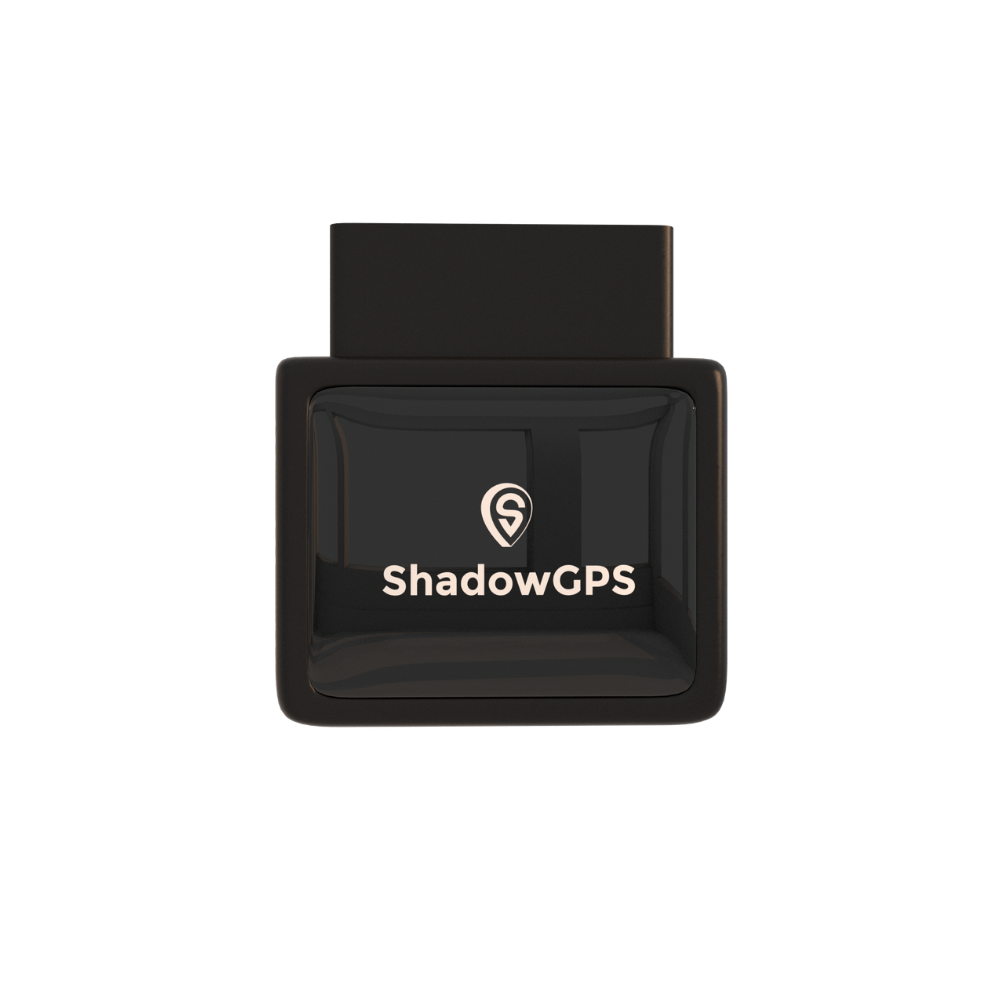
ShadowAuto
- Plug it in, under 2 minutes, no tools
- Live tracking, trip timeline and trip replay
- Car Alarm plus engine code alerts


Tracking something without an OBD-II port, like a trailer, boat, ATV or piece of equipment? ShadowTrack is the battery-powered version, with the same live tracking in a weatherproof magnetic case.
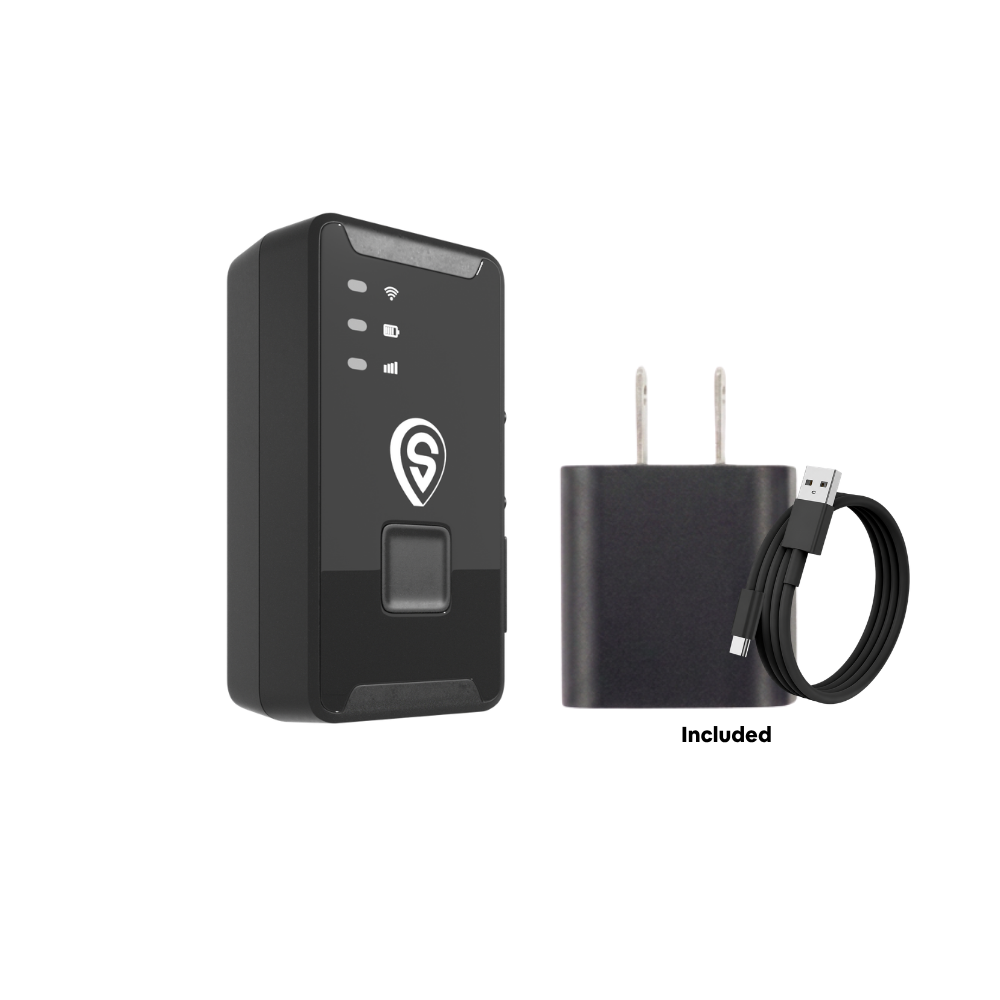
ShadowTrack
- Up to about 15 days per charge
- Weatherproof magnetic case, mounts in seconds
- Movement and geofence alerts
Every plan is backed by 99.9% network uptime and a 30-day money-back guarantee. Still deciding between the two? Our OBD2 vs battery-powered GPS tracker guide breaks it down.
Best for: anyone who wants live, reliable location for a car, truck, Turo rental, trailer or small fleet, without a contract.
How to Choose: The 5-Question "Now or Later" Test
Answer these honestly and the choice between an active vs passive GPS tracker usually makes itself.
- Do you need to know where it is right now, or just where it went? "Right now" means active.
- Would you act on an alert? If a text saying "your car just left the driveway" would make you pick up the phone, you need active.
- Is there cell coverage where it lives and drives? If the answer is "almost never," consider passive or satellite.
- Can you get your hands on the device every week? Passive only works if you can. If you can't, passive data is just sitting there unread.
- Is the monthly fee worth the certainty? For a teen driver, a rental car or a work truck, most owners say yes. For a mileage log, probably not.
Rule of thumb: if you said "now" to question 1 or "yes" to question 2, get an active tracker. Only go passive if every answer points to "later."
A quick word on legality
Active or passive, the law treats GPS tracking the same way. Tracking a car or truck you own, or one you have clear permission to track, is generally fine. Putting a tracker on a car you don't own, or tracking someone without their consent, can violate state law in many places.
Running a small business? Tell your drivers and put it in writing. Our guide on GPS tracking laws for employee vehicles covers the details. This isn't legal advice, so check your state's rules if you're unsure.
Frequently Asked Questions
Still have questions about active vs passive GPS tracking? Here are the ones we hear most.
What is the difference between active and passive GPS tracking?
Active GPS tracking sends location data over a cellular or satellite network as it's collected, so you can see it live and get alerts. Passive GPS tracking stores location on the device itself, and you only see it after you retrieve the tracker and download the data. Both use the same GPS satellites. The difference is when the information reaches you.
Is there a monthly fee for active or passive GPS trackers?
Active trackers almost always have a monthly fee, because they use a cellular connection and a cloud app. Passive loggers usually don't, since nothing is sent. ShadowGPS plans run $12 to $15 a month with no contract. Month-to-month, or prepay and save.
Does a GPS tracker need a SIM card?
A passive logger doesn't, because it never connects to a network. An active cellular tracker does need a cellular connection, but with most modern trackers, including ShadowGPS, the connection comes built in with your plan, so you don't buy or insert a SIM yourself. Learn more in does your GPS tracker need a SIM card?
Is an active GPS tracker hard to set up?
Not if it's a plug-in model. An OBD-II tracker like ShadowAuto plugs into the port under your dashboard in under 2 minutes, with no tools. Battery trackers just need charging and a spot to mount. Only hardwired trackers need real wiring work.
How fast does an active GPS tracker update?
It depends on the brand and plan. Many consumer trackers update every 15 seconds to 5 minutes, and some slow down further to save battery. ShadowAuto and ShadowTrack update within seconds while moving on every plan, with no speed upgrade to buy.
Can a passive GPS tracker help find a stolen car?
Not in real time. A passive logger stays with your car and keeps recording, but you can only read that data once you have the device back in hand. For theft recovery, you need an active tracker that shows where your car is while it's happening, so you can share that location with police.
Which lasts longer on battery, active or passive?
Passive loggers usually last longer, often weeks or months, because they don't power a cellular radio. Battery-powered active trackers typically last days to a couple of weeks depending on update speed and how much the asset moves. ShadowTrack lasts up to about 15 days per charge. Plug-in OBD-II trackers never need charging. See how long GPS tracker batteries last.
Is an Apple AirTag an active or passive GPS tracker?
Neither. An AirTag has no GPS and no cellular connection. It uses Bluetooth and relies on nearby Apple devices to report its location, so updates depend on who happens to walk by. It's great for keys and bags, but unreliable for tracking a car.
What happens to an active tracker with no cell service?
It can't report live until it reconnects. Many active trackers save positions during a dead zone and upload them once signal returns, so your trip history fills in afterward. If your car or equipment lives somewhere with no coverage at all, a satellite tracker or passive logger may be a better fit.
Can one GPS tracker do both active and passive tracking?
In a sense, yes. These are sometimes called hybrid trackers. A good active tracker reports live when it has signal and stores points when it doesn't, then syncs later. You get the live view most of the time and a complete history either way.
Is active or passive GPS tracking legal?
Both are legal when you track a car or truck you own, or have permission to track. Tracking a vehicle you don't own, or a person without consent, can break state laws regardless of which type you use. This isn't legal advice, so check your state's rules if you're unsure.
Know where your car is. Right now.
Plug it in, see it move, and cancel any time. No contract, ever.
Pricing and plan details checked September 2026 and may change. Some links on this page are affiliate links, which means ShadowGPS may earn a commission at no extra cost to you. Theft figures from the National Insurance Crime Bureau's 2025 Vehicle Theft Report. Tracking laws vary by state; this article is general information, not legal advice.

