

Fleet management statistics are usually written for companies running 500 trucks. But the most common fleet in America is much smaller: one car in one driveway, maybe a pickup, a teen's first sedan, or a Turo rental parked near the airport. The numbers that matter to you are the same ones big fleets watch every day: where your car is, how it's being driven, and what it costs to keep on the road.
We pulled the newest 2025 and 2026 data from the NICB, NHTSA, ATRI, AAA, the CDC and IIHS, Verizon Connect and Fleetio. Then we translated every fleet management stat into what it means if you own 1 to 5 vehicles. Every number links to its source, and a few popular stats are missing on purpose. We explain why further down.
The fleet management statistics that matter most in 2026: 80% of fleet professionals now use GPS tracking, running a truck costs a record $2.336 per mile, 659,880 vehicles were stolen in the U.S. in 2025, and owning a new car costs $12,863 a year. For one-car owners and small fleets, the takeaway is simple: knowing where your car is and how it's used is now the baseline, not an extra.
Top Fleet Management Statistics for 2026 at a Glance

If you only have a minute, start here. These are the headline numbers from each major 2025 and 2026 report, with the source beside each one.
| Statistic | Number | Source |
|---|---|---|
| Fleet professionals using GPS tracking | 80% (up 11 points in a year) | Verizon Connect, 2026 |
| Fleets using AI-powered in-cab video | 46% | Verizon Connect, 2026 |
| Average cost to run a truck in 2025 | $2.336 per mile (a record) | ATRI, 2026 |
| Fleet managers naming rising costs as top concern | 54.4% | Fleetio, 2026 |
| Fleets still tracking vehicles in spreadsheets | 30.8% | Fleetio, 2026 |
| Vehicles stolen in the U.S. in 2025 | 659,880 (down 23.2%) | NICB, 2026 |
| Average yearly cost to own a new car | $12,863 | AAA, 2026 |
| Average age of a U.S. car or light truck | 12.8 years | S&P Global Mobility |
| U.S. traffic deaths in 2025 (early estimate) | 36,640 (down 6.7%) | NHTSA, 2026 |
| Teen (16 to 19) fatal crash rate per mile vs. drivers 20+ | Almost 3x higher | CDC |
| Active vehicles shared on Turo | 340,000 | Turo |
Figures are the latest published by each source as of September 2026. Links to every report appear in the sections below.
Fleet Management Market Statistics: How Big Is the Industry?
The fleet management market is big and growing fast, but the headline number depends on who you ask. Here are the most-cited 2026 estimates:
- $27.34 billion in 2026, growing to $45.33 billion by 2030 at a 13.5% CAGR, according to The Business Research Company.
- $30.1 billion in 2026, reaching $122.3 billion by 2035 at 16.9% a year, per Global Market Insights. It pegs Verizon as the leader with over 13% share in 2025.
- $43.56 billion in 2026, projected to hit $88.49 billion by 2032, according to MarketsandMarkets.
- $11.61 billion in 2026 for software alone, heading to $47.81 billion by 2034, per Fortune Business Insights. North America held 40.76% of that market in 2025.
Why market-size estimates disagree
These reports aren't measuring the same thing. Some count only software, some add hardware like GPS trackers and dash cams, and some include leasing and outsourced fleet services, which is why names like Arval and ORIX show up next to Verizon and Trimble.
So when you see a fleet management stat about market size, check the scope before you quote it. The safe way to say it: the global market is somewhere between roughly $27 billion and $44 billion in 2026, and every major estimate has it growing at double digits.
What the market numbers mean for you
Big money flowing into fleet technology has pushed tools that used to be enterprise-only down to regular owners. Live GPS tracking, trip history and engine alerts that once needed a sales call and a multi-year contract now come in a tracker you can plug in yourself.
GPS Tracking Adoption Statistics
GPS tracking is now the default for professional fleets. According to the 2026 Verizon Connect Fleet Technology Trends Report, based on almost 900 fleet professionals:
- 80% of fleet professionals rely on GPS fleet tracking, an 11-point jump from the year before.
- 46% now use AI-powered in-cab video, up 10 points since 2023.
- 74% of in-cab video users say it improved driver safety, per the same report.
- 44% of GPS tracking users report improved productivity, and 53% of asset tracking users report better equipment use (Work Truck Online).
- 66% of fleet professionals say increasing efficiency and productivity is their focus for the next 12 to 18 months.
Fleetio's State of Fleet Management 2026 survey of 600+ fleet professionals adds a reality check. 30.8% still rely on spreadsheets for tracking, and while 35.1% are researching AI, only 5.6% use it broadly.
The adoption gap nobody measures
Every adoption survey above samples fleet professionals: people whose job title includes the word "fleet." Nobody surveys the parent with a 16-year-old, the retiree with a classic truck, or the Turo host with three cars.
That's the real gap in fleet management stats. The group with the fewest vehicles is also the group with the least visibility, and often the most to lose if one of those vehicles goes missing.
Fleet Cost Statistics: What It Costs to Keep Vehicles Moving
Cost is the number one worry across the industry. In Fleetio's 2026 survey, 54.4% of fleet managers named rising costs as their top concern, ahead of regulations and emissions mandates at 46.1%.
Commercial trucks: a record cost per mile
The American Transportation Research Institute's 2026 cost analysis found the average truck cost $2.336 per mile to run in 2025, up 3.4% and the highest in the report's history. Key numbers from the report:
- Costs excluding fuel rose 4.2% to $1.854 per mile.
- The biggest jumps were tolls (+13.2%), repair and maintenance (+8.6%), driver benefits (+6.6%) and tires (+6.4%).
- Fuel averaged $0.48 per mile, highest in the West at $0.54 (FleetOwner).
- Driver wages rose to 81.8 cents per mile, per Transport Topics.
What GPS users say they save
In the 2026 Verizon Connect report, fleets using GPS tracking reported these average cost drops after getting set up (Truck News summary):
- 12% lower fuel costs and 12% lower labor costs
- 11% lower insurance premiums
- 15% lower maintenance costs
- 19% lower accident costs
These are self-reported averages from fleet professionals, so treat them as a direction, not a promise. If you run a small fleet, our breakdown of what GPS tracking actually costs a small fleet in 2026 walks through the math.
What it costs to own one car in 2026
For personal vehicles, the benchmark is AAA's Your Driving Costs 2026, released September 15, 2026. It puts the average cost to own and operate a new vehicle at $12,863 a year, or $1,071.92 a month.
- Depreciation is still the biggest single cost, averaging $4,422 a year.
- Gas averaged $4.152 a gallon at the time of the study, up 31.8% from 2025.
- AAA notes a methodology change, so this year's figure isn't directly comparable to 2025's $11,577.
Put simply, your car is likely one of the most expensive things you own after your home. Protecting it is protecting a five-figure yearly commitment.
Older vehicles cost more to keep
Americans are keeping cars longer than ever. S&P Global Mobility puts the average age of U.S. light vehicles at a record 12.8 years, with passenger cars at 14.5 years and light trucks at 11.9. There are now 289 million light vehicles in operation.
Cost per mile by vehicle age
Fleetio's data from over 1 million vehicles shows why age matters. Vehicles 10+ years old drive about 12% of miles but eat about 34% of service spend. Service cost per mile climbs from $0.06 (0 to 5 years) to $0.15 (6 to 10 years) and $1.10 (10+ years).
The lesson for an older family car or work truck: catch problems early. A tracker that reads engine codes on your phone, like we cover in our guide to reading engine diagnostics remotely, turns a surprise repair into a scheduled one.
Vehicle Theft Statistics for 2026
Here's the good news first. The National Insurance Crime Bureau reports 659,880 vehicles were stolen in the U.S. in 2025, down 23.2% from 850,708 in 2024. That's the lowest level in several decades and 190,828 fewer thefts in a single year.
The flip side: that's still about 1,800 vehicles a day, or one roughly every 48 seconds. The NICB itself warns that organized theft networks keep evolving, so the drop isn't a reason to relax.
The NICB credits coordinated prevention for the decline, including anti-theft software updates from carmakers. That's the pattern worth noticing: prevention works. For recovery steps and what a tracker changes, see GPS trackers vs. car theft: real stats and tips.
Where theft is concentrated
- California led the nation with 136,988 thefts in 2025, more than 20% of the U.S. total.
- Texas, Illinois, Florida and New York rounded out the top five states by volume.
- The national rate sits at about 193 thefts per 100,000 people, according to AutoInsurance.com's analysis of NICB data.
The most-stolen models
The Hyundai Elantra was the most stolen model in 2025 with 21,732 thefts, followed by the Honda Accord at 17,797. Hyundai and Kia's share of all thefts fell to 14% in 2025, down from 16% in 2024 and 21% in 2023, after software fixes rolled out. Our full list of the most stolen vehicles in 2025 covers every model on the NICB list.
Driver Safety and Teen Driver Statistics
Roads got safer in 2025. NHTSA's early estimate projects 36,640 traffic deaths, down about 6.7% from 39,254 in 2024. The fatality rate fell to 1.10 per 100 million miles driven, the second lowest ever recorded.
Teen driver risk by the numbers
For parents, one group still stands out. These are the fleet safety stats that matter most if a new driver is borrowing your car:
- Drivers ages 16 to 19 have a fatal crash rate almost three times that of drivers 20 and older per mile driven, according to the CDC.
- The crash rate per mile is about 1.5 times higher for 16-year-olds than for 18 and 19-year-olds, and risk peaks in the first months after licensing.
- Based on police-reported crashes, IIHS finds 16 to 19-year-olds crash at nearly 4 times the rate of drivers 20 and older.
- Teen motor-vehicle occupant deaths fell to 2,565 in 2024, down 5.4%, per the National Safety Council. Counting all road users, about eight teens ages 13 to 19 still die every day.
- A 16 or 17-year-old driver with one passenger doubles their risk of dying in a crash. With an adult aged 35 to 64 in the car, that risk is cut in half.
What parents can do with these numbers
The data points to the same few risk windows: the first months of driving, nights, weekends and carloads of friends. You don't need to hover. You need a calm way to see where the car went and how it was driven, so you can have a real conversation instead of a guess.
That's why so many families pair a driving agreement with a tracker. Our guide to teen drivers and peace of mind covers how to set it up without it feeling like punishment.
Peer-to-Peer Rental (Turo) Statistics
Car sharing has turned everyday owners into small fleet operators. Turo closed 2024 with 140,000 active hosts, 340,000 active vehicles and 3.5 million active guests, according to the company. It generated $2.5 billion in gross booking value and paid hosts $1.5 billion that year.
Two 2025 trends from Turo's year in review matter for hosts:
- Airport trips made up 38% of host earnings in 2025.
- Trips lasting 30+ days became the fastest-growing booking type.
Longer trips and airport handoffs mean more days your car is somewhere you can't see. If you host, our guide to the best GPS tracker for Turo covers what to look for.
What These Fleet Management Stats Mean If You Own 1 to 5 Vehicles
Big fleets use all of this data to answer three questions. You can use the same framework, scaled down to your driveway.
The Where / How / Cost framework
- Where is it? Theft is down, but still happens every 48 seconds. Live location and parked-car alerts answer this in seconds.
- How is it being driven? Teen crash risk and fleet accident costs both come down to speed, time of day and trip patterns. A trip timeline shows all three.
- What is it costing? With a new car costing $12,863 a year and older vehicles eating most of the repair budget, early engine alerts and mileage history pay off.
Parent of a teen driver
Use trip history to see late-night drives and speed patterns, then talk about them. The goal is coaching during the riskiest first year, not reading texts.
Turo host with 1 to 3 cars
Know your car made it back from a 30-day booking or an airport handoff. See our Turo host page for how hosts set it up.
Owner-operator with 2 to 5 vehicles
See every truck on one map, spot after-hours use, and catch engine codes early. More in fleet tracking for 3 to 10 vehicles.
Where a plug-in tracker fits
You don't need an enterprise platform to get the visibility that 80% of professional fleets rely on. ShadowAuto plugs into the OBD-II port under your dash and updates your car's location every 5 seconds while it's moving. There's no shop visit and no tools, and it takes under 2 minutes.
What you get is certainty: live tracking, a trip timeline, trip replay, Car Alarm alerts if your car moves when it shouldn't, and engine codes on your phone. Plans run $12 to $15 a month. No contract: month-to-month, or prepay and save.
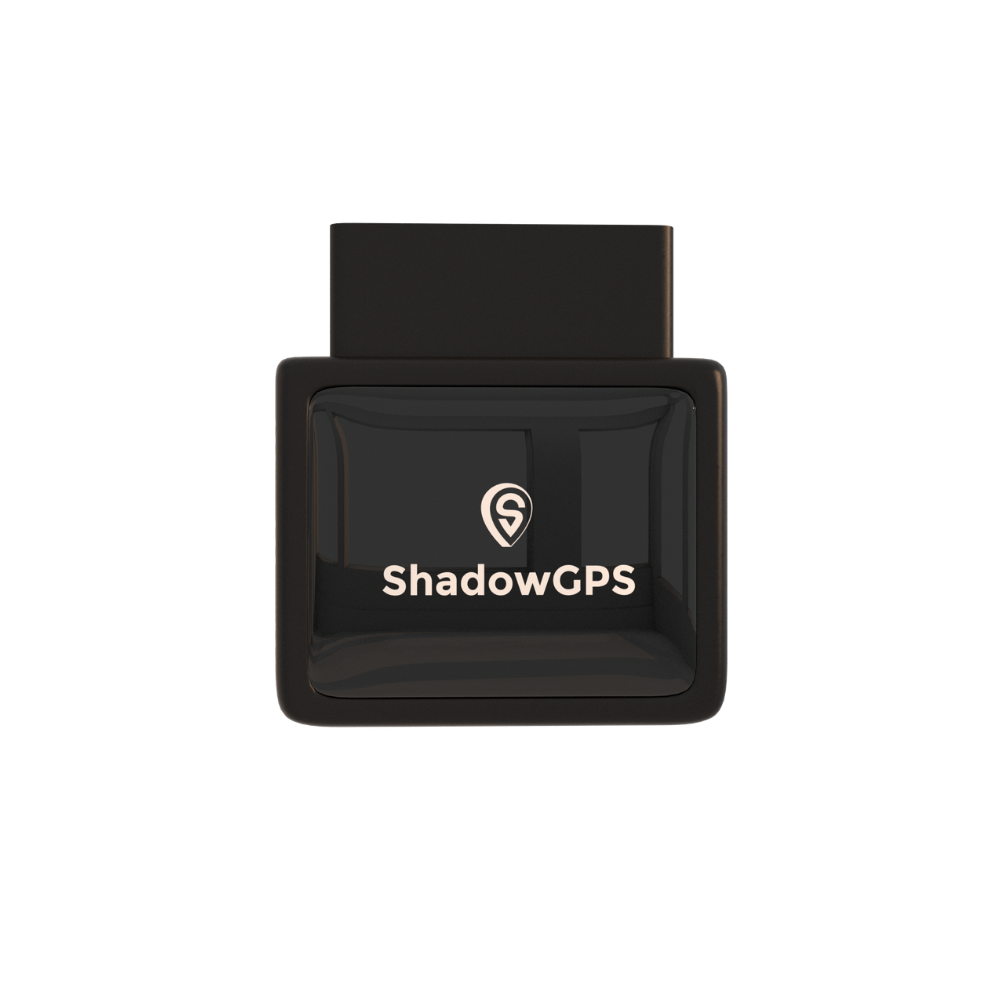
ShadowAuto
- Plugs in under 2 minutes, powered by your car
- Live tracking, trip timeline and trip replay
- Car Alarm alerts and engine codes on your phone


If what you need to protect doesn't have an OBD-II port, like a trailer, equipment, a boat or a classic car, ShadowTrack is the battery-powered option. It lasts up to about 15 days per charge and sits in a weatherproof magnetic case you can mount or hide in under 2 minutes.
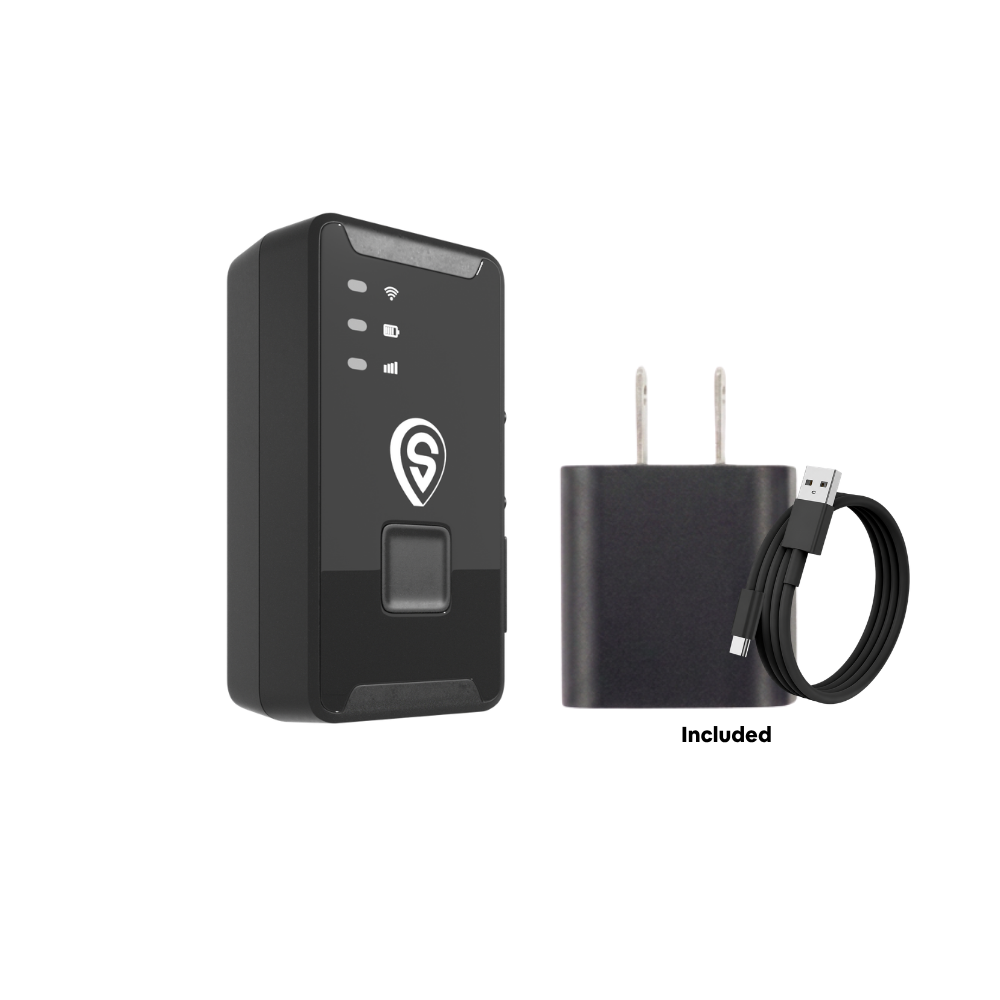
ShadowTrack
- Up to about 15 days per charge
- Weatherproof magnetic case, hides anywhere
- Same app, live map and trip history as ShadowAuto
Both run on a network with 99.9% uptime, come with a 30-day money-back guarantee, and average 4.3 to 4.6 out of 5 across 199 verified reviews on our site.
Best for: ShadowAuto for the family car, a teen's car, a Turo rental or a work truck. ShadowTrack for anything without an OBD-II port or anything you'd rather keep out of sight.
GPS Tracking Options Compared: Enterprise Platforms vs. Consumer Trackers
Not every tracking option fits a one to five vehicle owner. Here's how the main categories stack up on the things that matter day to day.
| Option | Best for | How it works | Location updates | Contract | Monthly fee |
|---|---|---|---|---|---|
| Enterprise fleet platforms (Samsara, Verizon Connect) | Large, regulated fleets | Hardwired or OBD hardware + software | Varies by plan | Often multi-year | Quote-based |
| Apple AirTag | Keys, bags | Bluetooth, relies on nearby Apple devices | Only when a device passes by | None | None |
| Bouncie | Budget OBD-II tracking | Plugs into OBD-II port | Every 15 sec | None | $9.00-$9.65 |
| LandAirSea | Portable, heritage brand | Battery, magnetic | 3 min on base plan (faster tiers cost more) | 2 years for best rate | $9.95-$49.95 |
| ShadowTrack | Trailers, equipment, non-OBD assets | Battery, magnetic case | Every 5 sec while moving | None, ever | $12-$15 |
| ShadowAuto | Cars, trucks, Turo, small fleets | Plugs into OBD-II port | Every 5 sec while moving | None, ever | $12-$15 |
Competitor pricing and update speeds are from publicly listed plans and can change. Check each brand's site for current terms. AirTag is a Bluetooth item finder, not a GPS tracker.
Fleet Management Stats We Left Out on Purpose
Why some popular numbers aren't here
A lot of fleet management stats get copied from page to page until nobody remembers where they came from. We skipped these:
- "Over 1 million cars stolen a year." True for 2022 and 2023, but outdated. The 2025 NICB total is 659,880.
- "90% of stolen cars with GPS are recovered." We couldn't trace this to independent data for consumer GPS trackers. It appears to come from older studies of a different recovery technology, so we don't repeat it.
- Vendor ROI claims with no published method, such as specific multi-year ROI percentages. If a number has no sample size or method behind it, it isn't in this article.
Every figure we did include links to the organization that published it.
How to Track Your Own Fleet Stats in 5 Steps
Industry numbers are useful, but your own numbers are what change decisions. Here's how to build a simple personal dashboard for one car or five:
- Know where each vehicle is right now. Start with live location and a "last parked" spot for every car or truck you own.
- Set a parked-car alert. Turn on Car Alarm or a geofence around home, so movement at 2 a.m. gets your attention fast.
- Review the trip timeline weekly. Look for late-night trips, long idle stops and speeding, the same patterns fleets track.
- Log mileage and engine codes. Catching a code early keeps an older vehicle out of the expensive 10+ year repair curve.
- Estimate your cost per mile. Add up fuel, insurance, repairs and depreciation, then divide by miles driven. Compare it to AAA's averages once a year.
Frequently Asked Questions About Fleet Management Statistics
What are the most important fleet management statistics for 2026?
Four numbers stand out: 80% of fleet professionals use GPS tracking (Verizon Connect 2026), running a truck cost a record $2.336 per mile in 2025 (ATRI), 659,880 vehicles were stolen in the U.S. in 2025 (NICB), and owning a new car costs $12,863 a year (AAA 2026).
What percentage of fleets use GPS tracking?
According to Verizon Connect's 2026 Fleet Technology Trends Report, 80% of fleet professionals now rely on GPS fleet tracking, up 11 percentage points in one year. Nearly half (46%) also use AI-powered in-cab video.
How much does it cost to operate a fleet vehicle per mile?
ATRI found the average truck cost $2.336 per mile to operate in 2025, the highest in the report's history, or $1.854 per mile without fuel. For a personal new car, AAA puts total ownership cost at $12,863 a year in 2026.
How many cars are stolen in the US each year?
The NICB reports 659,880 vehicles were stolen in the U.S. in 2025, down 23.2% from 850,708 in 2024. That still works out to roughly one vehicle every 48 seconds, with California accounting for more than 20% of thefts.
Are teen drivers more likely to crash?
Yes. The CDC says drivers ages 16 to 19 have a fatal crash rate almost three times as high as drivers 20 and older per mile driven. Risk is highest in the first months after getting a license and when teen passengers are in the car.
How big is the fleet management market in 2026?
Estimates range from about $27 billion to $43.6 billion depending on what's counted. The Business Research Company says $27.34 billion, Global Market Insights says $30.1 billion, and MarketsandMarkets says $43.56 billion. All project double-digit yearly growth.
Does GPS tracking lower insurance costs?
It can. GPS tracking users in Verizon Connect's 2026 report saw an average 11% drop in insurance premiums. Discounts vary by insurer, state and driving record, so ask your carrier. Some insurers also ask for tracking information at renewal.
What is the average age of a car in the US?
S&P Global Mobility puts the average age of U.S. cars and light trucks at a record 12.8 years. Passenger cars average 14.5 years and light trucks 11.9 years, across 289 million light vehicles in operation.
Is there a monthly fee for a GPS tracker?
Most real-time GPS trackers have a monthly fee because they use cellular data to send your location. ShadowGPS plans run $12 to $15 a month with no contract: month-to-month, or prepay and save. See our pricing page for every plan.
Does a GPS tracker need a SIM card?
Not one you have to buy. ShadowAuto and ShadowTrack come ready to connect, and cellular service is part of your plan. Plug it in or mount it, activate it in the app, and it starts reporting. More in does your GPS tracker need a SIM card.
Is it legal to track my own car?
Tracking a vehicle you own is generally legal in the U.S. Tracking a car you don't own, or a person without consent, can break state law. If employees drive your vehicles, tell them up front. Our employee vehicle tracking guide covers the rules.
The Bottom Line on Fleet Management Statistics in 2026
The 2026 numbers tell a clear story. Professional fleets have made GPS tracking standard, costs keep climbing, cars are older than ever, and theft is down but far from gone. Teen drivers and car-sharing hosts face the same questions big fleets do, just with fewer vehicles and less help.
You don't need a fleet department to act on these fleet management stats. You need to know where your car is, how it's driven, and what it's costing you, and you can have all three today.
Know where your car is, every time you check
Plug it in. See it move. Cancel any time. No contract, ever.
Statistics current as of September 24, 2026, from the sources linked in each section. ShadowGPS pricing as of September 2026. Some links are affiliate links, and we may earn a commission at no extra cost to you. Always follow your state's laws when tracking any vehicle, and only track vehicles you own or have permission to track.

