

A baler doesn't have a horn to honk or an owner behind the wheel. It sits at the edge of a field for weeks, then one morning it's just gone, and nobody heard a thing. Tractors, trailers, and other equipment go missing off farms every season, often from properties spread across hundreds of quiet, unwatched acres.
Farm equipment GPS tracking sounds like it should be simple: strap on a tracker, see it on a map, done. In practice, most of what shows up when you search for it is either built for row-crop precision guidance (steering, not security) or built for operations running dozens of machines with dedicated software teams. If you own one tractor and a baler and want to know where they are, neither of those is really speaking to you.
This guide covers what actually matters for an individual owner or a small operation with a handful of equipment: the difference between tracking and guidance, which tracker type fits which piece of equipment, what it costs, how rural cell coverage affects it, and how to set the whole thing up in an afternoon.
Farm equipment GPS tracking means attaching a small, battery-powered or hardwired GPS tracker to a tractor, baler, trailer, or other implement so you can see its real-time location, get an alert if it moves, and locate it again if it's stolen or misplaced. Self-propelled equipment with a 12-volt system can run a hardwired tracker; anything without its own power source, which is most implements, needs a battery-powered, magnet-mount tracker instead. Plans typically run $10 to $20 a month per device, with no long-term contract required.
GPS Tracking vs. GPS Guidance: Clear Up the Confusion First
Is farm equipment GPS tracking the same thing as GPS guidance or auto-steer?
No. GPS guidance (auto-steer) is a precision-agriculture system built into the cab that keeps a tractor driving a straight, exact line through a field to reduce overlap and waste. GPS tracking is a security and location tool: a small device that reports where a piece of equipment is, whether it's supposed to be there, and whether it just started moving. Guidance receivers are actually a known theft target themselves in some regions, which is a separate problem from the one this guide addresses. If you're trying to find out where your tractor or baler physically is right now, or get an alert the moment it leaves your property, you want a tracking device, not a guidance upgrade.
Why Farm Equipment Needs Its Own Approach to GPS Tracking
Most GPS tracker content online is written for two audiences: car owners parking in a driveway, or large operations running enterprise fleet software. Farm equipment sits in between, and it has a few problems neither of those groups deals with.
The theft problem is real, and equipment sits exposed
Industry estimates put annual farm and construction equipment theft losses in the United States somewhere between $300 million and $1 billion, and fewer than 15% of stolen equipment that isn't tracked is ever recovered. County-level numbers tell the same story: Fresno County, California alone reported more than $30 million in agricultural theft losses between 2022 and 2024, with law enforcement in nearby counties describing equipment theft as a near-daily occurrence.
Tractors, trailers, and implements are attractive targets for a simple reason: they're valuable, they're often parked far from the farmhouse, and a missing baler at the edge of a back field might not be noticed for days. Sheriff's offices in some of California's largest agricultural counties describe equipment theft as an almost daily occurrence, with tractors, ATVs, and farm vehicles topping the list. These aren't random crimes of opportunity; thieves scout properties ahead of time and often have a buyer lined up before anything goes missing.
It's worth noting that GPS receivers used for auto-steer guidance are a well-documented theft target in their own right, since a single receiver can be worth thousands of dollars and is easy to resell. That's a separate problem from equipment theft itself, but it's part of why "GPS" and "tractor" show up together in so many unrelated search results, and why the distinction above matters.
Rural coverage and remote storage change what "real-time" means
A tracker that works perfectly in a suburban driveway can struggle at the back of an 800-acre property with one bar of signal. Any tracker you choose needs a cellular radio built to fall back gracefully when coverage is thin, and a battery that can go weeks without a charge if a piece of equipment sits idle over winter.
Most equipment doesn't have a power source to tap into
A pickup truck or a self-propelled tractor has a 12-volt electrical system a tracker can draw from. A baler, planter, disc harrow, or utility trailer usually doesn't. That single fact decides which type of tracker actually works for a given piece of equipment, which is the next section.
Two Ways to Track Farm Equipment, and How to Choose
Nearly every tracker on the market falls into one of two categories. Picking the right one per asset matters more than picking a single "best" tracker for the whole farm.
Powered trackers, for equipment with its own electrical system
A powered tracker draws from the 12-volt system of a self-propelled machine, whether that's a tractor, a combine, or a farm pickup truck. It never needs to be recharged and can be tucked out of sight permanently.
Does farm equipment have an OBD-II port for GPS tracking?
Almost never. OBD-II is the standardized diagnostic port required on U.S. cars and light trucks since 1996. Tractors, combines, and most agricultural equipment use a different diagnostic connector (commonly a heavy-duty CAN bus connector), not a car-style OBD-II port, so an OBD plug-in tracker made for passenger vehicles won't plug into a tractor. Where a car-style OBD-II tracker does fit well on a farm is a farm pickup truck or service van, since those have the same port as any other car or truck. For the tractor, baler, or trailer itself, a battery-powered tracker is the right tool, not an OBD-II device.
ShadowAuto is a good example of the powered category and is a strong fit for the farm truck or service vehicle you drive between fields, not for the tractor itself.
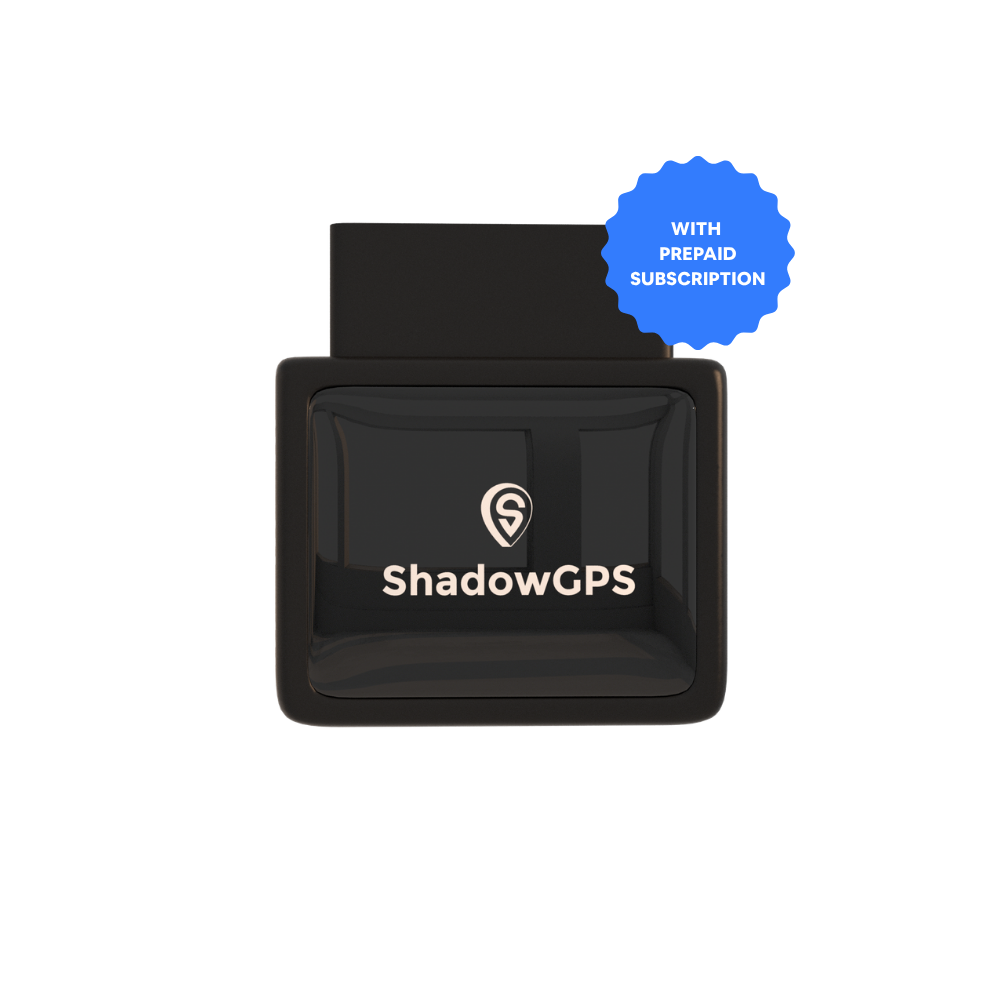
ShadowAuto
- Updates every 5 seconds while moving
- Trip timeline & trip replay
- Vehicle diagnostics & engine codes


Battery-powered, magnet-mount trackers, for balers, trailers, and implements
Anything without its own electrical system, which covers most of what sits in a farm's back lot, needs a tracker with its own battery. A weatherproof, magnet-mount tracker attaches to a baler, a utility trailer, a disc harrow, a UTV, or an ATV in about two minutes with no tools and no wiring, and it can move to a different piece of equipment whenever priorities shift.
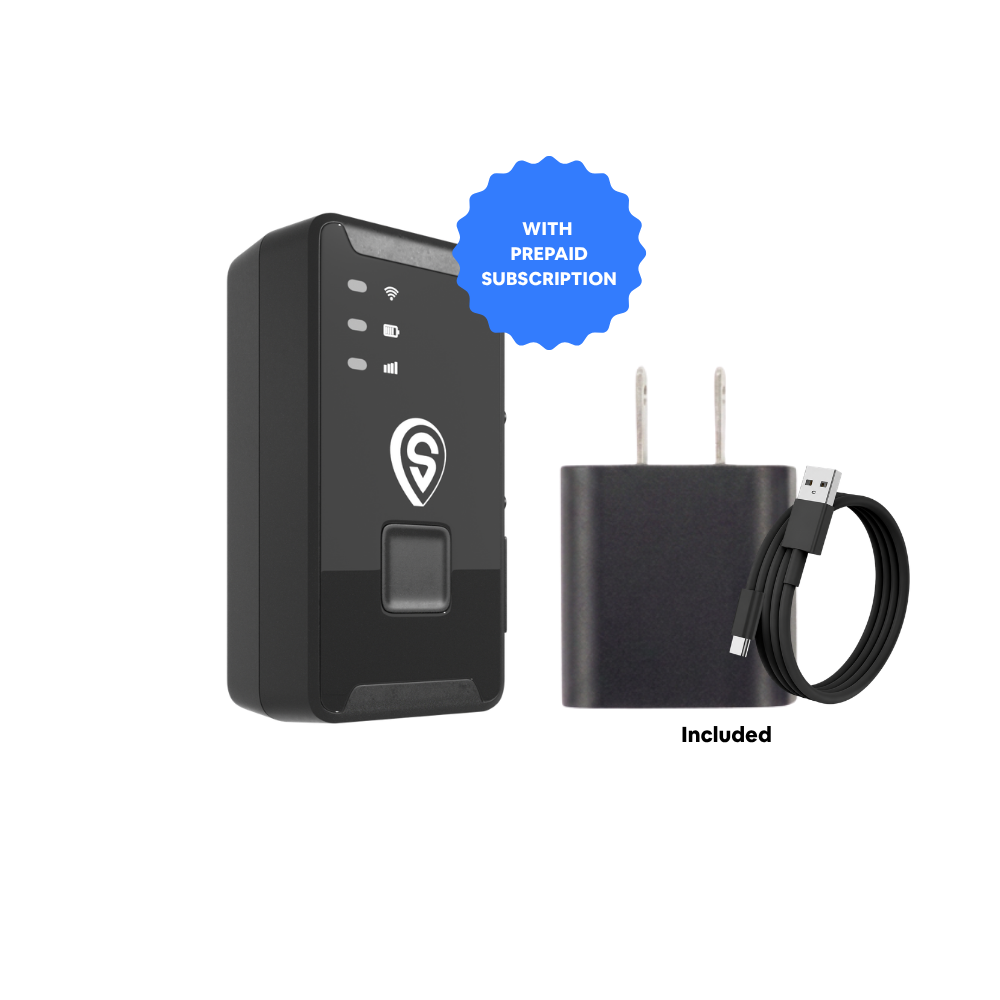
ShadowTrack
- Updates every 5 seconds while moving
- Weatherproof, magnetic mount
- Up to ~15 days per charge
For a deeper look at how the two device types differ beyond farm use, see our battery-powered vs. OBD-II comparison guide. And if the SIM-card question is still on your mind, we cover it in full in does a GPS tracker need a SIM card.
What to Look For in a Farm Equipment GPS Tracker
Not every tracker built for a car or a delivery van holds up on a farm. Before buying, check for these:
- Weatherproof housing that can sit outdoors through rain, dust, and temperature swings, not a device meant to live inside a cabin
- Battery life measured in weeks, since a lot of farm equipment sits idle between seasons
- A cellular network with rural coverage and 2G/older-network fallback, not just a single carrier
- Fast real-time updates, not just a once-a-day location ping
- Geofencing so you get an alert the moment equipment crosses your property line
- Month-to-month pricing with no multi-year contract, so it's low-risk to try and easy to walk away from if it's not a fit
One tractor and a baler
A single ShadowTrack on the baler and, if the tractor has no power tap you want to touch, a second ShadowTrack on the tractor covers the whole operation for about the cost of two coffees a month, each.
A custom-hire or small equipment operation
Equipment that moves between fields and job sites benefits most from geofences per site and quick trip history, so you can confirm a rented tractor actually left when it was supposed to.
Equipment shared or loaned out
If a neighbor, family member, or hired hand borrows a piece of equipment you own, a tracker lets you confirm it came back and where it's been, without needing to call and ask.
Beyond Theft: Everyday Reasons Owners Track Equipment
Theft is the headline reason to add a tracker, but it's rarely the only reason owners end up glad they have one. A few uses come up again and again:
- Finding a specific trailer or implement on a large, multi-field property without driving the whole perimeter looking for it
- Confirming a piece of equipment sent off-site for repair, or out on a custom-hire job, actually arrived and came back
- Getting a middle-of-the-night alert the moment something rolls out of the storage yard that shouldn't be moving
- Having a documented location history if a rental, lease, or insurance dispute ever needs proof of where equipment actually was
None of this requires a farm management platform or a dashboard to learn. It's the same map and the same phone alert you'd use to check on a car.
How Farm Equipment GPS Trackers Compare
| Tracker | Power | Refresh rate | Best for | Contract |
|---|---|---|---|---|
| ShadowGPS ShadowTrack | Rechargeable, ~15 days/charge | 5 sec while moving | Balers, trailers, ATVs/UTVs, implements | None, month-to-month |
| Spytec GL300 | Rechargeable battery | Real-time, interval-based | Small tools, compact equipment | Month-to-month plans available |
| LandAirSea Portable | Rechargeable battery | Real-time | Trailers, general portable assets | Varies by plan |
| BrickHouse Spark Nano 7 | Rechargeable battery | Real-time | Vehicles and portable assets | Varies by plan |
| SPOT Trace | Replaceable battery | Interval-based (satellite) | Zero-cell-coverage remote land | Annual plan typical |
Most of these trackers rely on a cellular network, which is the right call for the vast majority of farms. SPOT Trace is the one exception on this list worth knowing about: it uses satellite instead of cellular, which trades off real-time speed for coverage in truly dead zones where no carrier reaches at all.
If your farm also has a work truck, service van, or other heavy machinery beyond what's covered here, our guide to GPS tracking for construction equipment and heavy machinery and our breakdown of portable GPS trackers for work trucks and equipment cover the adjacent ground.
How Much Does Farm Equipment GPS Tracking Cost?
What does a GPS tracker for farm equipment cost per month?
Expect to pay roughly $10 to $20 a month per tracked device, plus a one-time device cost in the $60 to $90 range. There's no monthly fee shortcut around that since every tracker uses a cellular connection to send its location, the same way a phone does, and that connection is what the monthly plan covers. What you're paying for is knowing where a $40,000 tractor or a $15,000 baler actually is, which is a small monthly cost against the value being protected. No contract, month-to-month, or prepay and save.
How to Set Up GPS Tracking Across Your Farm
- List what's actually worth protecting. Start with the highest-value and most exposed equipment: tractors, balers, trailers, UTVs, anything stored away from the house.
- Match each piece to the right tracker. Self-propelled equipment with a 12-volt tap can use a powered tracker; everything else gets a battery-powered, magnet-mount tracker.
- Mount it somewhere discreet. A magnet-mount tracker takes about two minutes to attach to a frame rail or under a fender, no tools required.
- Set a geofence. Draw a boundary around your property or storage yard so you get an alert automatically if anything crosses it, day or night.
- Check the map from your phone. No separate fleet software to learn, just the app you already have on your phone.
Frequently Asked Questions
Is there a monthly fee for a farm equipment GPS tracker?
Yes, every real-time GPS tracker needs a monthly data plan to send its location over the cellular network, typically $10 to $20 per device. There's no contract behind that fee. It's month-to-month, and you can cancel or pause it any time, or prepay a longer term and save.
Does a tracker for a tractor or baler need a SIM card?
It has a SIM built in, but you never handle it yourself. ShadowTrack and ShadowAuto ship with the cellular connection already active, so you're not buying a separate SIM or picking a carrier plan. It just works out of the box.
How hard is it to set up a GPS tracker on farm equipment?
For a battery-powered tracker, it's a magnet: attach it somewhere out of sight on the equipment and you're tracking within minutes, no wiring or tools involved. For a powered tracker on a farm truck, it plugs into the OBD-II port under the dash in under two minutes.
How does the subscription actually work?
You pick a plan per device, it renews monthly, and you can cancel any time with no penalty. If you'd rather not think about it monthly, prepaid 3, 12, or 36-month plans are available too.
How often does the location update?
Every 5 seconds while the equipment is moving, which matters most in the minutes right after something is taken, when a faster refresh gives you and law enforcement a real head start over a device that only checks in once an hour.
Does farm equipment have an OBD-II port for GPS tracking?
Almost never. Tractors and most agricultural machinery use a different diagnostic connector than the OBD-II port found in U.S. cars and light trucks, so an OBD-II tracker generally won't fit a tractor or combine. It's the right fit for a farm pickup truck, though. For the tractor, baler, or trailer itself, use a battery-powered, magnet-mount tracker instead.
Will a GPS tracker work in a field with no cell service?
A cellular tracker needs some level of carrier signal to send a live update, though it will typically store recent points and send them once signal returns. If part of your land has zero cell coverage at all, a satellite-based tracker like SPOT Trace is a better fit for that specific area, trading real-time speed for guaranteed coverage.
What's the difference between GPS tracking and GPS guidance (auto-steer)?
GPS guidance keeps a tractor driving a straight, precise line in a field to reduce overlap. GPS tracking is a security tool that tells you where a piece of equipment is and alerts you if it moves unexpectedly. They solve completely different problems and aren't interchangeable.
Can I track equipment I loan to a neighbor or hired hand?
Generally yes, tracking equipment you own is different from tracking a person, and owners commonly track loaned-out or rented equipment for exactly this reason. Laws do vary by state, so if you have specific concerns it's worth a quick check with a local attorney, especially for anything tied to a formal rental or lease agreement.
Does GPS tracking help with insurance claims after equipment theft?
It can. A documented location history and a last-known-location alert give an insurer and law enforcement something concrete to work from, rather than a vague timeline of when equipment was last seen.
Know where it is. Every 5 seconds.
Plug it in or mount it, see it move, cancel any time. No contract, ever.
This guide reflects pricing, specifications, and theft-loss estimates published as of September 2026. Subscription pricing, features, and third-party product specs are subject to change by each manufacturer and should be confirmed before purchase.

