

GPS tracking for junk removal means putting a small tracker in your truck (and on your dump trailer) so you can see where it is, where it has been, and when it will reach the next job, right from your phone. For a one-truck hauler or a crew running 2 to 5 trucks, it turns "I think the guys are close" into "they're four minutes out."
Think about a normal Saturday. Three cleanouts, a garage full of furniture, a run to the transfer station, a donation drop, and a customer texting "are you still coming?" Your truck is the whole business. When you can't see it, every call turns into a guess.
This guide is written for owner-operators, not city garbage fleets. You'll learn what a junk truck tracker actually does, which kind fits a box truck versus a pickup and trailer, how to set up alerts that matter for haulers, what it costs (with no contract), and how to roll it out without making your crew feel watched.
GPS tracking for junk removal is a plug-in or battery-powered tracker that shows your junk truck's live location, trip history, and stops in a phone app. It helps haulers send the closest crew to same-day jobs, give customers real arrival times, prove when a truck showed up, cut wasted miles and idle time, and protect trucks and dump trailers overnight. Most owner-operators do best with an OBD-II tracker in the truck plus a battery tracker on the trailer, on a month-to-month plan with no contract.
What Is GPS Tracking for Junk Removal?
GPS tracking for a junk removal vehicle is simple: a tracker figures out its position from GPS satellites, then sends that location over the cellular network to an app on your phone or computer. You see your truck on a map, plus a timeline of every trip and stop it made.
It is the same technology big waste haulers use on garbage trucks. The difference is scale. A municipal fleet needs route-sequencing software for hundreds of packer trucks. A junk hauler needs to know three things: where is my truck, where has it been, and is it safe tonight.
How a junk truck tracker works, in three steps
- Locate: the tracker reads its position from GPS satellites, usually accurate to within a few meters in open sky.
- Send: a built-in cellular connection pushes that position to the cloud while your truck is moving.
- Show: you open the app and see the live dot, the trip timeline, and any alerts you set up.
A common question is whether you need to buy a SIM card for this. With ShadowGPS you don't, because the connection is built in and covered by the plan. We broke that down in does your GPS tracker need a SIM card.
Who This Guide Is For
Most content about GPS tracking for junk removal is written for enterprise waste companies or sells route-planning software. That leaves out the people who actually run most junk removal businesses: small operators with one or a few trucks.
The one-truck owner-operator
You drive, quote, load, and dump. The truck is your income, so you mostly want to know it's safe overnight and have a clean record of every job and mileage.
The 2 to 5 truck crew
You're dispatching from your phone between jobs. You want to see who's closest to a same-day call and give customers a real arrival window.
The pickup + dump trailer hauler
Your trailer is worth as much as your truck and sits unhooked a lot. You want the trailer tracked on its own, not just the pickup that pulls it.
If you run 50 roll-off trucks with ELD requirements and municipal contracts, you'll want an enterprise fleet platform instead. Everyone else, keep reading.
9 Ways GPS Tracking Helps a Junk Removal Business
Here are the practical wins haulers actually feel, in roughly the order most owners notice them.
- Dispatch the closest truck to same-day jobs
- Give customers a real arrival window
- Settle "you never showed up" disputes
- Cut idle time and wasted miles
- Protect your truck and trailer overnight
- Keep dump and donation runs on track
- Catch engine problems early
- Keep clean trip and mileage records
- Grow with real data, not hunches
1. Dispatch the closest truck to same-day jobs
Same-day and next-day pickups are where junk removal money is made. When a call comes in at 1 p.m., you can open the map, see which crew just finished a job nearby, and send them instead of the truck across town.
That's fewer miles, a happier customer, and one more job squeezed into the day.
2. Give customers a real arrival window
Junk removal customers usually book a two-hour window and then wait by the window. A tracker lets you answer "how close are you?" with a real number instead of "soon."
With ShadowGPS's Share Location feature, you can send a customer a live view of your truck's location while you're on the way, so they stop calling and start getting the driveway clear.
3. Settle "you never showed up" disputes
Every hauler has heard it: "Nobody came." Trip history gives you a timestamped record of when your truck arrived, how long it stayed, and when it left.
That record helps with customer disputes, chargebacks, and even commercial clients who want proof of service for a property cleanout.
4. Cut idle time and wasted miles
Junk trucks spend a lot of time parked with the engine running, waiting on a customer or warming up in winter. According to Argonne National Laboratory research published by the U.S. Department of Energy, a passenger car burns roughly 0.2 to 0.5 gallons an hour at idle, and Argonne's idling data puts medium-duty gas trucks in the 5 to 7 liter range at about 0.84 gallons an hour.
Here's a simple example. One box truck idling 45 minutes a day at 0.8 gallons an hour, over 250 working days, burns about 150 gallons doing nothing. At $4 a gallon, that's around $600 a year per truck. Your trip timeline shows long stops, so you can spot the habit and talk about it.
5. Protect your truck and trailer overnight
Vehicle theft is down nationally, but it hasn't gone away. The National Insurance Crime Bureau reported 659,880 vehicles stolen in the U.S. in 2025, a 23% drop from 2024, and still warns owners to consider anti-theft technology.
For haulers, the trailer is often the bigger worry because it sits unhooked in a yard or driveway. A geofence around your yard plus an after-hours alert means you hear about movement the moment it happens, not the next morning. Our guide to geofence alerts that catch overnight theft walks through the setup.
6. Keep dump and donation runs on track
Dump runs are a real cost in junk removal: fuel, tipping fees, and hours. Tracking shows how long each run actually takes and whether trucks are taking the long way.
It also keeps everyone honest. Back in 2012, Cebu City in the Philippines put GPS on its city garbage trucks and caught one truck making a 16-minute stop at a junk shop, where drivers had been selling scrap off the route, as the Inquirer reported. Same idea applies to a two-truck hauler: you see every stop, so side trips don't stay invisible.
7. Catch engine problems early
A junk truck that breaks down on a Saturday costs you the whole day's jobs. ShadowAuto reads engine codes from your truck's OBD-II port and shows them in the app, so a check engine light becomes something you can look up before it becomes a tow.
More on that in how to read engine diagnostics remotely.
8. Keep clean trip and mileage records
If you deduct business mileage, the IRS expects you to keep records that back it up (see IRS Publication 463). A trip timeline gives you a running history of where your truck went and when, which makes year-end paperwork and insurance questions a lot less painful.
9. Grow with real data, not hunches
After a few months of trip history you'll see patterns: which neighborhoods you're in every week, which dump site is actually faster, and how many jobs one truck can really handle in a day. That's what tells you when it's time for truck number two.
Which GPS Tracker Fits a Junk Removal Vehicle?
There are two kinds of trackers that make sense for haulers. A plug-in OBD-II tracker for the truck, and a battery tracker for anything without a port, like a dump trailer, a skid steer, or a container.
For the truck: ShadowAuto (OBD-II)
ShadowAuto plugs into the OBD-II port under your dash. No tools, no wiring, no shop visit, and it runs off your truck's power so you never charge it. It updates your truck's location every 5 seconds while it's moving, which is fast enough to watch a crew turn onto a customer's street in real time.
It also brings Car Alarm and tamper alerts, trip timeline and trip replay, and engine codes from your phone.
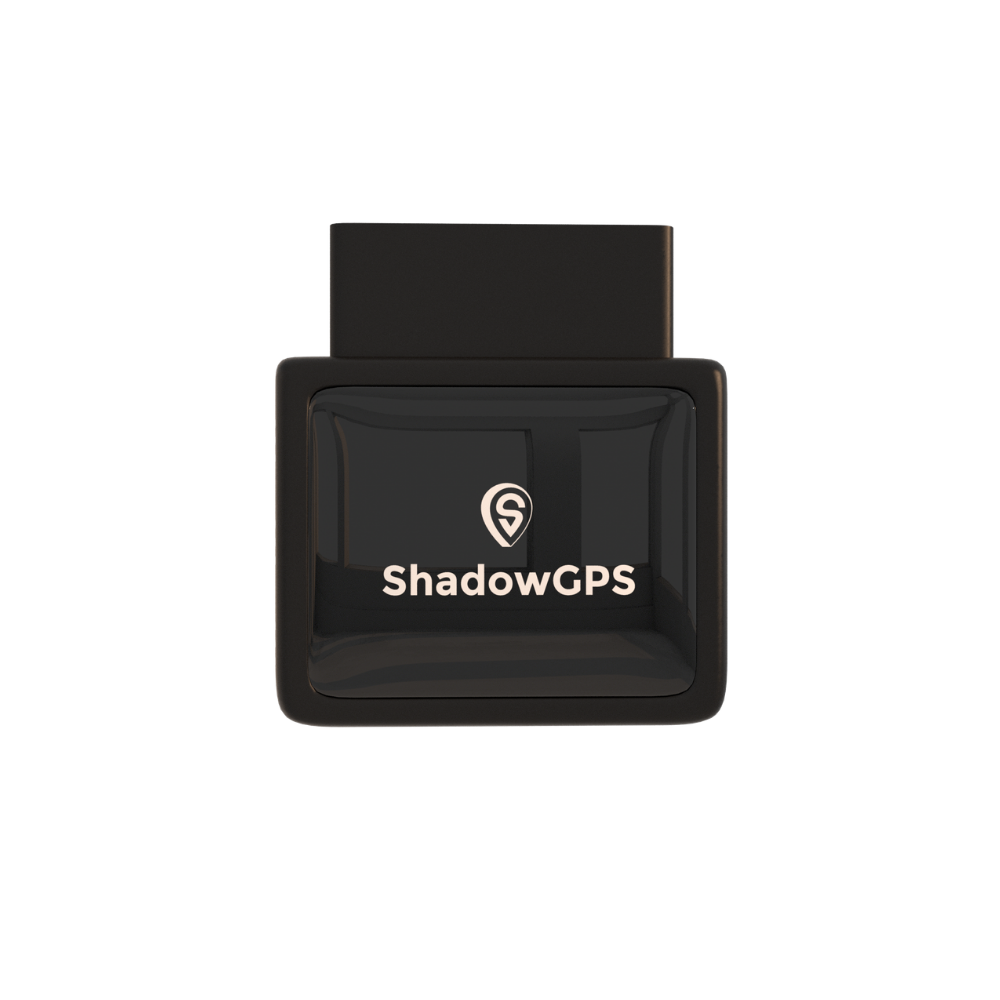
ShadowAuto
- Plug it in under 2 minutes, powered by your truck
- Car Alarm and tamper alerts after hours
- Trip timeline, trip replay, and engine codes

Best for: box trucks, pickups, and cargo vans with a standard OBD-II port that run jobs every day.
Check your port before you buy
Most pickups, cargo vans, and lighter cab-over box trucks have the standard 16-pin OBD-II port, usually under the steering column. Heavier trucks (think large dump trucks and roll-offs) often use a round 9-pin diagnostic port instead, which an OBD-II tracker won't plug into. For those, use a battery tracker. Not sure where yours is? See where is my OBD2 port.
For the trailer and equipment: ShadowTrack (battery)
ShadowTrack is a battery-powered tracker that lasts up to about 15 days per charge and sits in a weatherproof magnetic case. Stick it inside a trailer frame rail, a toolbox, or a piece of equipment and it tracks on its own, even when the trailer is unhooked.
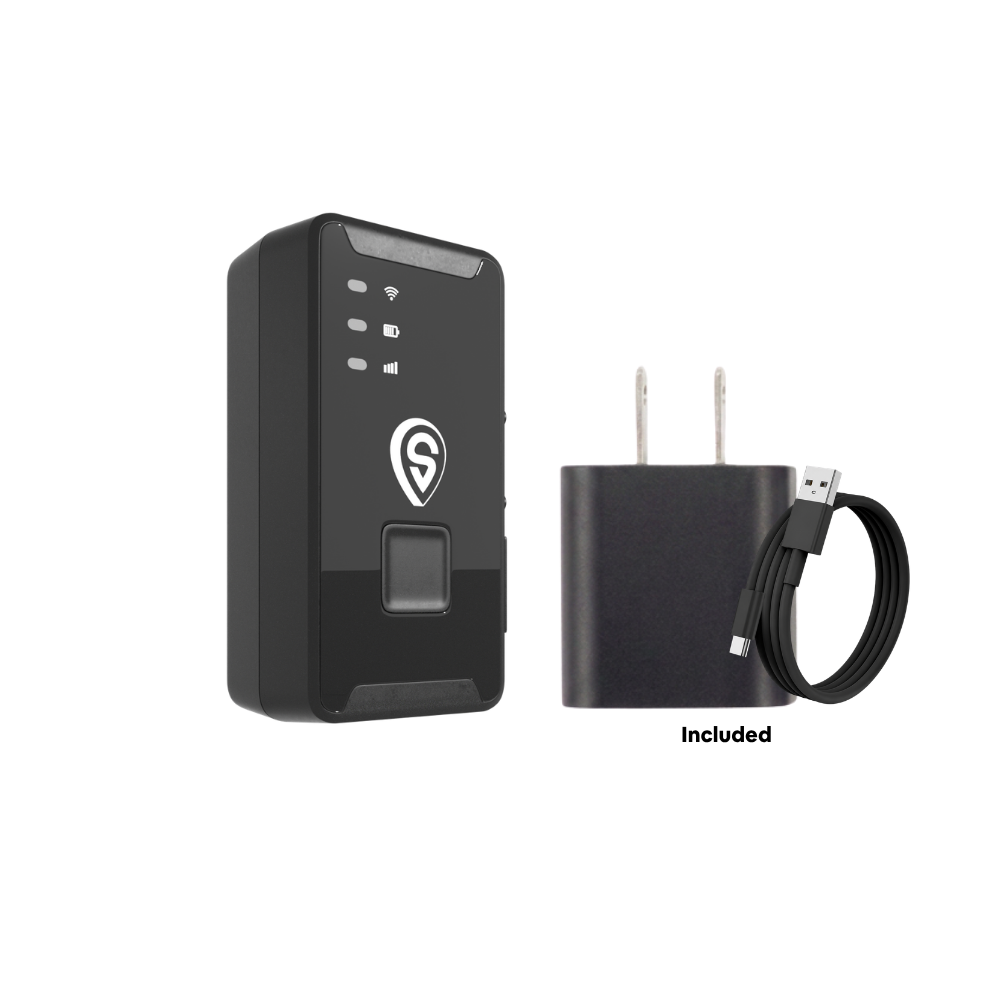
ShadowTrack
- Up to ~15 days per charge
- Weatherproof magnetic case hides almost anywhere
- Works on trailers and trucks without an OBD-II port
Best for: dump trailers, enclosed trailers, skid steers, and heavier trucks with a 9-pin port. Not sure which one you need? Read battery-powered vs. OBD GPS trackers.
The Junk Hauler's 4-Zone Geofence Setup
A geofence is a virtual fence on the map. When your truck or trailer enters or leaves it, you get an alert. Most haulers only need four zones to cover 90% of what matters.
| Zone | Where to draw it | Alert to turn on | Why it matters |
|---|---|---|---|
| 1. Home base | Your yard, shop, or driveway | Leaves after hours | First warning if a truck or trailer moves at night |
| 2. Dump site | Transfer station or landfill you use most | Arrives and leaves | Shows real dump-run time and wait times at the scale |
| 3. Donation / recycling | Thrift drop-offs, scrap and e-waste recyclers | Arrives | Confirms donation drops for customers who ask for receipts |
| 4. Big job site | Multi-day cleanouts or commercial sites | Arrives and leaves | Timestamped proof of service for property managers |
Pair zone 1 with Car Alarm on any truck that sits overnight. That combination answers the question every owner asks at 11 p.m.: is my truck still where I left it?
Other GPS Trackers Junk Haulers Consider
ShadowGPS isn't the only option, and some haulers will be better served elsewhere. We looked at each tracker the way a junk removal owner would.
1. Bouncie
Bouncie is a popular plug-in OBD-II tracker with a low monthly fee and strong app-store ratings. It updates every 15 seconds and includes a driving report card. The catch for haulers: it's OBD-only, so it can't cover a trailer, and it stops reporting the moment it's unplugged.
Pros
- Low monthly fee, no contract
- Simple plug-in setup
- Driving behavior reports
Cons
- OBD-only, no battery option for trailers
- Goes dark when unplugged
- Slower 15-second updates


Best for: a single pickup with no trailer, where the lowest monthly fee matters most.
2. LandAirSea 54
The LandAirSea 54 is a small, waterproof magnetic tracker from a long-running U.S. brand. It's a common pick for trailers. Its base plans update slowly, and the best monthly rates require longer prepay terms, so read the plan details closely.
Pros
- Compact, waterproof, magnetic
- Well-known brand
- Works on unpowered trailers
Cons
- Base plan updates every 3 minutes
- Faster updates cost much more per month
- Lowest rates tied to long prepay terms

Best for: a trailer you mainly want to find if it goes missing, not watch live.
3. BrickHouse Spark Nano 7
The Spark Nano 7 is a small portable tracker that works in a truck cab, a toolbox, or on a trailer with an optional magnetic case. Plans are tiered, and costs climb as you add trackers and faster updates.
Pros
- Small and portable
- Optional extended-battery magnetic case
- No long-term contract
Cons
- Higher monthly plans than most
- Update speed depends on plan tier
- Signal issues reported in weak-coverage areas

Best for: haulers who want one portable tracker to move between a truck and equipment.
4. Apple AirTag
Plenty of haulers toss an AirTag on a trailer and call it done. It's a Bluetooth item finder, not a GPS tracker. It only updates when a nearby iPhone passes by, so a trailer parked in an empty lot or rural yard may not report at all, and anti-stalking alerts can tip off whoever has it.
Pros
- No monthly fee
- Tiny and easy to hide
- Great for keys and small gear
Cons
- No live GPS or trip history
- Depends on nearby iPhones
- Alerts can warn a thief it's there

Best for: keys, tool bags, and a backup tag alongside a real GPS tracker. More in why AirTags fail for cars.
Junk Removal GPS Tracker Comparison
| Tracker | Type | Live updates | Monthly fee | Contract | Best for |
|---|---|---|---|---|---|
| Apple AirTag | Bluetooth tag | No (crowd-sourced) | None | None | Keys and small gear |
| Moto Watchdog | Wired / plug-in | Yes | None ($119.99 one-time) | None | Owners who want no monthly bill |
| LandAirSea 54 | Battery, magnetic | 3 min to 3 sec, by tier | $9.95 to $49.95 | 2-yr for best rate | Trailer recovery |
| BrickHouse Spark Nano 7 | Battery, portable | By plan tier | $17.99 to $34.99 | None | Moving between assets |
| Bouncie | OBD-II plug-in | Every 15 sec | $9.00 to $9.65 | None | One pickup, no trailer |
| Enterprise fleet platforms | Hardwired + software | Yes | Quote-based | Usually multi-year | Large waste and roll-off fleets |
| ShadowTrack | Battery, magnetic | Every 5 sec | $9 to $15 | None, ever | Dump trailers and equipment |
| ShadowAuto | OBD-II plug-in | Every 5 sec | $9 to $15 | None, ever | Junk trucks, pickups, vans |
Competitor pricing and update speeds are based on publicly listed plans as of October 2026 and can change. ShadowGPS live updates apply while your truck is moving. Check each brand's site for current terms.
How Much Does GPS Tracking Cost for a Junk Removal Business?
GPS tracking for a junk removal truck typically costs a one-time device price plus a monthly fee. With ShadowGPS, each tracker is $69.90, and service runs $15 a month month-to-month, or less when you prepay. No contract. Month-to-month, or prepay and save.
| Number of trackers | Monthly | Quarterly | Annual | 2 Year |
|---|---|---|---|---|
| 1 to 3 trackers | $15/mo | $13/mo | $12/mo | $9/mo |
| 4 to 10 trackers | $13/mo | $11/mo | $10/mo | $8/mo |
A typical one-truck hauler with a dump trailer runs two trackers: ShadowAuto in the truck and ShadowTrack on the trailer. A three-truck crew with two trailers runs five, which drops everyone into the lower 4 to 10 tier. See the full breakdown on our pricing page or in what GPS tracking really costs a small fleet.
Is GPS tracking worth it for a small junk removal business?
Look at it as one job. If a tracker helps you fit one extra same-day pickup a month, avoid one "nobody showed up" refund, or catch one overnight move of a trailer, it has done its job. The real value is certainty: knowing where your truck is and what it did today, without calling anyone.
How to Set Up GPS Tracking on a Junk Truck (5 Steps)
- Count what moves. List every truck, trailer, and piece of equipment that leaves your yard. Trucks with an OBD-II port get ShadowAuto; trailers and heavier trucks get ShadowTrack.
- Plug it in. Find the OBD-II port under the dash and plug ShadowAuto in. It takes under 2 minutes. For ShadowTrack, charge it, then place the magnetic case on a clean metal surface out of sight.
- Add it to the app. Download the ShadowGPS app, sign in, and add each tracker to the same account so every truck shows on one map.
- Draw your four zones. Set up home base, dump site, donation drop, and any big job site, and turn on the alerts from the table above.
- Tell your crew. Explain what's tracked and why before day one. It keeps trust high and keeps you on the right side of notice rules.
For a step-by-step with photos, see how to set up a GPS tracker in your car.
Tracking Your Crew: Legal and Trust Basics
Is it legal to GPS track a junk removal truck your employees drive?
In general, yes, when your business owns the truck and the tracking is for business purposes. A few states require employers to give written notice of electronic monitoring, including New York, Connecticut, and Delaware, so the safest habit everywhere is simple: tell your crew in writing what's tracked and when. Tracking a personal vehicle you don't own is a different story. This isn't legal advice, so check your state's rules. Our employee vehicle tracking legal guide goes deeper.
The legal piece is the easy part. The trust piece is what makes tracking work long term:
- Lead with safety and customers. Frame it as faster dispatch, fewer angry customer calls, and getting the truck back if it's stolen.
- Track the truck, not the person. Tracking during work hours on company trucks is reasonable. Following someone's personal life isn't.
- Use the data to help, not to punish. Share good stats, like the fastest dump-run times, not just problems.
- Put it in writing. One short policy page avoids most misunderstandings later.
We wrote a full playbook on telling your crew about GPS trackers without losing their trust.
Common Mistakes Junk Haulers Make With GPS Tracking
- Tracking the truck but not the trailer. The trailer is often what gets taken, because it sits unhooked.
- Using a Bluetooth tag as the only tracker. No live location, no trip history, and it may not report at all in a rural lot.
- Locking into a multi-year contract. Junk removal is seasonal. Month-to-month lets you add trackers in spring and scale down in winter.
- Setting up alerts and ignoring them. Keep alerts to the four zones that matter so notifications still mean something.
- Buying fleet software you don't need. Route-sequencing platforms are built for municipal routes, not 6 to 10 on-demand jobs a day.
Key takeaways
GPS tracking for junk removal gives small haulers four things: faster dispatch, real arrival times for customers, timestamped proof of service, and overnight protection for trucks and trailers. Use an OBD-II tracker in trucks with a standard port, a battery tracker on trailers and heavier trucks, set up four geofence zones, and tell your crew up front. Choose a plan with no contract so it fits a seasonal business.
Frequently Asked Questions
Is there a monthly fee for a junk truck GPS tracker?
Most live GPS trackers have a monthly fee because they use cellular data to send your truck's location. ShadowGPS is $15 a month month-to-month, or as low as $9 a month when you prepay, with lower rates for 4 or more trackers. No contract. Month-to-month, or prepay and save.
Does a GPS tracker for junk removal need a SIM card?
Not with ShadowGPS. The cellular connection is built into the tracker and included in your plan, so there's no separate SIM card or carrier account to set up.
Is it hard to set up a GPS tracker in a junk truck?
No. ShadowAuto plugs into your truck's OBD-II port in under 2 minutes with no tools or wiring. ShadowTrack charges up and sticks on with a magnetic case. Then you add it to the app.
Do junk removal companies use GPS tracking?
Yes. From large franchise operations to one-truck owner-operators, haulers use GPS tracking to dispatch the closest crew, share arrival times, keep proof of service, and protect trucks and trailers from theft.
Can I track my dump trailer separately from my truck?
Yes, and you should. A battery tracker like ShadowTrack in a magnetic case tracks the trailer on its own, so you still see it when it's unhooked and parked in a yard or driveway.
Will an OBD-II tracker work in a box truck or dump truck?
It works in most pickups, cargo vans, and many lighter cab-over box trucks that have a standard 16-pin OBD-II port. Larger dump trucks and roll-offs often use a 9-pin port instead, so use a battery tracker like ShadowTrack on those.
Is it legal to track my junk removal employees with GPS?
Generally yes on business-owned trucks used for work, but some states, including New York, Connecticut, and Delaware, require written notice of electronic monitoring. Tell your crew in writing and check your state's rules. This is not legal advice.
Can I use an AirTag instead of a GPS tracker on my junk trailer?
You can, but it's a backup, not a tracker. AirTags only update when an iPhone passes nearby, have no live location or trip history, and can alert a thief that they're being followed.
How accurate is GPS tracking for junk removal trucks?
In open sky, GPS is usually accurate to within a few meters, which is plenty to tell which driveway your truck is parked in. Tall buildings, parking garages, and heavy tree cover can reduce accuracy.
What happens if I cancel my ShadowGPS plan?
You can cancel any time, with no contract and no cancellation fee. That's helpful for seasonal haulers who run extra trucks in spring and summer. Your purchase is also backed by a 30-day money-back guarantee.
Know where your truck is. Every job, every dump run.
Plug it in. See it move. Cancel any time.
Pricing current as of October 2026. Some links in this article are affiliate links, which means ShadowGPS may earn a commission at no extra cost to you. Legal information is general and not legal advice; check the rules in your state before tracking vehicles driven by employees.

