

A GPS tracker for teen drivers shows you where your car is, how fast it's going, and when it gets home, right from your phone. It won't turn your teen into a careful driver on its own. Paired with a clear agreement and a weekly check-in, though, it turns "text me when you get there" into something you can actually count on.
If you just handed over the keys, you know the feeling. The car backs out of the driveway and your brain fills in every blank. This guide covers what the research says about teen driving risk, which tracker features matter for a new driver, how to get one running in under two minutes, and how to talk about it so it builds trust instead of breaking it.
The best way to use GPS tracking devices for vehicles with a teen driver: plug an OBD-II tracker into the car your teen drives, tell them it's there, and agree on three alerts together: a top speed, a curfew, and a few geofences (home, school, work). Review trips side by side once a week, and loosen the rules as they earn it. Tracking a car you own is legal across the US.
Why the First Year Behind the Wheel Is the Riskiest
New drivers aren't careless by default. They're inexperienced, and inexperience is exactly what makes the first months behind the wheel so different from every year after.
According to the CDC, drivers ages 16 to 19 have a higher crash risk than any other age group. Per mile driven, their fatal crash rate is almost three times that of drivers 20 and older.
The numbers every parent should know
- The first months matter most. CDC data shows the crash rate per mile is about 1.5 times higher for 16-year-olds than for 18 and 19-year-olds.
- Night driving multiplies risk. At night, the fatal crash rate for teen drivers is roughly three times that of adults ages 30 to 59, per mile driven.
- Friends in the car raise the stakes. Teen or young adult passengers increase crash risk for unsupervised teen drivers.
- Seat belts are still skipped. Among teen drivers and passengers killed in crashes in 2020, 56% weren't buckled up.
What a tracker can and can't see
The CDC lists inexperience, night and weekend driving, skipped seat belts, distraction, speeding, and alcohol as the main teen crash risk factors. A tracker gives you clear visibility into some of these and none into others. Knowing the difference keeps your expectations honest.
What a tracker shows you
- Speed on every trip, with alerts over your limit
- Late-night driving, through curfew alerts
- Where the car went and when it arrived
- A possible crash, the moment it happens
What it can't see
- Phone use while driving
- Whether everyone is wearing a seat belt
- How many friends are in the car
- Who is actually behind the wheel
That's why the rules you set out loud (phone in the glovebox, belts on, a passenger limit) matter as much as anything the app shows you.
What Is a GPS Tracker for Teen Drivers?
A GPS tracker for teen drivers is a small device that plugs into, or mounts inside, the car your teen drives and reports its location, speed, and trips to a parent's phone app. It has its own cellular connection, so your teen doesn't need to carry anything, keep location sharing on, or keep a phone charged.
That last part is the big difference from phone apps. A phone can die, stay home, or have location turned off. A tracker in the car keeps reporting as long as the car is moving.
Live location you can check anytime
Open the app and you see your car on the map. ShadowGPS trackers refresh every 5 seconds while the car is moving, so you're watching where it is now, not where it was a few minutes ago. For a parent waiting up, that's the difference between guessing and knowing.
Trip timeline and trip replay
Every drive is saved: start time, stops, route, and arrival. With trip replay, you can play back a drive on the map. This is the feature most parents end up using week to week, because it's the easiest way to have a calm conversation about one specific drive.
Speed alerts
You pick a number, and the app pings you when the car goes over it. Most families settle on a highway threshold they'd both call "too fast," then review the trip together instead of calling mid-drive.
Geofences and curfew alerts
A geofence is a virtual boundary around a place like home, school, or a part-time job. You get a notification when the car arrives or leaves. Curfew alerts flag any driving after a set time, which lines up neatly with the night limits in most state graduated licensing rules. We break down setup in our guide to setting up geofence alerts.
Unplug and tamper alerts
Teens are resourceful. If the tracker gets unplugged, you get an alert. That's not about catching anyone. It's about making the agreement self-enforcing, so you don't have to play detective.
Crash alerts
ShadowAuto can send a Collision SOS alert if it detects a crash. For a parent, that's the one notification you hope you never get and the one you'll be most grateful for. Learn more about how Collision SOS alerts work.
Car health alerts
A plug-in tracker can read check engine codes, battery voltage, and fuel level. That means you hear about a weak battery before it strands your teen in a dark parking lot after practice.
The first solo week
Geofences on home and school send you an arrival ping, so your teen never has to text "here" while still in the driver's seat.
Friday night
A curfew alert at 11 p.m. and a live map mean you can actually sleep instead of refreshing your messages.
The car won't start
A low-battery or check engine alert gives you a heads-up days early, and Share Location gets roadside help to the exact spot.
Does Tracking Actually Make Teens Drive Safer?
Yes, with one important condition. In a randomized study from the Insurance Institute for Highway Safety (IIHS), researchers put monitoring devices in teens' cars and concluded that electronic monitoring can reduce risky driving, especially skipped seat belts.
The detail that matters most: serious speeding (10+ mph over the limit) dropped significantly only when teens got feedback in the moment and parents received reports of what happened. A broader research review from County Health Rankings points the same way: immediate feedback paired with later feedback for the family is what moves the needle on speeding and hard braking.
What this means for your family
The tracker is half the system. The other half is you looking at the data with your teen. A tracker nobody talks about is just a map. A tracker you review together every week is a driving coach.
ShadowAuto vs. ShadowTrack: Which Fits Your Teen's Car?
ShadowAuto: the plug-in tracker most parents should start with
ShadowAuto plugs straight into the OBD-II port under your dashboard. No tools, no wiring, no appointment. It takes power from the car, so there's nothing to charge and nothing for your teen to forget. It works with gas cars from 1996 or newer and most diesel models.
For teen drivers, it covers everything on the list above: live location, trip replay, speed and curfew alerts, geofences, unplug alerts, Collision SOS, and car health. You and your co-parent can both see the car from your own phones.
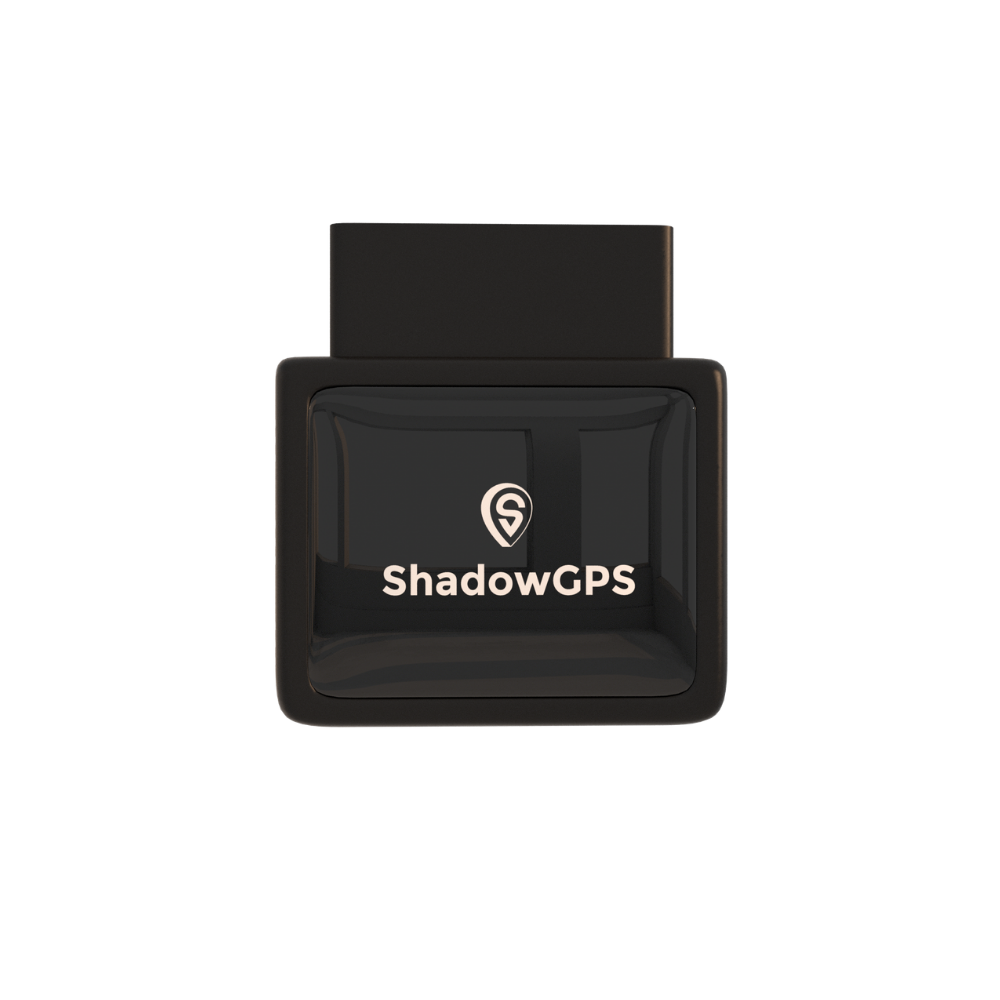
ShadowAuto
- Plug it in under 2 minutes, never charge it
- Speed, curfew, geofence and unplug alerts
- Collision SOS and check engine alerts


ShadowTrack: for an EV, an older car, or a second family car
Some cars don't have an easy-to-reach OBD-II port, and some teens rotate between a parent's car and a grandparent's. ShadowTrack is battery-powered, sits in a weatherproof magnetic case, and moves between cars in seconds. A charge lasts about 15 days, so add "charge the tracker" to the same calendar reminder as your weekly trip review.
We recommend telling your teen where it is, just as you would with ShadowAuto. The goal is a shared agreement, not a hidden one.
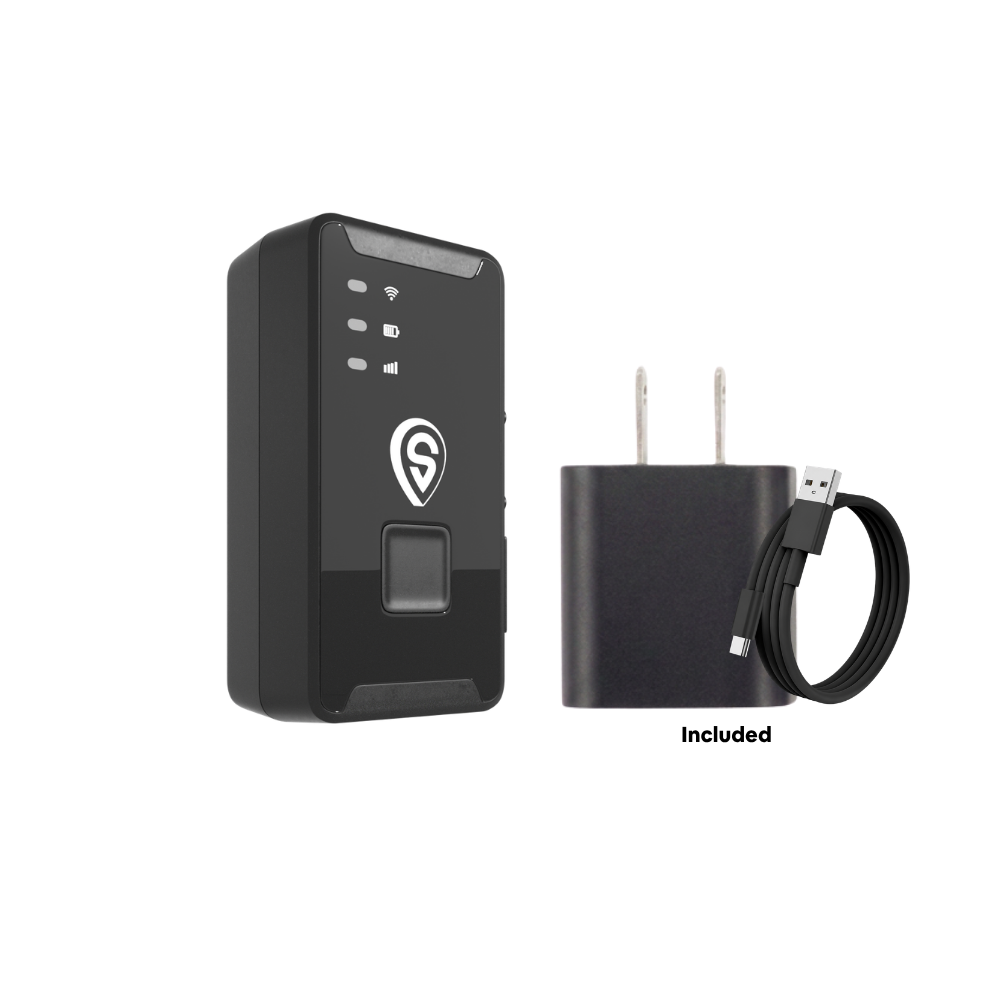
ShadowTrack
- No port needed, works in any car
- About 15 days per charge
- Geofence, motion and speed alerts
Best for: ShadowAuto if your teen has one regular car with an OBD-II port (most families). ShadowTrack if the car is an EV, has no reachable port, or your teen switches between cars.
How to Set Up a GPS Tracker on Your Teen's Car in 8 Steps
The whole setup takes about ten minutes, and most of that is the conversation in step one.
- Talk first. Before anything gets plugged in, explain what the tracker is for and what you'll look at (more on that below).
- Find the OBD-II port. It's under the dashboard on the driver's side, usually near the steering column or above the pedals.
- Plug in ShadowAuto. Push it in until it's snug. No tools, under two minutes.
- Download the ShadowGPS app from the App Store or Google Play, then activate your tracker.
- Set a speed alert. Pick a number you agreed on together, such as 10 mph over your local highway limit.
- Add geofences. Start with home, school, and work. Add a friend's house or the gym later.
- Set a curfew alert. Match your state's nighttime driving limit for new drivers, or your house rule if it's earlier.
- Add your co-parent. Give the other parent or guardian access so alerts don't all land on one phone.
How to Talk to Your Teen About GPS Tracking
How you introduce the tracker decides whether it feels like trust or like a leash. The families who get the most out of it treat it as a short-term training tool with a clear finish line.
Lead with the why, not the rules
Start with the honest reason: the first year is statistically the riskiest, and you want to know they're okay without texting them while they drive. Teens respond much better to "I'd rather check an app than call you on the highway" than to "I'm going to be watching you."
Set the rules together
Ask your teen what speed alert feels fair and which places should be geofenced. When they help write the rules, they're far more likely to follow them. You'll also learn what they're worried about, which is useful on its own.
A simple parent-teen driving agreement
Write it down, keep it to one page, and stick it on the fridge. Here's a structure that works:
1. What the tracker is for
Safety and peace of mind during the learning period. Not for checking up on friends, and not for random location checks during school hours.
2. What we'll look at, and when
Speed alerts, curfew alerts, and arrival pings in real time. Trip history only during a weekly 10-minute review, together, at the kitchen table.
3. What happens after an alert
One speeding alert means a conversation, not a punishment. A pattern means one rule tightens for two weeks. Unplugging the tracker means the keys stay home.
4. How you earn more freedom
Clean weeks unlock later curfews and new destinations, following the plan below. The agreement ends on a date you both sign.
The Graduated Freedom Plan: Loosen the Rules as They Earn It
Every state uses some form of graduated driver licensing (GDL), which phases in privileges like night driving and passengers over time. A CDC review found GDL programs are associated with 20% to 40% lower crash risk for the youngest teen drivers. Your tracker settings can follow the same idea.
| Stage | When | Tracker settings | How they move up |
|---|---|---|---|
| 1. Learning | Months 0-3 | Speed alert, early curfew, geofences on home, school and work | 4 clean weeks in a row |
| 2. Building | Months 4-6 | Later curfew, more approved places, review every two weeks | No speed alerts for a month |
| 3. Trusted | Months 7-12 | Speed and curfew alerts only, monthly check-in | Agreement end date reached |
| 4. Independent | 12+ months | Crash, unplug and Car Alarm alerts only, or turn tracking off together | You both agree it's done |
Adjust stage timing and curfews to match your state's GDL rules. Many states restrict night driving and passengers for the first 6-12 months.
Stage 4 is worth thinking about early. Plenty of families keep the tracker in the car after the teen years for theft protection alone. Car Alarm alerts you if your car moves when it shouldn't, which matters just as much for a 22-year-old's first car.
GPS Tracker vs. Phone Apps vs. Insurance Apps: Compared
Parents usually weigh three kinds of tools: a GPS tracker in the car, a family location app on the teen's phone, or a driving app from their insurer. Here's how the common options compare for teen driver monitoring.
| Option | Tracks | Live updates | Teen-driver alerts | Monthly fee | Contract |
|---|---|---|---|---|---|
| Family location app (e.g. Life360) | Teen's phone | Real-time, if phone is on | Driving reports on paid tiers | Free tier; paid $14.99-$24.99 | None |
| Insurer driving app | Teen's phone | Trip-based, not live | Driving score | Usually free with policy | Tied to policy |
| Bouncie | Car (OBD-II) | Every 15 sec | Speed, geofence, hard braking | $9.00-$9.65 | None |
| LandAirSea 54 | Car (battery) | 3 min to 3 sec, by plan tier | Geofence, speed (by plan) | $9.95-$49.95 | 2 years for best rate |
| ShadowTrack | Car (battery) | Every 5 sec while moving | Speed, geofence, motion | $12-$15 | None, ever |
| ShadowAuto | Car (OBD-II) | Every 5 sec while moving | Speed, curfew, geofence, unplug, Collision SOS | $12-$15 | None, ever |
Competitor pricing and refresh rates from publicly listed plans as of October 2026. Check each brand's site for current terms.
Phone apps and car trackers aren't really rivals. A phone app follows your teen. A tracker follows your car, even when the phone is dead, left at a friend's house, or has location turned off. Plenty of families use both. For a wider look at in-car options, see our best GPS trackers for cars in 2026.
Is It Legal to Put a GPS Tracker on Your Teen's Car?
The short version
If the car is yours, meaning your name is on the title, tracking it is legal throughout the US. Parents of minor children also have wide latitude to supervise them. Two situations need more care:
- Your teen is 18 or older. Once your child turns 18, they have full adult privacy rights. If the car is still titled to you, tracking it is generally still legal, but get their agreement anyway.
- The car is titled in your teen's name. Then it's their car. Several states, including California and Texas, have laws against tracking someone else's vehicle without the owner's consent, so get written consent first.
This is general information, not legal advice. When in doubt, talk to a local attorney. The simplest way to stay on the right side of every state's law is also the best parenting move: tell your teen the tracker is there.
6 Mistakes Parents Make With Teen Driver Tracking
- Tracking in secret. If your teen finds a hidden tracker, you lose the trust the whole plan depends on, and you've also skipped the feedback loop that the IIHS research says makes monitoring work.
- Turning on every alert. Twenty notifications a day trains you to ignore all of them. Start with speed, curfew, and two or three geofences.
- Calling or texting during a drive. An alert pops up and you instinctively call. Don't. Wait until they've arrived, or you've just created the distraction you were worried about.
- Using data only to punish. Point out the clean weeks too. Praise for a month with zero speed alerts does more than a lecture about one.
- Forgetting the finish line. Monitoring with no end date starts to feel like a sentence. Put the end date in the agreement.
- Relying on the phone alone. Phone apps stop reporting when the battery dies or location is off. A tracker in the car doesn't depend on any of that.
Can a GPS Tracker Lower Your Car Insurance?
Sometimes, but not automatically. Most teen-driver discounts come through an insurer's own usage-based program, which typically uses its own phone app or plug-in device. An aftermarket tracker usually won't feed into that score.
Some insurers do offer an anti-theft device discount for a GPS tracker, though. Call your agent, ask whether a GPS tracker qualifies, and ask about good-student and driver's-ed discounts at the same time. Don't buy any tracker on the promise of an insurance discount alone.
What a Teen Driver Tracker Costs (and the Monthly Fee Question)
Every real-time GPS tracker has a monthly fee, because it uses a cellular connection to send location to your phone. ShadowAuto and ShadowTrack are $69.90 each, with plans from $12 to $15 a month. No contract, ever. Go month-to-month, or prepay and save. There's also a 30-day money-back guarantee.
You don't need to buy a SIM card or add a line to your phone plan. The cellular connection is built in and included in your plan. Here's more on whether a GPS tracker needs a SIM card, and you can compare plans on our pricing page.
When your teen moves to Stage 4, you can cancel any time. Or keep the tracker for theft protection and keep watching your car the way you'd watch any car that matters to you. More ideas for families are on our personal tracking page.
Frequently Asked Questions
Is there a monthly fee for a teen driver GPS tracker?
Yes. Any tracker that shows live location uses a cellular connection, which carries a monthly fee. ShadowGPS plans run $12 to $15 a month with no contract, ever. Go month-to-month, or prepay and save, and cancel any time.
Does a GPS tracker need a SIM card?
Not with ShadowGPS. The cellular connection is built into ShadowAuto and ShadowTrack and included in your plan, so there's nothing extra to buy or set up with your phone carrier.
Should I tell my teen there's a tracker in the car?
Yes. Research from IIHS found the biggest drop in speeding happened when teens got feedback and parents reviewed reports, which only works if your teen knows. Telling them also protects the trust you'll need for every other conversation about driving.
Can my teen unplug or turn off the tracker?
They can physically unplug a plug-in tracker, but ShadowAuto sends you an alert the moment it happens. Write the consequence into your driving agreement up front so an unplug alert never turns into a surprise argument.
Is a GPS tracker better than Life360 for a teen driver?
They do different jobs. Life360 tracks your teen's phone, which stops reporting if the phone dies or location is off. A GPS tracker tracks your car and keeps reporting no matter what happens to the phone. Many families use both.
Can I get an alert if my teen is speeding?
Yes. You set a speed threshold in the ShadowGPS app and get a notification whenever the car goes over it. Every trip also logs speed, so you can review it together later instead of calling during the drive.
Is it legal to track my 18-year-old's car?
If the car is titled to you, it's generally legal, though your adult child has full privacy rights and you should get their agreement. If the car is titled to them, you need their consent, and some states make tracking without it a crime. This isn't legal advice, so check your state's rules.
How long should I monitor my teen driver?
Most families taper over 6 to 12 months, which lines up with the riskiest early period CDC data points to. Use clear milestones, like four clean weeks, to loosen alerts step by step, and put an end date in your agreement.
Can I track more than one teen or car?
Yes. You can manage multiple trackers from one ShadowGPS account and give both parents access. Each car gets its own tracker, its own alerts, and its own trip history.
Will the tracker help if the car is stolen?
Yes. Car Alarm alerts you if your car moves when it shouldn't, and live location shows police exactly where it is. That's why many families keep the tracker long after the teen years end.
Pricing as of October 2026. Teen crash statistics from the CDC and IIHS, linked above. Some links in this article are Amazon affiliate links, and ShadowGPS may earn a commission at no extra cost to you. Legal information is general and not legal advice.

