

What makes the best GPS tracker for vehicle security? It comes down to seven things: how fast the location refreshes, what it alerts you to, whether it survives tampering, how it's powered, the network it runs on, an app you can use when your heart is racing, and pricing you can actually trust.
Most "best tracker" lists skip straight to product names. This guide does the opposite. We break down each feature in plain words, show you what "good" looks like, and flag the shiny extras that sound great on a box but rarely help you get your car back.
Whether you're a parent handing the keys to a new driver, a Turo host with a car out on a rental, or running a few work trucks, you'll leave knowing exactly what to look for in a GPS tracker for your car.
The 7 must-have features in a GPS tracker for vehicle security:
- Real-time updates every few seconds while your car is moving
- Instant alerts for movement, trip starts, geofence exits and tampering
- Tamper and unplug protection, ideally with a hidden backup tracker
- A power source that fits your car (plug-in OBD-II or rechargeable battery)
- A modern LTE cellular connection with nationwide coverage
- A simple app with live map, trip history and location sharing
- Clear pricing with no contract, so the tracker stays active when it matters
Why "Security" Changes What You Need From a Tracker
A tracker that's fine for checking where your teen parked can still let you down during a theft. Security puts pressure on every weak spot at once: slow updates, missed alerts, a dead battery, a spotty signal or an app you can't figure out in a hurry.
The good news is that car theft is falling. The National Insurance Crime Bureau (NICB) reports U.S. vehicle thefts dropped 23.2% in 2025, from 850,708 to 659,880. That's still roughly one car stolen every 48 seconds, and the Hyundai Elantra, Honda Accord and Hyundai Sonata topped the most-stolen list.
So the question isn't whether you need a tracker. It's whether the one you pick closes the gap between "my car is gone" and "I know exactly where it is." Each feature below either shrinks that gap or widens it.
The 7 Features of the Best GPS Tracker for Vehicle Security
1. Real-Time Location With a Fast Refresh Rate
Refresh rate is how often a tracker reports a new location while your car is moving. It's the single spec that separates a security tracker from a "where did I park" gadget, and it's the one most listings bury in the fine print.
Here's why it matters. At 30 mph, a car covers 44 feet every second. The longer the gap between updates, the further it can travel before you see it move.
| Update interval | Distance traveled at 30 mph | Distance traveled at 60 mph | What it means for you |
|---|---|---|---|
| Every 5 seconds | About 220 ft | About 440 ft | You can follow turns street by street |
| Every 15 seconds | About 660 ft | About 0.25 mile | Good, but corners get skipped |
| Every 60 seconds | About 0.5 mile | About 1 mile | You see the general direction only |
| Every 3 minutes | About 1.5 miles | About 3 miles | Your car can be in a garage before the next ping |
What good looks like
Look for updates every 5 to 15 seconds while moving, included in the standard plan. Many brands advertise "real-time" but sell a 1 to 3 minute default and charge more for faster tiers. ShadowGPS trackers update every 5 seconds while moving on every plan, which is roughly three times faster than Bouncie's 15-second standard.
Accuracy matters too
Speed is useless if the dot lands on the wrong block. According to GPS.gov, consumer GPS receivers like smartphones are typically accurate within about 16 feet (4.9 m) under open sky, and accuracy drops near tall buildings, bridges and trees. Trackers that blend GPS with other satellite systems and cell data tend to hold up better in parking garages and dense downtowns. Our deep dive on how accurate GPS trackers are covers this in detail.
Ask before you buy: "What's the update interval while moving on the plan I'm paying for, and does it cost extra?"
2. Instant Theft Alerts You Can Customize
Fast tracking only helps if you know to look. The best GPS tracker for vehicle security pushes an alert to your phone the moment something happens, so you aren't checking the map every hour out of worry.
The alerts that matter most for security
- Car alarm / movement alerts: notifies you when your parked car moves, even if nobody starts it (think towing or a flatbed).
- Trip start alerts: tells you when your car starts a trip at a time it shouldn't, like 2 a.m.
- Geofence alerts: lets you draw a virtual fence around home, work or a rental drop-off point and get pinged when your car leaves it. See how to set up geofence alerts that catch overnight theft.
- Tamper or unplug alerts: warns you if someone pulls or disturbs the tracker itself.
- Driving alerts: speed and trip notifications that matter most to parents of new drivers.
Avoid alert fatigue
More alerts aren't better if you start ignoring them. Pick a tracker that lets you choose which alerts you get and when. A Turo host might want every geofence exit, while a parent may only want late-night trip starts.
Ask before you buy: "Which alerts are included, and can I turn each one on or off?"
3. Tamper Protection and a Hard-to-Find Backup
Experienced thieves check the obvious spots. A plug-in tracker in the OBD-II port under the dashboard is easy to find, which is exactly why tamper alerts and a second, hidden tracker matter.
What strong tamper protection looks like
- Unplug alerts sent the instant power is cut, so you get a last known location and time.
- A layered setup: one tracker in the OBD-II port plus a battery tracker hidden somewhere a thief won't think to check, like under a seat, inside a trunk liner or in a weatherproof magnetic case under the frame.
- A discreet design with no flashing lights that give it away.
A note on GPS jammers
Some thieves use signal jammers to block GPS. These devices are illegal to use, sell or import in the U.S., and the FCC enforces that with fines and equipment seizure. No consumer tracker can beat a jammer sitting right next to it, which is one more reason a second hidden tracker and a "last known location" alert are so valuable.
Ask before you buy: "Will I get an alert if the tracker is unplugged, and do you sell a battery tracker I can hide as backup?"
4. A Power Source That Fits How You Use Your Car
Every tracker needs power, and there are three common ways to get it. The right one depends on your car, how often it moves and whether you want a backup.
| Power type | Setup | Charging | Best for |
|---|---|---|---|
| Plug-in OBD-II | Plug into the port under your dash, under 2 minutes | Never, powered by your car | Everyday cars and trucks, Turo, teen drivers |
| Rechargeable battery | Hide it or use a magnetic case, under 2 minutes | Every few weeks, depending on movement | Hidden backup, trailers, older cars without OBD-II |
| Hardwired | Wired into your car's electrical system, usually by a pro | Never | Owners who want a permanent, wired setup |
For most people, the sweet spot is a plug-in OBD-II tracker as your everyday tracker, with a battery tracker as the hidden backup. Not sure where your port is? Here's how to find your OBD-II port in 30 seconds.
ShadowAuto is the plug-in option. It runs on your car's power, so there's nothing to charge, and it can also read engine codes so you know what that check engine light means.
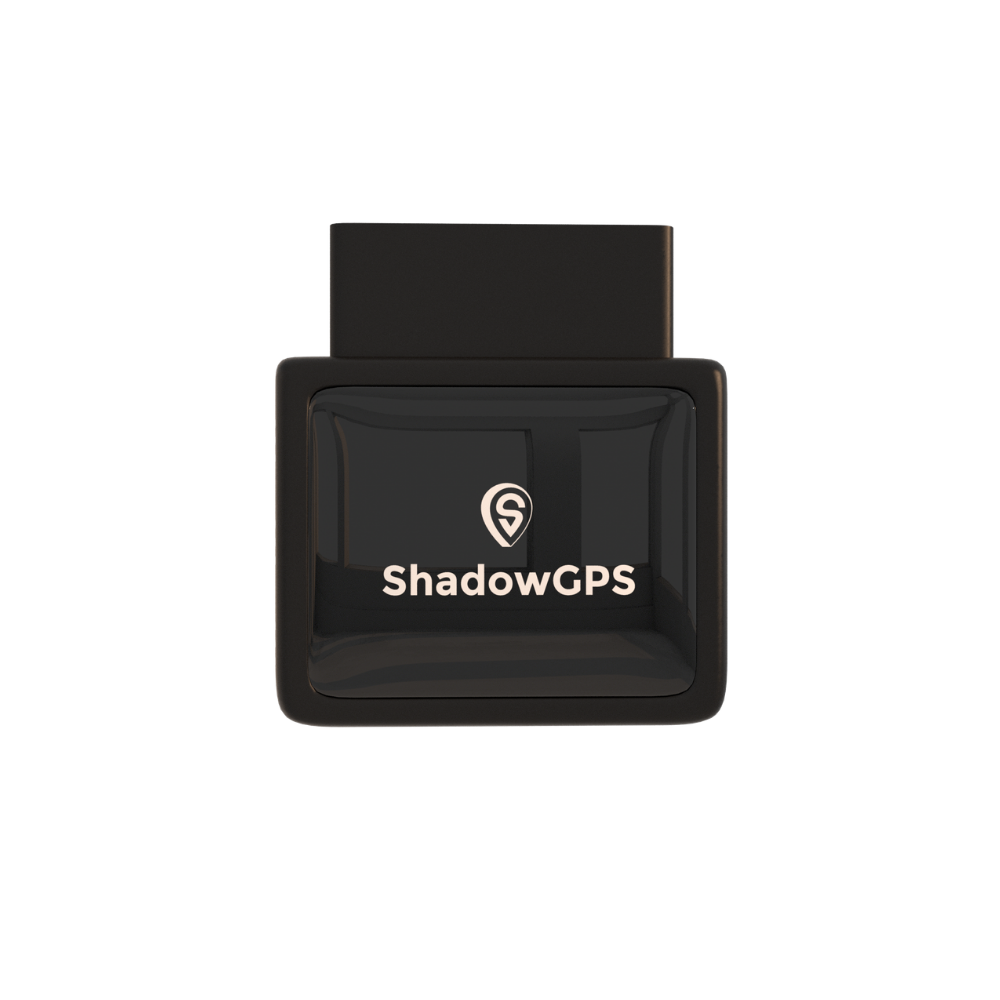
ShadowAuto
- Plugs in under 2 minutes, no tools
- Updates every 5 seconds while moving
- Car Alarm, geofence and unplug alerts


ShadowTrack is the battery option. It lasts up to about 15 days per charge depending on how much it moves, and it hides almost anywhere, which makes it the natural backup to a plug-in tracker or the main tracker for a trailer or older car.
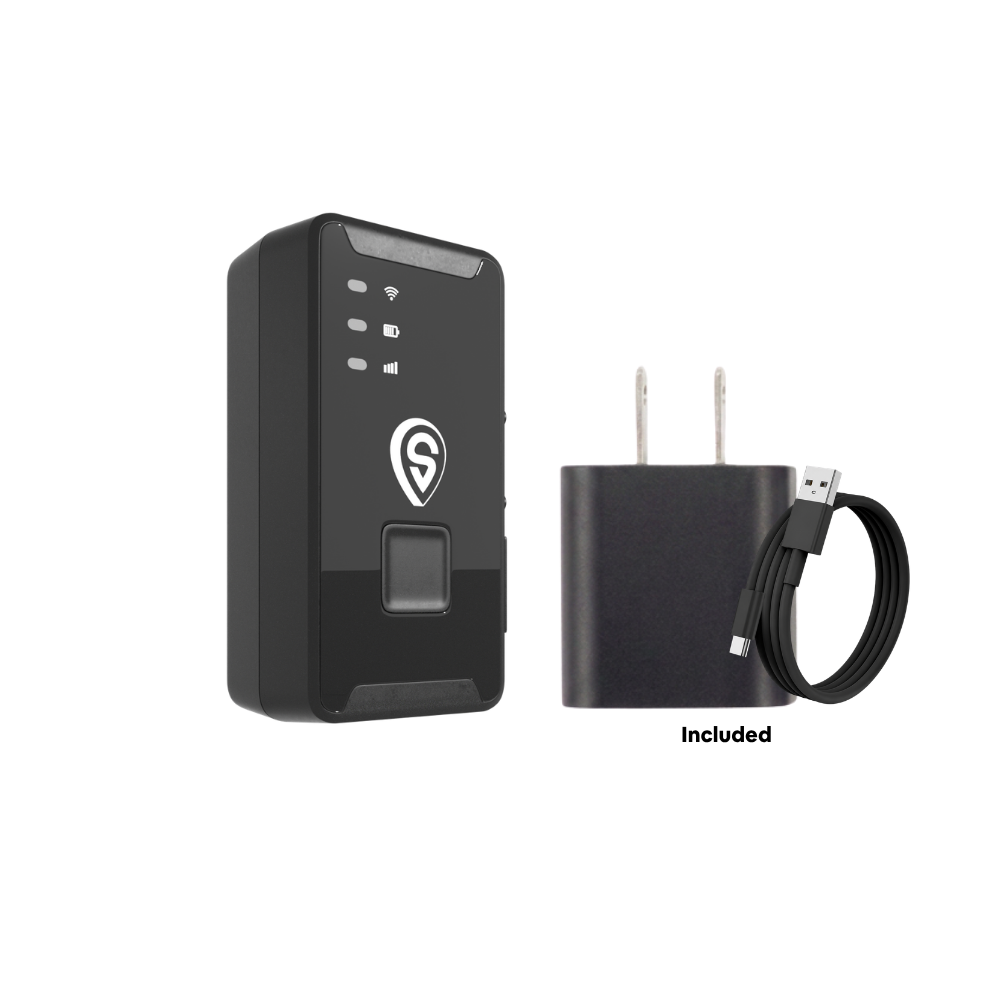
ShadowTrack
- Up to about 15 days per charge
- Works with a weatherproof magnetic case
- Same live map, alerts and trip history as ShadowAuto
Best for: ShadowAuto as your everyday tracker, ShadowTrack as the hidden backup. Want the full breakdown? Read OBD-II vs. battery-powered GPS trackers.
5. A Reliable Cellular Network and Coverage
A GPS tracker figures out where your car is from satellites, but it sends that location to your phone over a cellular network. If the network is weak or outdated, your fast refresh rate never reaches you.
What to check
- Modern LTE connectivity: older 3G trackers stopped working when U.S. carriers shut down their 3G networks. Look for LTE-M or 4G LTE.
- Multi-carrier coverage: trackers that can use more than one major carrier hold up better in rural areas and parking structures.
- No SIM card hassle: the best trackers come with connectivity built in, so you never shop for a data plan. Here's the full answer to "does a GPS tracker need a SIM card?"
- Uptime: ask for the provider's network uptime. ShadowGPS reports 99.9%.
Ask before you buy: "Which networks does it use, and do I need to buy a SIM card?"
6. An App You Can Use Under Pressure
The moment you realize your car is gone is not the moment to learn a new app. A good tracker app gets you from "open" to "here's my car on the map" in a couple of taps.
Features worth having
- Live map that follows your car as it moves
- Trip timeline and trip replay so you can see the exact route, stops and times
- Share live location so you can send a link to a family member or the police officer handling your report
- Web and mobile access so you can track from a laptop if your phone is low
- Multiple trackers in one account for families and small fleets
Sharing is the underrated one. When you report a stolen car, police can act faster on a live link than on a screenshot. Our step-by-step stolen car recovery guide explains what to do, and what not to do, in that moment.
Ask before you buy: "Can I share a live location link with someone who doesn't have the app?"
7. Clear, No-Contract Pricing
Here's a feature nobody lists: a plan you won't cancel. Almost every real-time tracker needs a monthly fee, because the tracker uses cellular data to reach your phone. A tracker that gets switched off over a surprise bill protects nothing.
Red flags to watch for
- Fast refresh rates locked behind a premium tier
- The best price only available with a 2-year lock-in
- Activation fees or cancellation hoops
ShadowGPS plans run $15/mo month-to-month for 1 to 3 trackers, with lower rates if you prepay quarterly ($13), yearly ($12) or two years ($9). No contract. Month-to-month, or prepay and save, and fast updates come standard on every plan. See current pricing.
Ask before you buy: "What's my total monthly cost, and how do I cancel?"
Features That Sound Impressive but Matter Less
Some feature lists read like a sci-fi movie. Here's an honest look at the extras that show up in marketing more often than in real recoveries.
- 24/7 professional monitoring: useful for some high-value or commercial setups, but it usually adds a higher monthly cost. With fast alerts and a shareable live link, most owners can contact police directly just as quickly.
- Remote engine cut-off: found on some professionally wired systems. It can help, but stopping a moving car remotely carries real safety risks, and police generally recommend letting them handle recovery.
- "AI threat analysis": often just basic alerts with a new name. Ask what it actually does.
- Smart home and biometric integrations: nice to have, rarely the reason a car gets found.
None of these replace the seven core features. A tracker that updates slowly and sends late alerts won't be saved by an AI label.
The 7-Point Vehicle Security Scorecard
Use this scorecard to compare any real-time GPS tracking device for vehicles side by side. Give each tracker a point for every row where it meets the "ideal" column. A score of 6 or 7 means it's built for security, not just convenience.
| Feature | Minimum bar | Ideal for security |
|---|---|---|
| Refresh rate | 60 seconds | 5 to 15 seconds, included in base plan |
| Alerts | Geofence | Movement, trip start, geofence and unplug alerts |
| Tamper protection | Unplug alert | Unplug alert plus a hidden battery backup option |
| Power | One option | Plug-in and battery options from the same app |
| Network | 4G LTE | LTE-M, multi-carrier, no SIM to buy |
| App | Live map | Live map, trip replay, share live location, web access |
| Pricing | Published price | No contract, fast updates on every plan |
How Popular GPS Trackers Compare on Security Features
Here's how common options stack up on the specs that matter most for theft. Bluetooth tags like AirTag are included because many people try them first, but they work very differently from a true GPS tracker.
| Tracker | Standard refresh | Form factor | Contract | Security trade-off |
|---|---|---|---|---|
| Bouncie | 15 seconds | OBD-II only | None | No battery backup option if unplugged |
| Tracki | Tiered, fastest costs more | Battery | Best rate needs 2 years | Short battery life on fast settings |
| Spytec | 60 seconds base | Battery or OBD-II | None | 5-second updates only on a top tier |
| LandAirSea 54 | 3 minutes base | Battery | Best rate needs 2 years | Slow base updates |
| Apple AirTag | No live GPS | Bluetooth tag | None | Relies on nearby iPhones and can alert the thief it's there |
| ShadowAuto + ShadowTrack | 5 seconds on every plan | OBD-II and battery | None, ever | Plug-in tracker plus hidden backup in one app |
Refresh rates and plan terms based on each brand's published plans as of October 2026 and may change. Check each brand's site for current details.
For a deeper look at why Bluetooth tags struggle as theft protection, read GPS tracker vs. Apple AirTag.
Which Features Matter Most for You?
All seven features matter, but your situation decides which ones you lean on hardest.
Parents of teen drivers
Prioritize trip start alerts, speed and driving alerts, and trip replay. A plug-in OBD-II tracker means nothing to charge and nothing to forget. More in our teen driver guide.
Turo and rental hosts
Prioritize geofences, unplug alerts and a hidden backup tracker, since guests can find an OBD-II port. Fast updates help you spot a car leaving its trip area. See our Turo host page.
Small fleets (2 to 5+ trucks)
Prioritize multi-tracker accounts, web access and no-contract pricing that scales. Overnight geofences around your yard catch after-hours use. Compare options in our small fleet guide.
How to Set Up a GPS Tracker for Maximum Security
Even the best tracker only protects you if it's set up right. This takes about 15 minutes.
- Plug in your main tracker. Push a plug-in tracker into the OBD-II port, or place a battery tracker somewhere hidden and dry.
- Add a hidden backup. Put a battery tracker in a second spot a thief wouldn't check first.
- Turn on security alerts. Enable movement, trip start and unplug alerts.
- Draw your geofences. Set one around home and one around work or your usual parking spot.
- Share access. Add a partner or family member so someone else gets alerts too.
- Run a test drive. Drive around the block and confirm your alerts and map updates arrive on your phone.
- Save your car's details. Keep your plate, VIN and a photo in your phone so a police report takes minutes, not hours.
Track what you own
Putting a GPS tracker on a car you own or are responsible for, like your family car, your rental fleet or your company trucks, is generally legal in the U.S. Tracking a car you don't own, or a person without their consent, can break state laws. Businesses should tell drivers about tracking in writing. Read our guide on GPS tracking laws for company vehicles and check your state's rules.
Frequently Asked Questions
Is there a monthly fee for a GPS tracker for vehicle security?
Yes, almost every real-time GPS tracker has a monthly fee because it uses cellular data to send its location to your phone. ShadowGPS plans run from $9/mo with a 2-year prepay to $15/mo month-to-month. No contract. Month-to-month, or prepay and save, and you can cancel any time.
Does a vehicle GPS tracker need a SIM card?
Not with most modern trackers. ShadowAuto and ShadowTrack come with cellular connectivity built in, so you don't need to buy a SIM card or a separate data plan. Your monthly fee covers the connection.
Is it hard to set up a GPS tracker in my car?
No. A plug-in OBD-II tracker goes into the port under your dashboard in under 2 minutes, with no tools or wiring. A battery tracker just needs to be charged and placed somewhere hidden.
What is the best GPS tracker for vehicle security?
The best GPS tracker for vehicle security updates every few seconds while moving, sends movement, geofence and unplug alerts, runs on a modern LTE network and has no contract. For most car owners, a plug-in OBD-II tracker paired with a hidden battery backup is the strongest setup.
How fast will I know if my car is stolen?
With movement and trip start alerts turned on, you'll typically get a phone notification within moments of your car moving. How closely you can follow it after that depends on the refresh rate. A tracker updating every 5 seconds shows each turn, while one updating every few minutes may only show where it ended up.
What happens if a thief unplugs my tracker?
A good tracker sends an unplug alert with the last known location the moment it loses power. That's why many owners add a hidden battery tracker as a backup, so they can keep following the car even if the plug-in tracker is found.
Can thieves block a GPS tracker with a jammer?
Jammers can interfere with GPS and cellular signals, but they're illegal to use, sell or import in the U.S. under FCC rules. Unplug alerts, last known location and a second hidden tracker give you the best chance of staying on your car's trail.
Will a GPS tracker work in a parking garage?
Signals get weaker underground and between tall buildings, so location may be less precise. Your trip history and last known location still show where the car entered the garage, which narrows the search a lot.
Is an AirTag good enough for car security?
An AirTag is a Bluetooth tag, not a GPS tracker. It only updates when an Apple device passes nearby, and it can alert a thief's iPhone that it's traveling with them. For theft protection, a real-time GPS tracker is far more reliable.
Is it legal to put a GPS tracker on my own car?
Yes, tracking a car you own is generally legal in the U.S. Tracking a car you don't own, or a person without consent, can violate state law, so stick to vehicles you own or are responsible for.
Know where your car is. Always.
Plug it in, and see your car update every five seconds. Cancel any time.
The Bottom Line
The best GPS tracker for vehicle security isn't the one with the longest feature list. It's the one that updates fast, tells you the moment something's wrong, survives a thief's first move and stays active because the pricing is fair.
Use the 7-point scorecard above on any tracker you're considering. If you want one that checks every box, ShadowAuto plugs into your car in under two minutes, and ShadowTrack hides as your backup. Both run in the same app, on 30-day money-back terms. Plug it in, see it move, cancel any time.
Pricing current as of October 2026. Theft data: NICB 2025 Vehicle Theft Report. Accuracy data: GPS.gov. Some links on this page are affiliate links, which means we may earn a commission at no extra cost to you. Only track vehicles you own or are legally responsible for.

