

Here's the short version: a real GPS tracker does not need WiFi, and it does not need a phone sitting next to it. It gets its position from satellites and sends that position over its own cellular connection, so your car shows up on your map whether it's in your driveway, a mall parking lot, or on a highway with no WiFi for fifty miles.
Where people get tripped up is that the word "tracker" covers very different gadgets. A Bluetooth tag, a WiFi-based tracker and a cellular GPS tracker can look almost identical on a store shelf. They work in completely different ways, and only one of them can reliably tell a parent where their teen's car is right now.
This guide breaks down what a GPS tracker actually needs to work, what it doesn't, and how to choose one that keeps working with no WiFi and no phone around. It's built around the questions new customers ask us most before they buy.
Yes, a GPS tracker works without WiFi and without a phone. GPS satellites tell the tracker where it is, and a built-in cellular (LTE) connection sends that location to the cloud, where you can see it in an app or any web browser. Only Bluetooth tags like AirTag and WiFi-only trackers depend on a nearby phone or network to report.
What a GPS Tracker Actually Needs to Work
Every tracker does two separate jobs. Job one is figuring out where it is. Job two is telling you.
Almost all the confusion about WiFi and phones comes from mixing those two jobs together. Once you separate them, the answer gets simple.
Job 1: Finding its location (no internet involved)
GPS is a receive-only system run by the U.S. government. The constellation has at least 31 operational satellites, and each one constantly broadcasts its position and the exact time.
A tracker listens to four or more of those satellites and calculates its own latitude, longitude, speed and direction. No WiFi, no data plan and no phone are involved in that math. Many trackers also listen to other satellite systems, like Europe's Galileo, which helps when tall buildings block part of the sky.
How precise is it? According to GPS.gov, GPS-enabled smartphones are typically accurate to within about 16 feet (4.9 meters) under open sky, with accuracy dropping near buildings, bridges and trees. Dedicated trackers land in that same range: close enough to show which row of the parking lot your car is in. For a deeper look, see our guide on how accurate GPS trackers are.
Job 2: Sending the location to you (this is where connectivity matters)
A location that stays inside the device doesn't help you. To put a moving dot on your map, the tracker has to send its coordinates somewhere. There are four ways it can do that:
| Connection | How it sends location | Typical range | Good for a car? |
|---|---|---|---|
| Cellular (LTE / LTE-M) | Built-in data connection, like a tiny phone with no screen | Anywhere with cell coverage | Yes, this is how real-time car trackers work |
| WiFi | Uploads only when it's near a known network | A home or office | No, it goes quiet once your car leaves |
| Bluetooth | Pings a nearby phone, which reports for it | Tens of feet | Only if a phone happens to pass by |
| Satellite or long-range radio | Satellite messaging network or a handheld radio receiver | Global (satellite) or a few miles (radio) | Niche: off-grid trips, not everyday driving |
The one-line rule
GPS tells the tracker where it is. Cellular tells you where it is. WiFi and your phone are optional extras, not requirements.
Does a GPS Tracker Need WiFi?
No. A cellular GPS tracker does not need WiFi to find its location or to send it to you. It uses satellites for positioning and its own built-in cellular connection for data, so it keeps working on highways, in parking lots, on job sites and down rural roads where there's no WiFi at all.
That matters more than it sounds. Your car spends almost none of its day near your home WiFi. If a tracker depended on WiFi, it would go silent the moment your teen backed out of the driveway.
So why do some trackers mention WiFi?
You'll see WiFi on spec sheets for three reasons. None of them make WiFi a requirement for a cellular GPS tracker.
- WiFi-assisted location indoors. Some trackers and phones scan nearby WiFi networks, without connecting to them, to estimate location when GPS is blocked inside a building. Life360, for example, notes that leaving WiFi switched on can improve accuracy even with no connection.
- Battery-saving home zones. Pet trackers like Tractive can use your home WiFi to save battery while your dog is at home. It's a power trick, not how the tracker reports.
- WiFi-only devices. A few budget gadgets truly rely on WiFi, or your phone's hotspot, to upload. These are the ones to skip for a car or truck.
Does a GPS tracker use my home WiFi or my phone's data?
A cellular tracker uses neither. It has its own data connection, and that's what a tracker's monthly fee pays for. Your home internet and your phone plan aren't touched.
Does a GPS Tracker Need a Phone?
No. A cellular GPS tracker does not need a phone to work. The driver doesn't have to carry one, your phone doesn't have to be nearby, and the tracker doesn't get added to your phone plan. You only need a screen, whether that's a phone, tablet or computer, at the moment you want to check the location.
"Needs a phone" can mean four different things, so here's each one answered plainly.
Does the driver need to have a phone?
No. A tracker plugged into your car reports on its own. If your teen leaves their phone at home, or it dies halfway through the night, your car is still on the map.
This is the biggest difference between a car tracker and a family app like Life360. Those apps track a phone, not a car, so the location is only as good as the phone's battery and signal. If you're weighing the two, our guide to why parents are turning to GPS car trackers walks through it.
Does the tracker need your phone nearby?
Only Bluetooth tags do. An Apple AirTag or Tile has no GPS chip and no cellular connection. It reports its location only when a compatible phone passes close by.
In a busy city lot, that might happen often. On a quiet back road, or overnight in a closed garage, it might not happen for hours. That gap is why AirTags fall short for cars.
Do you need a smartphone to see the location?
No. Most cellular trackers include a web dashboard. ShadowGPS works in the ShadowGPS app and in any web browser, so a grandparent with a laptop or a small business owner at a desk can check in without a smartphone at all.
Does the tracker need a SIM card from you?
Not with ShadowGPS. The cellular connection comes built in and is covered by your plan, so there's no SIM to buy and nothing to add to your phone account. If that's still a sticking point, we cover it in full in does your GPS tracker need a SIM card?
6 Types of Trackers, and What Each One Needs to Work
Here's how each kind of tracker handles the two jobs, side by side. The highlighted row shows where ShadowGPS fits.
| Tracker type | Needs WiFi? | Needs a phone nearby? | Live map from anywhere? | Works with no cell signal? | Monthly fee? |
|---|---|---|---|---|---|
| Bluetooth tag (AirTag, Tile) | No | Yes, someone's phone | Only when a phone passes by | Only via nearby phones | Usually no |
| WiFi-based tracker | Yes | Sometimes (hotspot) | Only near WiFi | No | Varies |
| Phone-based family app | No (uses phone data) | It is the phone | Only if the phone is on and online | No | Free to paid tiers |
| Offline GPS logger | No | No | No, review data later | Yes (records only) | No |
| Satellite tracker (SPOT Trace, Garmin inReach) | No | No | Yes, at slower intervals | Yes | Yes |
| Cellular GPS tracker (LTE / LTE-M) | No | No | Yes | Records or pauses until signal returns (varies by brand) | Yes |
| ShadowAuto / ShadowTrack | No | No | Yes, app or any browser | Needs cell coverage to update live | $9 to $15/mo, no contract |
Fee column shows typical pricing models. Check each brand's current plans before buying.
Which type fits which job?
Live tracking for your car or truck: cellular GPS
If you want to open a map and see where your car is right now, with alerts when it moves, you need a cellular GPS tracker. It's the only type that does both jobs on its own, everywhere there's cell coverage.
Truly off-grid trips: satellite
Backcountry hikers and remote crews use satellite communicators like the Garmin inReach Mini 2 or asset trackers like SPOT Trace. They work where no cell tower reaches, but update less often and aren't built for everyday car tracking.
Finding your keys or a bag nearby: Bluetooth tag
Tags are great for things you lose in the couch cushions. They are a gamble for a car that could be miles away in a quiet spot.
A record you review later: offline logger
Loggers save a trip history you download afterward. Useful for mileage records, useless if you need to know where your car is tonight.
What Happens When There's No Cell Signal Either?
Here's the honest part most guides skip. A cellular tracker doesn't need WiFi or a phone, but it does need cell coverage to send live updates. GPS keeps working in a dead zone; the sending pauses.
Dead zones, tunnels and back roads
When a cellular tracker loses signal, one of two things happens depending on the brand. Many store location points while offline and upload them once the signal returns, which fills the gap in your trip history. Others simply show the last known location until they reconnect.
Neither is a dealbreaker for most drivers, since coverage gaps on paved roads tend to be short. Just ask the brand which approach it uses before you buy.
Underground parking garages
Concrete and steel weaken both satellite and cell signals. In a deep garage, a tracker usually shows its last good position near the entrance, which is normally enough to find your car.
Placement matters too. Tracki's support team warns against hiding a tracker in a metal toolbox, glove compartment or trunk, because metal blocks the signal. A plug-in tracker under the dash avoids most of that problem.
Rural areas: why LTE-M is worth asking about
LTE-M is a version of 4G LTE built for small connected devices like trackers. It's designed to use very little power and to reach into buildings and fringe coverage areas better than a standard phone connection.
ShadowGPS trackers run on LTE-M across major U.S. carriers, so they aren't tied to the weakest network in your area.
The 3G lesson: why some older trackers went dark
In 2022, U.S. carriers shut down their 3G networks. AT&T went first in February, and Verizon finished by December 31. The FCC estimated that 43.7 million devices still relied on 3G in 2021, and older GPS trackers that only spoke 3G lost the ability to send data overnight (see NCOA's summary of the FCC guidance).
The takeaway: buy a tracker on LTE or LTE-M today, and be wary of bargain-bin devices that list 2G or 3G.
How ShadowAuto and ShadowTrack Work Without WiFi or a Phone
Both ShadowGPS trackers have GPS and cellular built in, with roaming coverage in 188 countries. There's no WiFi to connect and no phone to pair with your car. Once it's on, your car updates on the map every 5 seconds while it's moving, so you're watching it drive, not guessing where it was a few minutes ago.
Getting started is simple. ShadowAuto plugs into your car's OBD-II port in under 2 minutes, with no tools and no wiring. Not sure where the port is? Find your OBD2 port in 30 seconds.
From there, it's about certainty: live tracking, a full trip timeline, trip replay, and Car Alarm alerts if your car moves when it shouldn't. You can check it all in the app or any browser, backed by 99.9% network uptime.
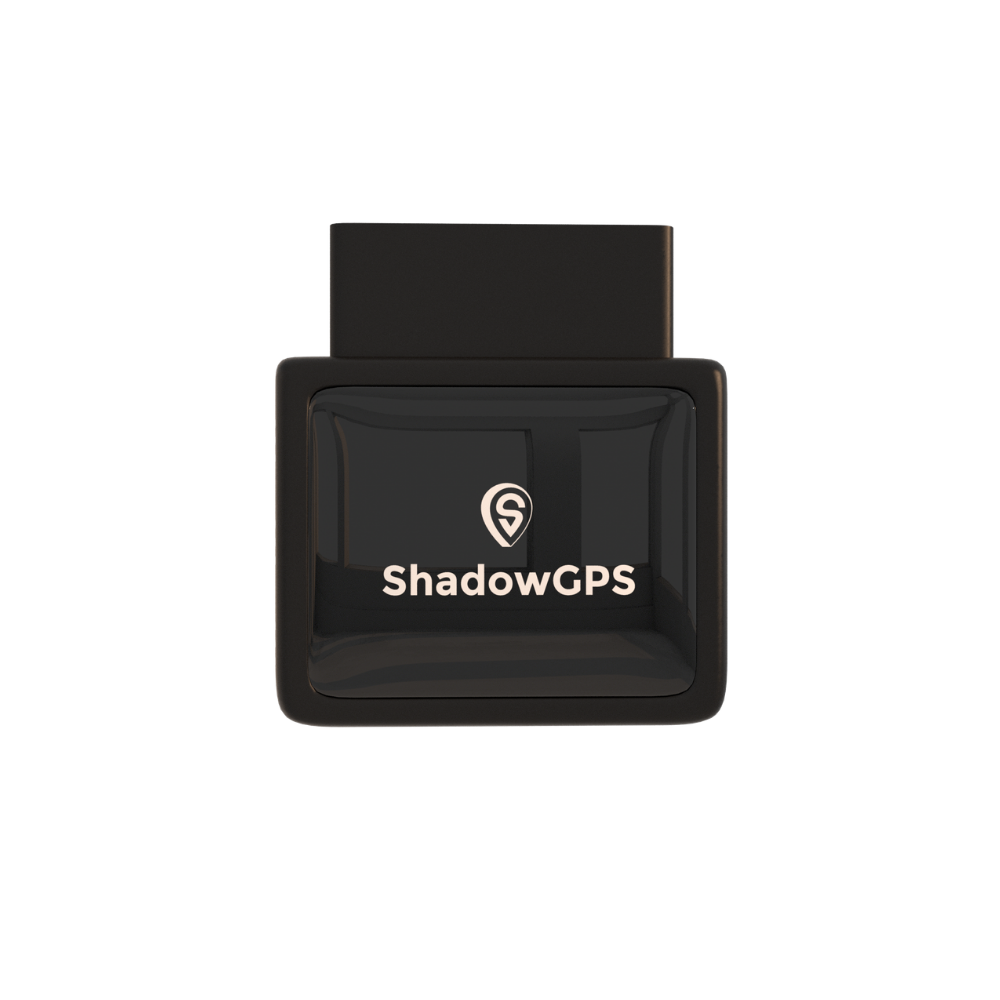
ShadowAuto
- Built-in cellular: no WiFi, no SIM, no phone pairing
- Powered by your car, never needs charging
- Live map, trip replay and Car Alarm in the app or browser


No OBD-II port, or need to track something that isn't a car? ShadowTrack does the same job on battery power. It runs up to about two weeks per charge, fits in a glovebox or toolbox, and mounts under a trailer or piece of equipment with the optional weatherproof magnetic case.
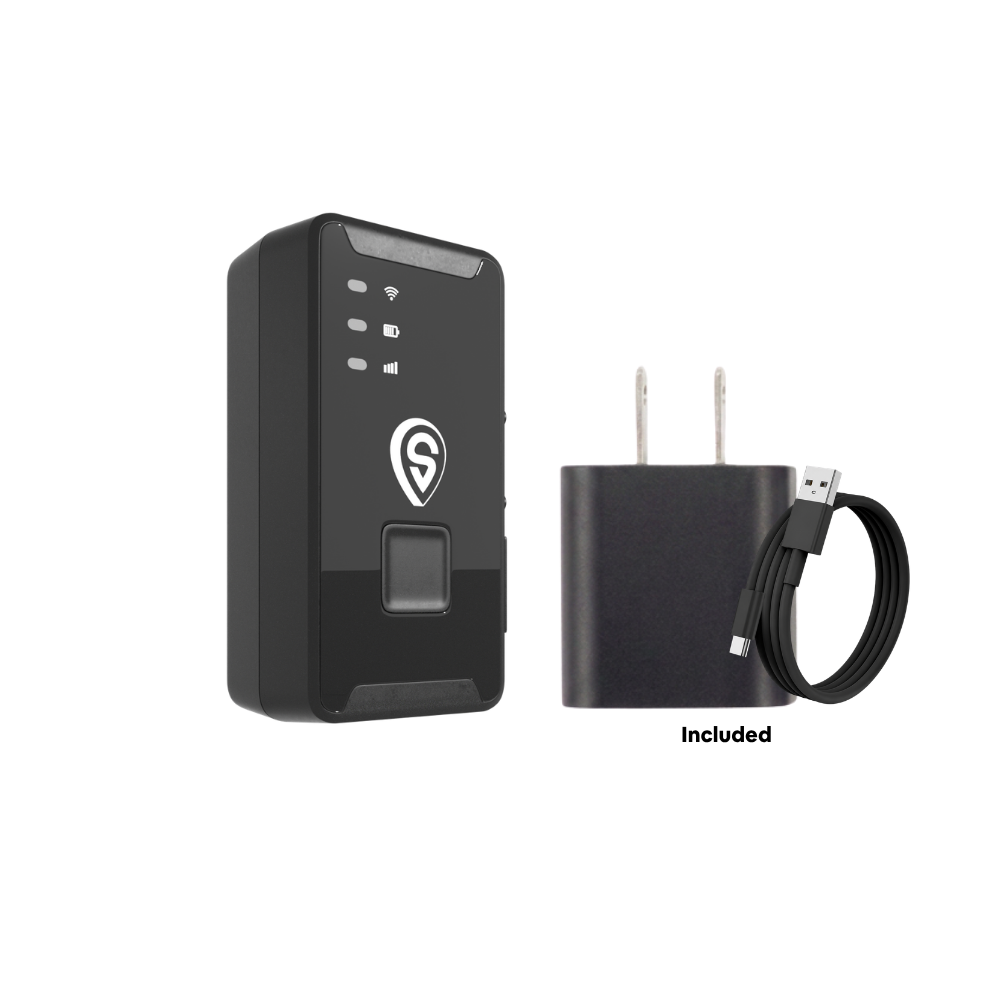
ShadowTrack
- Works far from WiFi, with no phone nearby
- Rechargeable, up to about two weeks per charge
- Magnetic weatherproof case option
Best for: ShadowAuto for the family car, a teen driver's car or a Turo rental. ShadowTrack for trailers, equipment and anything without an OBD-II port.
Is there a monthly fee? Yes. That built-in cellular connection is exactly what lets the tracker work without your WiFi or your phone, and it's what the plan covers. Plans run $9 to $15/mo depending on how you pay. No contract. Month-to-month, or prepay and save, with a 30-day money-back guarantee. Full details are on our pricing page.
Which Setup Fits Your Situation?
These are the three situations we hear about most, and how a no-WiFi, no-phone tracker handles each one.
Parent of a teen driver
Your teen's phone dies at 11pm, or they leave it in a friend's car. A tracker plugged into their car still reports where the car is, with speed and curfew alerts that don't depend on their phone at all.
Turo host
Guests won't connect your tracker to WiFi or carry an app for you. A plug-in cellular tracker reports on its own the whole trip. Learn more on our Turo hosts page.
Small fleet (2 to 5+ trucks)
Your crew's personal phones shouldn't be your tracking system. One tracker per truck, one dashboard in a browser, no driver phones required. See fleet tracking for 3 to 10 vehicles.
Before You Buy: The No-WiFi, No-Phone Checklist
Use these seven questions on any tracker, ours included. If a listing can't answer them clearly, keep looking.
- Does it have its own cellular connection? Look for LTE or LTE-M. Skip anything that lists only 2G or 3G.
- Can you see it in a web browser, not just an app? That's what lets anyone check in without a smartphone.
- Does it rely on the driver's phone or nearby phones? If yes, it's an app or a Bluetooth tag, not a standalone GPS tracker.
- What happens in a dead zone? Ask whether it stores points offline or shows the last known location.
- How often does it update while moving? Some trackers only update every few minutes on base plans.
- How is it powered? A plug-in tracker uses your car's power; a battery tracker needs charging every week or two.
- Is there a contract, and what's in the monthly fee? Get the full price and cancellation terms in writing before you pay.
4 Common Myths About GPS Trackers, WiFi and Phones
- Myth: "GPS needs the internet." GPS is satellite-based and works with zero internet. Your phone in airplane mode can still show your blue dot.
- Myth: "An AirTag is a GPS tracker." It isn't. It has no GPS chip and relies on nearby Apple devices to report its position.
- Myth: "A tracker uses my phone's data plan." A cellular tracker has its own connection, separate from your phone and your home internet.
- Myth: "No WiFi means no tracking." WiFi is a helper some devices use indoors. It's not how a car tracker reports from the road.
Key takeaways
- GPS finds location from satellites with no WiFi, phone or internet involved.
- A cellular GPS tracker sends that location over its own built-in LTE connection.
- Neither the driver nor you needs a phone nearby. You can check from any browser.
- Bluetooth tags and WiFi-only trackers are the exceptions: they need a nearby phone or network.
- Live updates need cell coverage. Choose LTE or LTE-M, never 3G.
Track what's yours
Only track a car or asset you own, or one you have clear permission to track, like your own car driven by your teen or a company truck with drivers who've been told. Tracking laws vary by state. If you run vehicles for a business, read our guide on GPS tracking laws for employee vehicles.
FAQ: GPS Trackers Without WiFi or a Phone
Does a GPS tracker work without WiFi?
Yes. A cellular GPS tracker uses satellites to find its location and its own built-in cellular connection to send it to you. WiFi isn't needed for either job, which is why it keeps working on the road, in parking lots and in rural areas.
Can a GPS tracker work without a phone?
Yes. The tracker reports on its own, so the driver doesn't need a phone and yours doesn't need to be nearby. You only need a phone, tablet or computer when you want to look at the map.
Is there a monthly fee for a GPS tracker that works without WiFi?
Usually, yes, because the fee covers the cellular connection that replaces WiFi. ShadowGPS plans run $9 to $15/mo. No contract. Month-to-month, or prepay and save.
Do GPS trackers need a SIM card?
A live cellular tracker needs a cellular connection, but you don't have to buy or insert a SIM with ShadowGPS. Service is built in and included in your plan. Read more in our SIM card guide.
Can I track my car without internet?
The tracker doesn't need your internet, because it has its own cellular data. To look at the location, though, the screen you're using needs some connection, whether that's phone data, WiFi or a computer online.
Will an AirTag work without a phone nearby?
Not really. An AirTag has no GPS or cellular connection, so it can only update when a nearby Apple device picks up its signal. In a quiet area, it may go hours without reporting.
Does a GPS tracker work in an underground parking garage?
Signals weaken underground, so the tracker usually shows its last good position near the garage entrance. That's normally enough to find your car, and live updates resume once it drives back out.
Does a GPS tracker work in rural areas with no cell service?
GPS still works, but a cellular tracker can't send live updates without cell coverage. Depending on the brand, it either stores points to upload later or shows the last known location. For true off-grid areas, a satellite tracker is the better tool.
Can I check my tracker on a computer instead of a phone?
Yes. ShadowGPS works in any web browser as well as the iPhone and Android app, so you can check your car from a laptop or desktop with no smartphone.
Does a GPS tracker use my phone's data?
No. A cellular tracker has its own data connection. Opening the app on your phone uses a tiny amount of your data to load the map, about the same as any other app.
Plug it in. See it move. Cancel any time.
No WiFi to set up, no phone to pair, no contract. Just your car on the map, from your phone or any browser.
Pricing current as of November 2026 for 1 to 3 trackers billed in USD; plans run $15/mo month-to-month down to $9/mo with prepayment. As an Amazon Associate, ShadowGPS earns from qualifying purchases made through Amazon links in this post. Always follow your state's laws on vehicle tracking.
