

Most people buy a GPS tracker for one reason: they don't want to be the person standing in an empty parking spot, wondering where their car went. That's a fair reason. But ask owners what they actually use their tracker for on a normal Tuesday, and theft rarely comes up.
They use it to find their car in a six-level airport garage. To see that their 16-year-old got to school. To check whether Dad made it to his doctor's appointment. To build a mileage log at tax time without a notebook. The real benefits of a GPS tracker in your car show up every week, long before anything goes wrong.
This guide walks through those everyday benefits one by one, shows which kind of tracker unlocks each one, and is honest about the trade-offs, so you can decide if it's worth it for your car or truck.
What are the benefits of a GPS tracker in your car? A GPS tracker shows your car's live location on your phone, so you can find it when parked, confirm a teen or aging parent arrived safely, share your location during a breakdown, catch engine problems early, keep a trip history for mileage logs, see what happens when someone else has your car, and get alerted fast if it moves when it shouldn't. Theft recovery is the backup benefit, not the only one.
What a GPS Tracker in Your Car Actually Does
A car GPS tracker is a small device that figures out where it is using GPS satellites, then sends that location over a cellular network to an app on your phone. You open the app, and you see a dot on a map. That's the whole idea.
What separates a useful tracker from a frustrating one is how often that dot updates and how easy the device is to set up. Some trackers refresh every minute or more, which means the dot you're looking at can be a mile behind your car. Others need wiring behind the dash.
There are two practical form factors for personal cars and small fleets. Each one unlocks a slightly different set of benefits.
Plug-in (OBD-II) trackers
These plug straight into the OBD-II port under your dashboard, the same port a mechanic uses to read engine codes. Every car and light truck sold in the US since 1996 has one. Your car powers the tracker, so there's nothing to charge, and because it sits on the diagnostic port it can also read engine codes. If you're not sure where your port is, here's how to find your OBD-II port in 30 seconds.
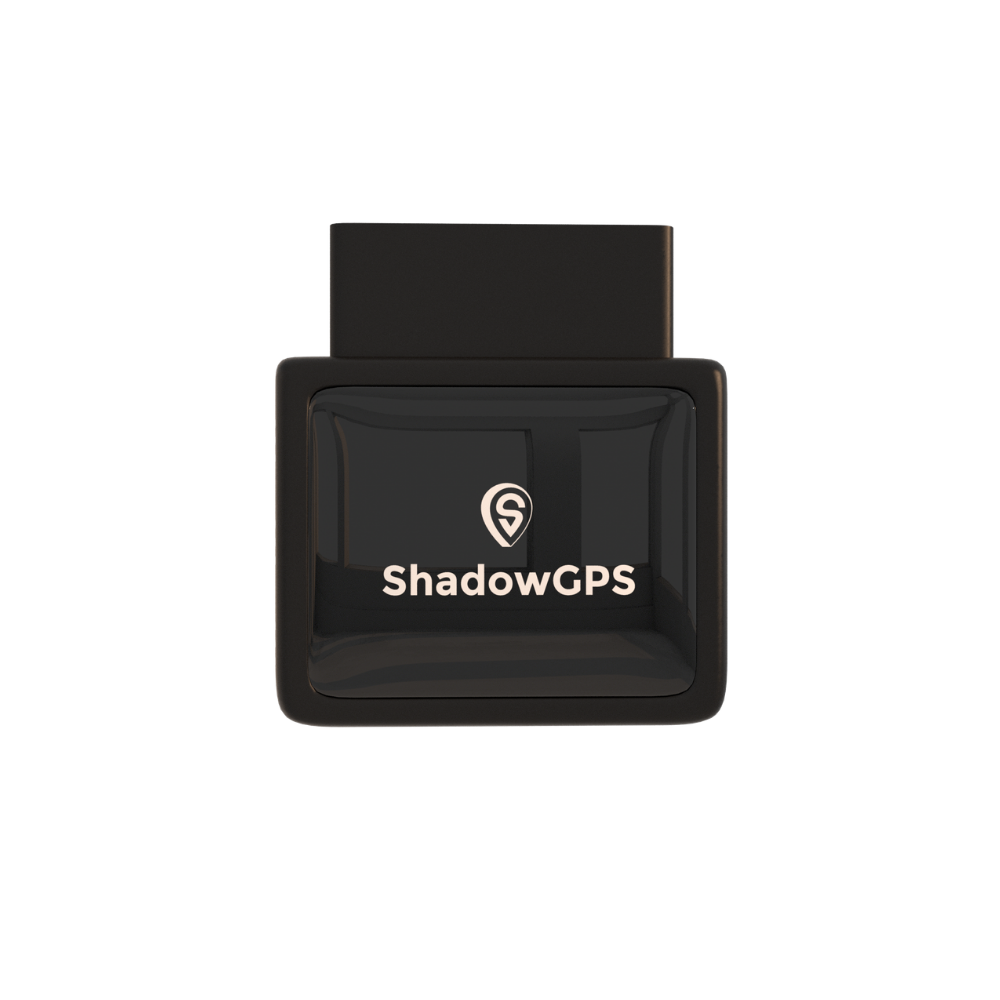
ShadowAuto
- Plug it in, no tools, under 2 minutes
- Powered by your car, nothing to charge
- Car Alarm, trip replay and engine codes


Battery-powered trackers
A battery tracker runs on its own rechargeable battery, so it doesn't need a port at all. You can drop it in the glovebox, under a seat, or in a weatherproof magnetic case on a trailer. It's the better fit for older vehicles, trailers, equipment, or when you want to move one tracker between cars.
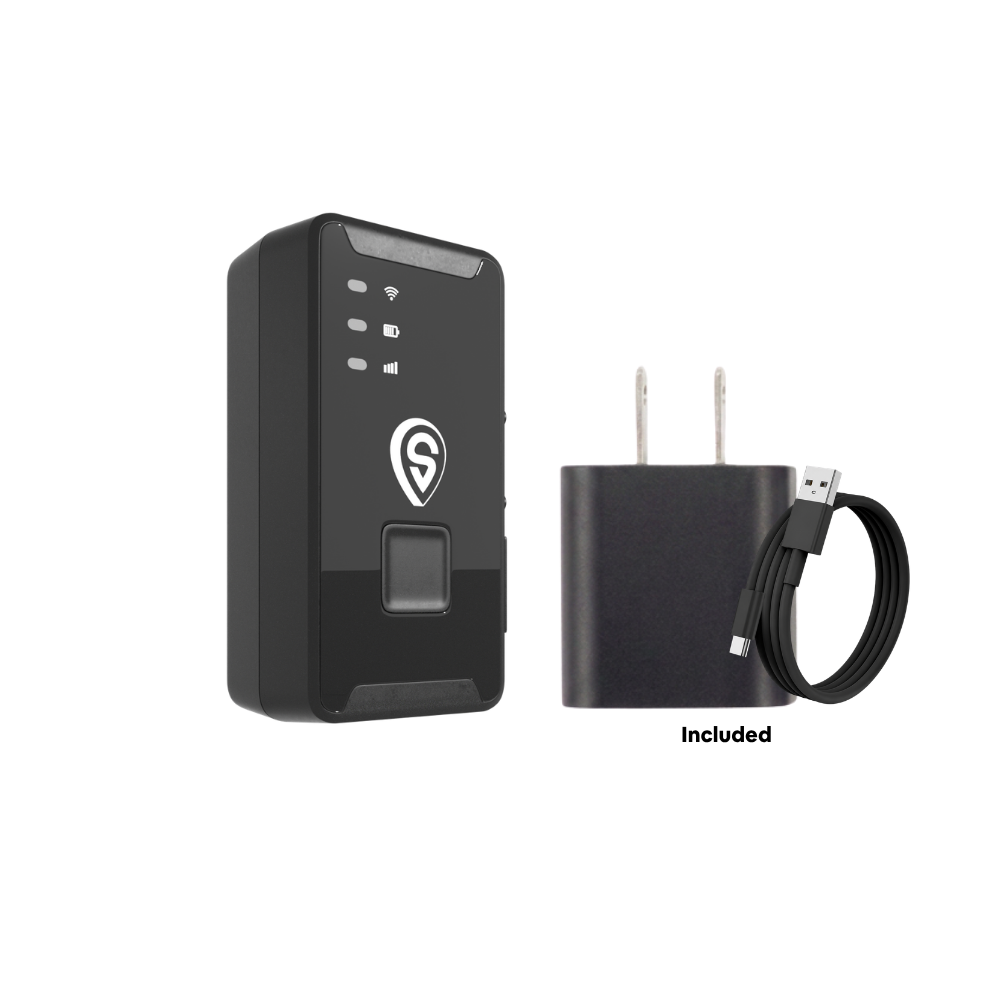
ShadowTrack
- Up to about 15 days per charge
- No port needed, moves between vehicles
- Works with an optional weatherproof magnetic case
Best for: ShadowAuto if you want a set-and-forget tracker for the car you drive every day. ShadowTrack if your vehicle has no OBD-II port, you want it out of sight, or you need to track a trailer or equipment too.
Both refresh every 5 seconds while your car is moving. That matters for every benefit below: the dot you see is where your car is now, not where it was a minute ago.
12 Everyday Benefits of a GPS Tracker in Your Car
These are ordered roughly by how often owners actually use them. The everyday conveniences come first. Theft protection comes last, because if the tracker does its job, it's the benefit you'll use least.
1. You'll never hunt for your parked car again
Airport long-term lots, stadium parking, a mall garage after a long day: these all eat time. With a tracker, you open the app and walk straight to the dot.
This one sounds small until you've circled a parking structure with two tired kids and a cart full of groceries. It's also the benefit people use most in the first month. For more ideas, see our parking lot tips for GPS tracker owners.
A quick note on underground garages
GPS signals are weak below ground and under thick concrete. In those spots, a tracker will usually show the last position it recorded before losing a clear signal, which is normally the garage entrance. That's enough to get you to the right level.
2. You'll know your teen got there, and got home

For most parents, this is the reason they buy. And the worry is grounded in data. According to the CDC, drivers aged 16 to 19 have a fatal crash rate almost three times as high as drivers 20 and older, per mile driven. Risk is highest in the first months after getting a license, and at night.
A tracker doesn't make your teen a better driver on its own. What it does is replace the 11 p.m. "where are you?" text with a calm look at the map. Set a geofence around home and school, and you'll get an alert when the car arrives or leaves.
How to use it so it builds trust, not resentment
- Tell them it's there. Frame it as safety for the car and for them, not a way to catch them out.
- Agree on what you'll check. Arrivals, curfew, and long drives. Not every stop at a friend's house.
- Use trip replay for coaching. Review a drive together the way a coach reviews game film.
- Loosen it over time. As they build a track record, check less. That's the reward.
The CDC also offers a free Parent-Teen Driving Agreement that pairs well with a tracker. Our guide on what every parent should know before handing over the keys goes deeper.
3. An aging parent can keep driving a little longer
Giving up the keys is one of the hardest conversations families have. A tracker can make it a gentler one. When an older parent knows you can see that they arrived at the pharmacy or got home before dark, both of you can relax about the drives that still go fine.
It also gives you something concrete to talk about if patterns change, like trips that take far longer than they should or drives at unusual hours. Do this with their knowledge and agreement. It keeps their dignity intact, and it's the right thing to do. One reader shared how this works in practice: "My dad is 74 and still drives every day."
4. You can share your exact location in a breakdown
Broken down on a highway you don't know, at night, in the rain? Describing where you are is harder than it sounds. Share Location lets you send a live link to your car's position to a family member or a tow driver, so they're not guessing at mile markers.
It works the other way, too. If your partner's car won't start across town, you can see exactly where they are and head straight there.
5. You'll hear about a crash faster
Some trackers can send a collision alert when they detect a hard impact, so the people you choose find out quickly instead of hours later. If you have a new driver or a parent who drives alone, this is worth turning on. Read how collision SOS alerts work in ShadowGPS.
6. You'll catch engine trouble before it gets expensive
A plug-in OBD-II tracker sits on the same port your mechanic uses. ShadowAuto can read diagnostic trouble codes and show them in the app, so when the check engine light comes on, you can see what it means from your phone before deciding whether to pull over or book a shop visit.
That's the difference between "this can wait until Monday" and "stop driving now." See what to do when your check engine light comes on.
7. Your mileage log mostly writes itself
If you drive for work as a contractor, realtor, or rideshare or delivery driver, every business mile is worth real money at tax time. The IRS set the 2026 business standard mileage rate at 72.5 cents per mile, then raised it to 76 cents per mile for driving from July 1, 2026 (IRS Announcement 2026-11).
A tracker's trip timeline gives you a dated record of every drive: where you started, where you went, and how far. You still need to note the business purpose of each trip, which IRS Publication 463 requires, but the hard part (remembering where you drove three weeks ago) is done.
Example: what a clean log is worth
Say you drive 3,000 business miles from January to June and another 3,000 from July to December in 2026. That's 3,000 × $0.725 = $2,175, plus 3,000 × $0.76 = $2,280, for a $4,455 deduction. Forget to log a few hundred miles and you're leaving money on the table. This is an illustration, not tax advice, so confirm your situation with a tax professional.
8. You'll know what happens when someone else has your car
Valet stands, repair shops, a friend borrowing your truck for a weekend move. Most of the time, nothing unusual happens. But it's reassuring to be able to check, and trip replay shows exactly where your car went and when.
If a "quick oil change" includes a 20-mile detour, you'll know, and you'll know which shop not to go back to. Our guide to preventing vehicle misuse and unauthorized trips covers this in more detail.
9. Your Turo or rental car stays accounted for
If you share your car on Turo or a similar platform, a tracker turns "I hope it comes back" into "I can see it's on its way back." You can confirm the car stayed in the agreed area, spot late returns early, and have a clear trip record if there's ever a dispute with a guest.
Plug-in trackers are a popular choice for hosts because there's no battery to manage between bookings. Check your platform's current rules on disclosing tracking devices in your listing. See our GPS tracking for Turo hosts page for setup ideas.
10. Two to five work vehicles, without a big fleet system
If you run a handful of trucks or vans for a small service business, you don't need an enterprise fleet platform with a long contract. You need to know where your trucks are, whether a job really took four hours, and whether a vehicle went home on a Saturday.
A tracker per vehicle, all in one app, covers that. It's also the easiest way to answer a customer who asks "when will your tech get here?" For a deeper look, read choosing fleet GPS tracking when you have 3 to 10 vehicles, and if you have employees, our guide on GPS tracking laws for employee vehicles.
11. Better records for insurance and accident claims
Some insurers offer a discount for anti-theft or tracking devices, and some ask for proof of one when you renew. Discounts vary a lot by carrier and state, so it's worth a two-minute call to ask before you assume either way.
Separately, trip history can help you reconstruct where your car was and when, which is useful when you're filing a claim after a hit-and-run or a parking lot incident.
12. Theft protection: the benefit you hope you never need
Car theft is down, but it hasn't gone away. The National Insurance Crime Bureau counted 659,880 vehicles stolen in the US in 2025. That's a 23% drop from 2024, and still roughly one car every 48 seconds. California alone accounted for more than 20% of thefts.
Here's where a tracker earns its keep:
- Car Alarm: get an alert on your phone if your parked car starts moving when it shouldn't.
- Tamper alerts: know if someone unplugs or disturbs the tracker.
- Live location: give police a current position instead of a description and a guess.
Never try to recover a stolen car yourself. Share the live location with law enforcement and let them handle it. Our stolen car recovery steps walk through exactly what to do, and GPS trackers vs. car theft covers the latest numbers.
Which Benefits Matter Most for You?
Not every benefit matters to every owner. Here's where to start based on who you are.
Parent of a new driver
Start with arrival geofences for home and school, collision alerts, and weekly trip replay reviews you do together. ShadowAuto is the simplest fit.
Turo host or car sharer
Start with live location, trip history for disputes, and Car Alarm between bookings. A plug-in tracker means no batteries to charge between guests.
Owner of 2 to 5 work trucks
Start with all vehicles in one app, trip timelines for job times, and mileage records. Add ShadowTrack for trailers or equipment.
GPS Tracker vs. AirTag vs. Phone Apps: Which Delivers These Benefits?
Plenty of people ask whether they can get the same benefits from something they already own. Sometimes the answer is yes. Often it isn't, because most alternatives track a phone or rely on nearby devices, not your car.
| Option | Tracks the car itself | Live updates | Arrival / geofence alerts | Trip history | Engine codes | Ongoing cost |
|---|---|---|---|---|---|---|
| Apple AirTag | Yes, via nearby Apple devices | No, updates only when an iPhone passes nearby | No | No | No | None |
| Phone location-sharing app (e.g., Life360) | No, tracks the driver's phone | Yes, while the phone is on and in the car | Yes | Yes (varies by plan) | No | Free tier, paid plans extra |
| Carmaker connected-car app | Yes | Varies by brand and model year | Varies | Varies | Some | Often a subscription after a trial |
| ShadowGPS (ShadowAuto / ShadowTrack) | Yes | Every 5 seconds while moving | Yes | Yes, with trip replay | Yes (ShadowAuto) | $15/mo or less with prepay, no contract |
Competitor features and pricing change often. Check each provider's current details before buying. ShadowGPS pricing as of October 2026.
The AirTag gap is the one people run into most. It's a great item finder, but it can't tell you where your car is right now unless an iPhone happens to be nearby. More on that in why AirTags fall short for cars.
The Honest Downsides of a Car GPS Tracker
Most articles about GPS tracker benefits skip this part. You deserve the full picture before you spend money.
What you get
- Live location of your car, from anywhere
- Arrival alerts for the people you worry about
- Trip records for taxes, claims and disputes
- A fast alert if your car moves without you
What to weigh
- A monthly fee to keep the cellular connection live
- Weak signal in deep garages and dead zones
- Battery trackers need charging every couple of weeks
- Tracking someone else's car without consent can be illegal
About the monthly fee: any real-time tracker needs a cellular connection, and that connection has a cost. With ShadowGPS it's $15/mo month-to-month, or prepay and save down to $9/mo. No contract, ever, and you can cancel any time. You also don't need to buy or add your own SIM card. Here's why a GPS tracker doesn't need your SIM card, and our pricing page has the full plan breakdown.
Tracking the right way
In the US, you can generally put a GPS tracker on a car you own. For a car someone else owns or mainly drives, like a spouse's car, get their consent first. Many states have laws against tracking another person without it, and the rules for employers vary by state. For family members, tell them the tracker is there. It protects you legally, and it protects the relationship. This is general information, not legal advice.
How to Get the Most From Your Tracker in the First Week
The owners who get the most value set up a few things on day one. Here's a simple five-step routine.
- Plug it in and name your car. ShadowAuto goes into the OBD-II port in under 2 minutes. Give the car a name you'll recognize in the app, like "Emma's Civic" or "Truck 2."
- Set two or three geofences. Home, school, and work cover most families. Turn on arrival and departure alerts only for the ones you'll actually act on. Our geofence setup guide walks through it.
- Turn on Car Alarm and tamper alerts. These are the two settings that matter most if something ever goes wrong, and they cost you nothing to leave on.
- Tell the people who drive the car. A 60-second conversation now prevents a hard one later.
- Do one trip replay at the end of the week. You'll learn what normal looks like for your car, which is exactly what makes unusual activity easy to spot.
Is a GPS Tracker Worth It for Your Car?
Ask yourself three questions:
- Does someone else drive my car regularly? A teen, an aging parent, a guest, or an employee? If yes, the everyday benefits alone usually justify it.
- Would losing this car disrupt my life or my income? If you'd be stuck without it, the theft and breakdown benefits are real protection against a very bad week.
- Do I drive for work? If so, a clean mileage log can be worth far more than the plan costs.
If you answered yes to any of these, a tracker will likely pay for itself in time saved and worry avoided. If you answered no to all three, a phone app or item finder may be enough for now, and that's a perfectly reasonable choice.
ShadowGPS backs that decision with a 30-day money-back guarantee, 99.9% network uptime, and an average 4.3 to 4.6 out of 5 across 199 verified on-site reviews.
Frequently Asked Questions
Is there a monthly fee for a car GPS tracker?
Yes. Real-time trackers use a cellular connection, and that has an ongoing cost. ShadowGPS is $15/mo month-to-month, or you can prepay and save down to $9/mo. No contract, ever, and you can cancel any time.
Does a GPS tracker need a SIM card?
Not one you have to buy. ShadowAuto and ShadowTrack come with cellular connectivity built in, and it's covered by your plan. You don't add your own SIM card or set up a separate phone line.
Is it hard to set up a GPS tracker in my car?
No. ShadowAuto plugs into your car's OBD-II port under the dashboard in under 2 minutes, with no tools or wiring. ShadowTrack runs on its own battery, so you just charge it and place it in your car.
Will a GPS tracker drain my car battery?
ShadowAuto is powered through your OBD-II port and draws a small amount of power, like other plug-in accessories. For a car you drive regularly, it's not a concern. If a car will sit unused for several weeks, unplugging it or using battery-powered ShadowTrack is the simple fix. ShadowTrack never touches your car's battery.
Can a GPS tracker lower my car insurance?
Sometimes. Some insurers offer a discount for anti-theft or tracking devices, and some ask for proof of one at renewal. It depends on your carrier and state, so call your insurer and ask before you count on it.
Is it legal to put a GPS tracker on my own car?
Generally yes, if you own the car. Tracking a car someone else owns or mainly drives without their consent can be illegal in many states. Parents tracking a car they own that their teen drives is common, and telling your teen about it is the best practice.
Can my family see where the car is too?
Yes. You can use Share Location to send a live link to your car's position, and you can check your account from the ShadowGPS app or on the web from any computer.
Can I use GPS tracker trips as a mileage log for taxes?
Trip history gives you the date, route and distance of each drive, which is most of what a mileage log needs. The IRS also requires the business purpose of each trip, so add a short note for business drives. Check with a tax professional for your situation.
What happens if I cancel?
Nothing complicated. Plans are month-to-month with no contract, so you can cancel any time and simply stop being billed. If you need it again later, like for a new teen driver, you can restart.
Know where your car is, every day
Plug it in, see it move, and cancel any time. No contract, ever.
Pricing accurate as of October 2026 for 1 to 3 trackers in the US; see the pricing page for current plans and multi-tracker rates. Some links on this page are affiliate links, and ShadowGPS may earn a commission from qualifying purchases. Tax and legal information here is general and not professional advice. Sources: CDC Teen Drivers, NICB 2025 Vehicle Theft Report, IRS IR-2025-128 and Announcement 2026-11, IRS Publication 463.

