

Do GPS tracker theft alerts actually help you get your car back? Yes. An instant alert tells you the moment your car moves, leaves a safe zone, or gets unplugged, so you find out in seconds instead of the next morning when you walk out to an empty driveway.
That head start is the whole game. Locks and alarms try to stop a thief at the door. A GPS tracker with theft alerts works on the part that happens next: it tells you something is wrong, shows you exactly where your car is going, and gives police a live location to act on.
This guide walks through which alerts matter, how to set them up so they don't fire every time your teen drives to practice, what to do in the first ten minutes after one goes off, and how to pick the best GPS car tracking device for the job.
A GPS tracker with theft alerts sends a push notification to your phone when your car moves without you, crosses a geofence, or has its tracker unplugged. The alert starts the clock early, and live location lets police head straight to your car. For most owners, a plug-in OBD-II tracker (like ShadowAuto) covers your daily car, and a hidden battery tracker (like ShadowTrack) covers trailers, older cars, or a backup layer.
What are GPS tracker theft alerts?
GPS tracker theft alerts are automatic notifications a tracker sends to your phone when it detects something that looks like unauthorized use of your car. The tracker reads its location from GPS satellites, sends it over a cellular network, and the app compares what's happening against the rules you set.
When a rule breaks, you get a push notification. You tap it, and you're looking at a live map of your car.
That's different from a factory car alarm, which only makes noise for whoever happens to be nearby. It's also different from a Bluetooth tag, which only updates when a phone from the same network walks past. A cellular GPS tracker reports on its own, wherever there's cell coverage.
The 5 alerts that actually matter for theft
Trackers advertise a long list of notifications. For theft, five do the heavy lifting. Here is what each one catches, and when it earns its keep.
1. Movement alert (Car Alarm)
You arm it when you park, and the tracker pings you if your car starts moving. This is the most direct theft alert there is, because it doesn't care how the thief got in. Relay attack, cloned key, or a tow truck, movement is movement.
On ShadowGPS, this is the Car Alarm feature. Arm it overnight or when you're parked at the airport, and you'll know the second your car rolls.
2. Geofence exit alert
A geofence is a virtual boundary you draw on a map, like a circle around your driveway, your office lot, or a Turo pickup spot. When your car leaves that zone, you get a notification.
Geofences are great for patterns. Set one around home, and you'll see any trip that starts while you're asleep. Our step-by-step guide to setting up geofence alerts that catch overnight theft covers the exact settings.
3. Tamper or unplug alert
Experienced thieves know to look for trackers. A tamper alert fires when a plug-in tracker is pulled from the OBD-II port or a device is disturbed. Even if the tracker goes quiet afterward, you now have the last known location and the exact time it happened.
That timestamp matters. It turns "sometime overnight" into "2:14 a.m. on Maple Street," which is far more useful to an officer.
4. Trip start or ignition alert
Many OBD-II trackers can tell you when a trip begins. For a parent, this is the "Did my son just take the car at midnight?" alert. For theft, it's another early signal, especially paired with a geofence.
5. Low battery alert (battery trackers)
A hidden battery tracker only protects you while it has charge. A low battery alert reminds you to top it up before it goes dark. It sounds boring, but a dead tracker is the most common reason a hidden tracker fails when you need it.
Alerts vs. live tracking: what's the difference?
An alert tells you that something happened. Live tracking tells you where your car is right now. You need both. The alert starts your response, and the refresh rate decides how useful the map is once you open it. A tracker that alerts instantly but updates its location every three minutes leaves you looking at a dot that's already miles behind your car.
Why refresh rate decides what happens after the alert
Once an alert fires, you and the police are working from the map. If the map updates slowly, a moving car can turn two corners and vanish into a parking garage between updates.
ShadowGPS updates your car's location every 5 seconds while it's moving, on every plan. That's the difference between "it was near the highway a few minutes ago" and "it's pulling into the lot on 5th right now."
Here's how standard refresh rates compare across popular trackers. Faster tiers with some brands cost extra or require a long contract.
| Tracker | Location refresh while moving | Form factor | Contract |
|---|---|---|---|
| Bouncie | 15 seconds | OBD-II plug-in only | None |
| Tracki | 10 seconds to 1 hour (tiered) | Portable battery | 2 years for best rate |
| Spytec | 60 seconds standard, faster on top plans | Portable and OBD-II | None |
| LandAirSea | 3 minutes to 3 seconds (tiered) | Portable and OBD-II | 2 years for best rate |
| ShadowGPS (ShadowAuto / ShadowTrack) | 5 seconds, standard on every plan | OBD-II plug-in and hidden battery | None, ever |
Competitor refresh rates and contract terms reflect publicly listed plans as of September 2026 and change often. Check each brand's current plan page before buying.
The best GPS car tracking device for instant theft alerts
The right tracker depends on what you're protecting and whether you'd rather plug it in or hide it. Most owners start with one of these two.
ShadowAuto: plug it in, get alerts in minutes
ShadowAuto plugs into your car's OBD-II port, the same port a mechanic uses to read engine codes. It's usually under the dashboard near your left knee, and it takes under two minutes with no tools. Your car powers it, so there's nothing to charge, ever.
From the app you can arm Car Alarm, draw geofences, get tamper alerts if it's unplugged, replay past trips, and share your live location with someone else. As a bonus, it reads engine codes, so a check engine light stops being a mystery. Not sure where your port is? Here's how to find your OBD-II port in 30 seconds.
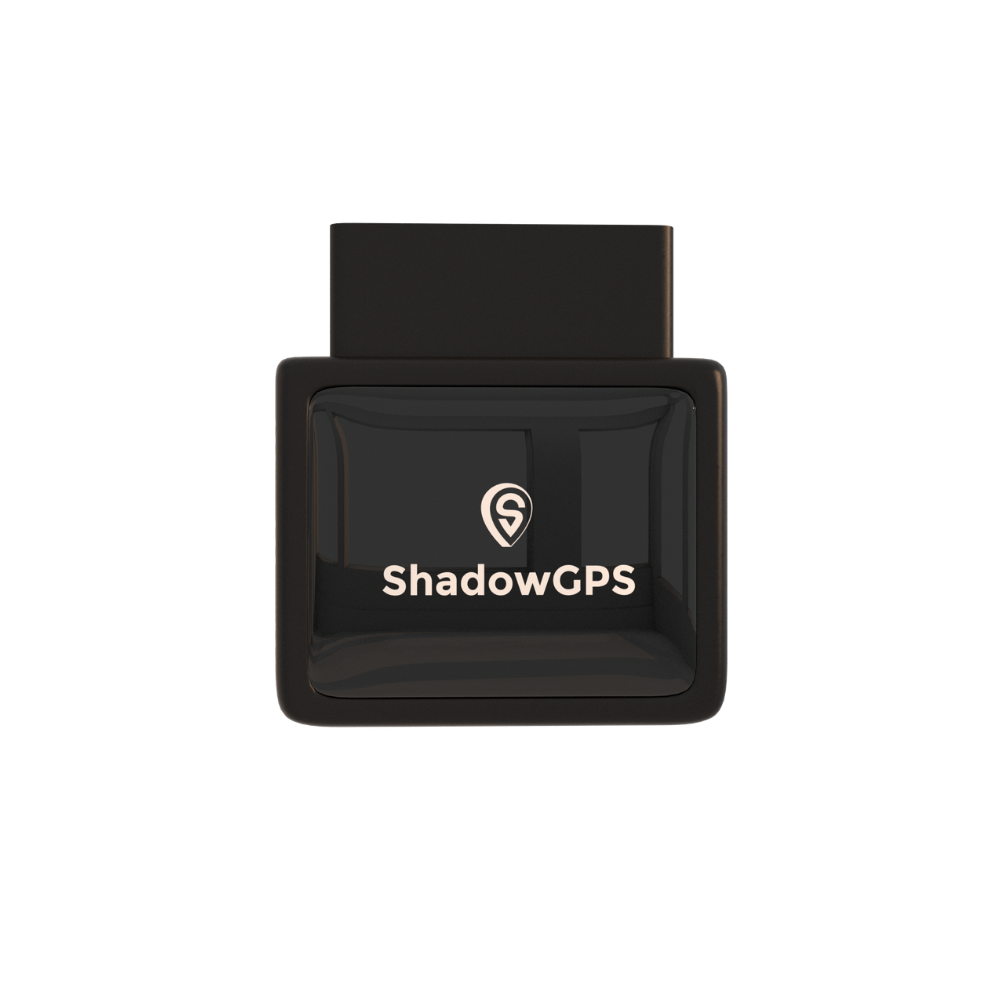
ShadowAuto
- Plugs in under 2 minutes, no tools
- Car Alarm, geofence and tamper alerts
- Powered by your car, never needs charging


Pros
- Zero maintenance once it's plugged in
- Tamper alert if someone pulls it out
- Engine codes on your phone
Cons
- OBD-II ports sit in a known spot, so a savvy thief can find it
- Needs a car built 1996 or later with an OBD-II port
Best for: the family car, a teen driver's first car, Turo rentals, and work trucks you drive every day.
ShadowTrack: hide it where a thief won't look
ShadowTrack is battery powered, so it doesn't need a port. Drop it in its weatherproof magnetic case and stick it to the frame, tuck it inside a trunk panel, or hide it in a trailer. A charge lasts up to about 15 days, and it takes under two minutes to set up.
Plenty of owners run both: ShadowAuto in the port as the obvious tracker, and ShadowTrack hidden elsewhere. If a thief finds and pulls the first one, the second keeps reporting. It's also the pick for anything without an OBD-II port, like trailers, boats, classic cars, and equipment.
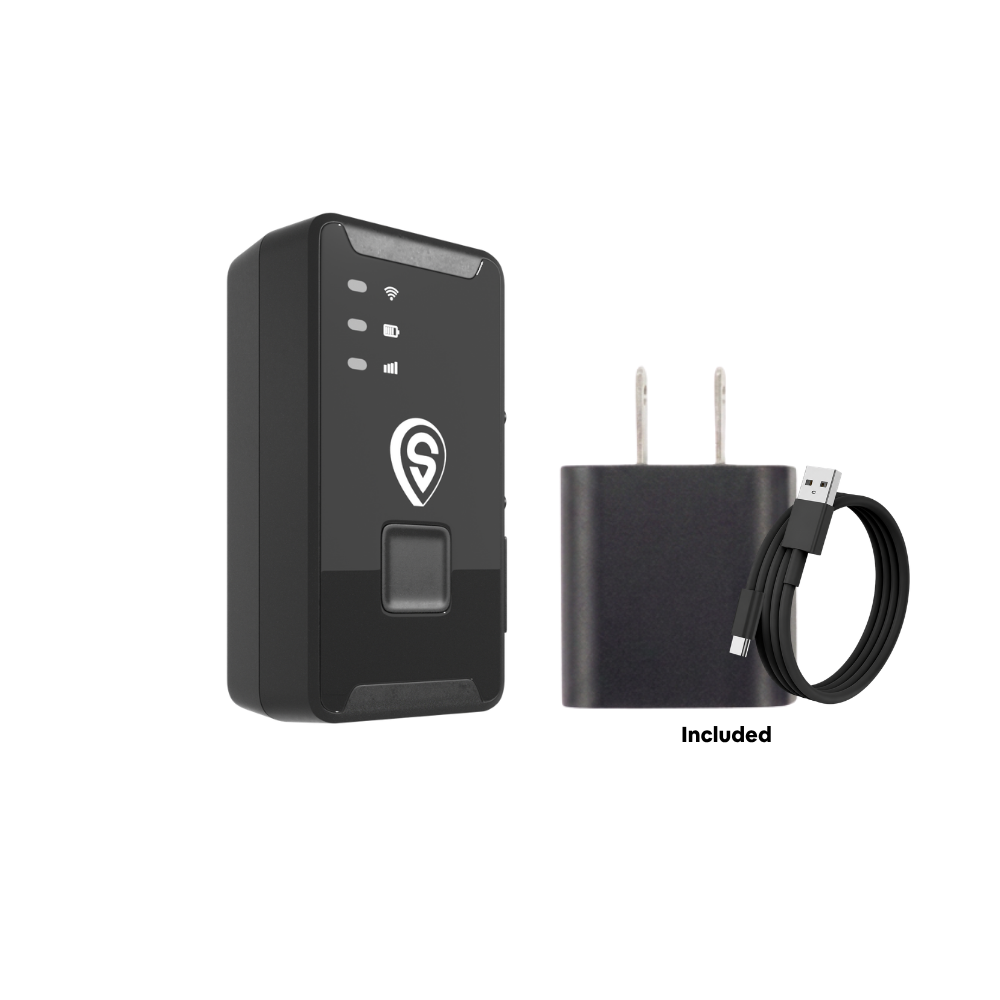
ShadowTrack
- Up to ~15 days per charge
- Weatherproof magnetic case, hides anywhere
- Works on anything, no port needed
Pros
- Hard to find, hard to remove
- Moves between cars, trailers and equipment
- Keeps reporting if the plug-in tracker is pulled
Cons
- Needs a recharge every couple of weeks
- No engine code readout
Best for: trailers, boats, ATVs, classic cars, work equipment, and a hidden second layer on your main car.
What to do in the first 10 minutes after a theft alert
An alert only helps if you know what to do next. Save this list, or better, walk through it once before you ever need it.
- Open the live map. Tap the alert and confirm your car is actually moving. Check the speed and direction.
- Rule out family. A quick text to your household ("Anyone take the car?") takes ten seconds and saves an awkward 911 call.
- Call 911 or your local police non-emergency line. Say your car is being stolen right now and you have live GPS location. Give the make, model, color and plate.
- Share the live location. Read out the street and direction, or use Share Location to send a live link if the officer can take it.
- Stay put. Never chase or confront a thief. Your job is to be the eyes, not the recovery team.
- Save the trip. Screenshot the timeline or keep the trip replay. It's useful for the police report and your insurance claim.
- Call your insurer. Report the theft and the recovery status as soon as it's safe.
We go deeper on this in our guide to immediate recovery steps for a stolen car, and in how GPS tracking helps police catch car thieves.
Example: how an alert plays out at 2 a.m.
This is an illustrative scenario, not a customer story. You park your truck in the driveway at 10 p.m. and arm Car Alarm. At 2:11 a.m., your phone buzzes: your truck is moving. You open the app and see it heading east at 25 mph. At 2:12, it crosses your home geofence. At 2:13, you're on the phone with dispatch reading off street names as the dot moves. Without an alert, you'd have found an empty driveway at 7 a.m., five hours behind.
The 3-layer alert setup (so alerts don't cry wolf)
Too many alerts and you'll start ignoring them. Too few and you'll miss the one that matters. This simple framework keeps the signal clean.
- Layer 1: Car Alarm when parked for the night or a trip. Arm it when you park and disarm it when you drive. It only fires when your car moves and you didn't expect it to.
- Layer 2: Geofences on the places your car sleeps. Home, work, the airport lot, or a Turo handoff spot. Keep the circle tight enough to matter, but wide enough that parking down the street doesn't set it off.
- Layer 3: Tamper alerts always on. There's no good reason for your tracker to be unplugged, so there's no reason to ever turn this off.
One phone setting matters too. Allow notifications from the ShadowGPS app, and on iPhone consider letting it through Focus modes, so a 2 a.m. alert actually wakes you.
How different owners set it up
Parent of a teen driver
Geofences around home and school, Car Alarm armed overnight, and Share Location for late drives. You get peace of mind without texting "where are you?" every hour. More in our teen driver guide.
Turo host
A geofence around your pickup spot, tamper alerts on, and trip replay to settle any dispute about where the car went. See our Turo host page.
Owner of 2 to 5 trucks
Geofences around the yard and job sites, plus after-hours checks on the web dashboard. One app shows every truck on one map.
Where to put your GPS tracker
An alert is only as good as the tracker sending it. Placement decides whether a thief finds it in thirty seconds or never finds it at all.
Plug-in tracker (ShadowAuto)
It goes in the OBD-II port, full stop. That's the tradeoff: dead simple and always powered, but in a spot a knowledgeable thief may check. The tamper alert covers you if they do.
Battery tracker (ShadowTrack)
- Under the frame or rear bumper in the magnetic case, on a flat metal surface away from the exhaust.
- Inside a trunk side panel or under the spare tire cover.
- Behind a plastic interior panel or under a rear seat cushion.
Skip the glove box and the spot directly under the driver's seat. Those are the first places anyone looks. Also avoid wrapping a tracker in metal, which can weaken its signal.
GPS tracker alerts vs. other anti-theft devices
A GPS tracker isn't meant to replace your locks. It covers what they can't: telling you where your car went. Here's how the common options stack up.
| Protection | Stops a theft? | Alerts your phone? | Shows live location? | Best role |
|---|---|---|---|---|
| Steering wheel lock | Slows it down | No | No | Visible deterrent |
| Factory car alarm | Sometimes scares off | Only on some newer cars | No | Break-in noise |
| Engine immobilizer | Blocks basic hot-wiring | No | No | Built-in first line |
| Bluetooth tag (e.g. Apple AirTag) | No | No movement alerts | Only when a compatible phone is nearby | Finding keys and bags |
| GPS tracker with alerts (ShadowGPS) | No, but starts recovery in seconds | Yes: movement, geofence, tamper | Yes, over cellular | Knowing where your car is |
Bluetooth tags can also trigger anti-stalking notifications on a thief's phone, which tells them there's a tracker aboard. We break that down in why AirTags fall short for cars.
Layer it: simple habits that pair well with alerts
Car theft in the U.S. dropped sharply last year. The National Insurance Crime Bureau counted 659,880 vehicles reported stolen in 2025, down about 23% from 2024. That's still hundreds of thousands of owners, and California alone accounted for more than 20% of the total.
The NICB credits layered prevention for the drop. Stack a few basics on top of your tracker:
- Park in well-lit spots and in a garage when you can.
- Lock up and take your keys, including spare fobs left in the car.
- Keep key fobs away from the front door, or in a signal-blocking pouch, to make relay attacks harder.
- Keep your car's software up to date, especially on models with known theft fixes.
- Add a visible deterrent like a steering wheel lock if your car is a commonly stolen model.
For the full numbers and which models get targeted most, see GPS trackers vs. car theft: real stats.
Is it legal to put a GPS tracker on my car?
In the U.S., tracking a car you own is generally legal. Tracking a car you don't own, or a person who hasn't agreed to it, can break state stalking and privacy laws. If you share a car or run a small crew, tell drivers the tracker is there. This isn't legal advice, so check your state's rules if you're unsure. Our guide to GPS tracking laws for work vehicles covers the business side.
Is there a monthly fee for GPS tracker alerts?
Yes. Real-time alerts run over a cellular network, so every live GPS tracker has a monthly fee. ShadowGPS plans run $12 to $15 a month per tracker, or $10 to $13 with four or more. No contract. Month-to-month, or prepay and save.
The fee covers the cellular connection, so there's no SIM card for you to buy or set up. Every plan gets the same alerts and the same refresh rate, and you can cancel any time. Full details are on our pricing page, and there's a 30-day money-back guarantee if it isn't the right fit.
Frequently asked questions
Do GPS trackers prevent car theft?
Not on their own. A GPS tracker doesn't lock anything. What it does is shrink the gap between your car being taken and you knowing about it, then give you and police a live location. Pair it with locks and good parking habits for the best protection.
Is there a monthly fee for a GPS tracker with alerts?
Yes, any tracker that sends live alerts over cellular has one. ShadowGPS is $12 to $15 a month per tracker. No contract. Month-to-month, or prepay and save, and you can cancel any time.
Does a GPS tracker need a SIM card?
It needs a cellular connection, but with ShadowGPS that's built in and covered by your plan. You don't buy or insert a SIM card. More in our guide: does your GPS tracker need a SIM card?
Is it hard to set up a GPS tracker in my car?
No. ShadowAuto plugs into the OBD-II port under your dash, and ShadowTrack sticks on with a magnetic case. Both take under two minutes, with no tools and no wiring.
How fast will I get a theft alert?
Alerts arrive as push notifications within moments of the trigger, as long as the tracker and your phone have signal. Once you open the map, ShadowGPS keeps updating your car's location while it moves, so you can follow it in near real time.
What happens if a thief unplugs the tracker?
You get a tamper alert with the last known location and time. That's why many owners add a hidden ShadowTrack as a second layer, so tracking continues even if the plug-in tracker is found.
Will a plug-in GPS tracker drain my car battery?
An OBD-II tracker draws very little power, and it's not a concern for a car you drive regularly. If your car will sit unused for several weeks, a battery-powered ShadowTrack sidesteps the question.
Can I share my car's live location with police?
Yes. You can read the location to dispatch as it updates, or use Share Location in the ShadowGPS app to send a live link. Never try to recover your car yourself.
Can a GPS tracker lower my car insurance?
Some insurers offer anti-theft device discounts, and policies vary by company and state. Ask your insurer whether a GPS tracker qualifies before counting on it.
How can I track my car's live location?
Plug a GPS tracker into your car (or hide a battery one), download the free ShadowGPS app, and your car shows up on a live map. You can also check it from any browser on the web dashboard.
Know the moment your car moves
Plug it in, see it move, cancel any time. Car Alarm, geofence and tamper alerts come with every plan, and there's no contract, ever.
Pricing and plan details checked September 2026 and subject to change. Theft figures from the National Insurance Crime Bureau's 2025 vehicle theft data. Some links on this page are affiliate links, and ShadowGPS may earn a commission at no extra cost to you. This article is general information, not legal advice.

