

If your car is ever taken, the most useful thing you can hand a police officer isn't a description or a plate number. It's your car's live location, moving on a map, right now.
That's what real-time GPS tracking devices for vehicles do. They turn a cold stolen-car report into a live lead officers can act on, and they give you something concrete to do in the worst hour of your week.
This guide walks through exactly how GPS tracking helps law enforcement recover stolen cars, what to do in the first hour, what you should never do, and which tracker features actually matter when it counts. It's written for people with one car or truck that matters to them, plus small operators running a few vehicles.
How does GPS help law enforcement catch car thieves? A GPS tracker gives police your car's live location instead of a description. You report the theft and share the location, officers use it to find your car and plan a safe stop, and the trip history backs up the police report. The faster the tracker updates, the less guesswork officers face.
Car theft in 2026: the numbers that matter
Car theft is down, but it hasn't gone away. According to the National Insurance Crime Bureau (NICB), 659,880 vehicles were reported stolen in the U.S. in 2025. That's a 23% drop from 2024 and the lowest level in decades, yet it still works out to one car every 48 seconds.
Not every car comes back. NICB notes that roughly 21% of vehicles stolen in 2025 were never recovered. Theft is also concentrated: more than a third of all thefts happened in the ten metro areas with the highest volumes, and California alone accounted for more than one in five.
Timing is the part most owners underestimate. Recovery figures NICB has published, compiled by LiveViewGPS, show about 34% of stolen passenger cars recovered the same day and 45% within two days. The first 48 hours decide most outcomes, and a live location is the fastest way to use them.
A note on the "90% recovery rate" claim
You'll see "90% of cars with GPS trackers are recovered" repeated all over the web, including in an older version of this post. We couldn't trace that number to independent research on GPS trackers, so we don't lean on it. What is well documented is that speed matters, and a live location is the single biggest thing that speeds recovery up.
How GPS tracking helps law enforcement recover stolen cars
Without a tracker, a stolen-car report goes into a database and officers watch for your plate. That can take days, and by then your car may be across state lines or already stripped for parts.
With a tracker, officers get a starting point, a direction of travel, and a place to go. Here's how it typically plays out.
Step by step: from "my car is gone" to recovery
-
You get an alert or notice your car is missing. A movement or tamper alert on your phone often tells you before you'd ever walk outside.
-
You check the app. Is your car moving? Where is it heading? If it's sitting in a tow yard, you've just saved yourself a police report.
-
You call 911 or your local non-emergency line. Lead with: "My car was just stolen and I can see where it is right now."
-
You share the live location. Read out cross streets as the car moves, or share a live location view if the dispatcher or officer wants it.
-
Officers locate your car and plan the stop. Instead of searching blind, they can move ahead of it or wait until it parks.
-
Trip history supports the case. The route, stops, and timestamps help with the police report, the insurance claim, and sometimes other stolen property at the same address.
What officers can do with a live location
Police pursuits are risky for everyone on the road, and many departments limit when officers can chase. A live location changes the math. Officers can wait until your car is parked, approach calmly, and avoid a high-speed chase altogether.
It also means fewer officers tied up searching. One dispatcher with your location can direct the nearest patrol car instead of alerting a whole district.
Trip history as evidence
A tracker doesn't just find your car. Its timeline shows where your car went, when it stopped, and for how long. That record can point officers to a garage, a storage lot, or a chop shop, and it gives investigators timestamps to line up with camera footage. We cover this in more depth in how GPS tracking data helps build stronger cases against auto thieves.
Why real-time updates change the outcome
"Real-time" gets used loosely. Plenty of trackers on the market report once every one to three minutes on their base plan, and that gap matters more than most people think.
Here's the simple math. A car moving at 45 mph covers about 66 feet every second. With a tracker that reports once a minute, your car can be three-quarters of a mile past its last dot, with several turns in between. ShadowGPS trackers update every 5 seconds while moving, which keeps the dot within roughly 330 feet of where your car really is.
For an officer trying to get ahead of a moving car, that's the difference between "somewhere in this neighborhood" and "turning onto this street right now."
The first hour: Confirm, Call, Share, Stay back
When your car is taken, adrenaline takes over. A simple four-step framework keeps you useful and safe.
- Confirm. Open the app. Moving at 2 a.m. when you're home asleep is a theft. Parked at a tow lot is a phone call.
- Call. Report it right away with your plate, make, model, color, and the fact that you have a live GPS location.
- Share. Stay on the line and keep updating location, or share a live view if officers ask. Let a family member watch the web dashboard while you talk.
- Stay back. Let officers handle the recovery. Your job is information, not confrontation.
For the full checklist, including what to tell your insurer, see our immediate recovery steps for a stolen car.
Don't go get it yourself
It's tempting when you can see exactly where your car is. Police departments in Denver and San Antonio have both publicly advised owners not to recover stolen cars on their own, because confronting a suspect can turn dangerous fast (Axios). A car can be replaced. Hand the location to officers and let them do the part they're trained for.
Tracker features that actually help police
Spec sheets list dozens of features. Only a handful change what happens after a theft.
Live tracking you can share
Live location is the core. The next step up is being able to share it, so a responding officer or a family member can see your car move without logging into your account. ShadowGPS includes Share Location for exactly this.
Trip timeline and trip replay
Replay shows the whole route after the fact: every stop, every turn, and how long your car sat in each place. It's the feature customers use most in everyday life, and it's what turns a recovery into a documented case.
Car Alarm and tamper alerts
The sooner you know, the better your odds. Car Alarm and tamper alerts ping your phone when something is off with your car or the tracker, so you're calling police while the thief is still close, not the next morning.
Geofence alerts
Draw a zone around your driveway or lot and get an alert the moment your car leaves it. This is especially useful overnight. Here's how to set up geofence alerts that catch overnight theft.
Power that suits your car
Plug-in (OBD-II)
Powered by your car, so there's nothing to charge. The trade-off: the OBD-II port is a known spot, so a thief who knows to look can find it.
Battery-powered
Hides almost anywhere, which makes it harder to find and remove. You recharge it every couple of weeks. Many owners run both for the best of each.
Web and app access
During a theft, you're on the phone with dispatch. Being able to open the same live map on a laptop or a second phone lets someone else read out locations while you talk.
Our picks: ShadowAuto and ShadowTrack
ShadowAuto (plug-in) and ShadowTrack (battery) by ShadowGPS
ShadowGPS makes two trackers built for people who own their car and want certainty about where it is. ShadowAuto plugs into your car's OBD-II port in under two minutes, with no tools and nothing to wire. It's the everyday pick for a family car, a teen driver's first car, a Turo rental, or a work truck.
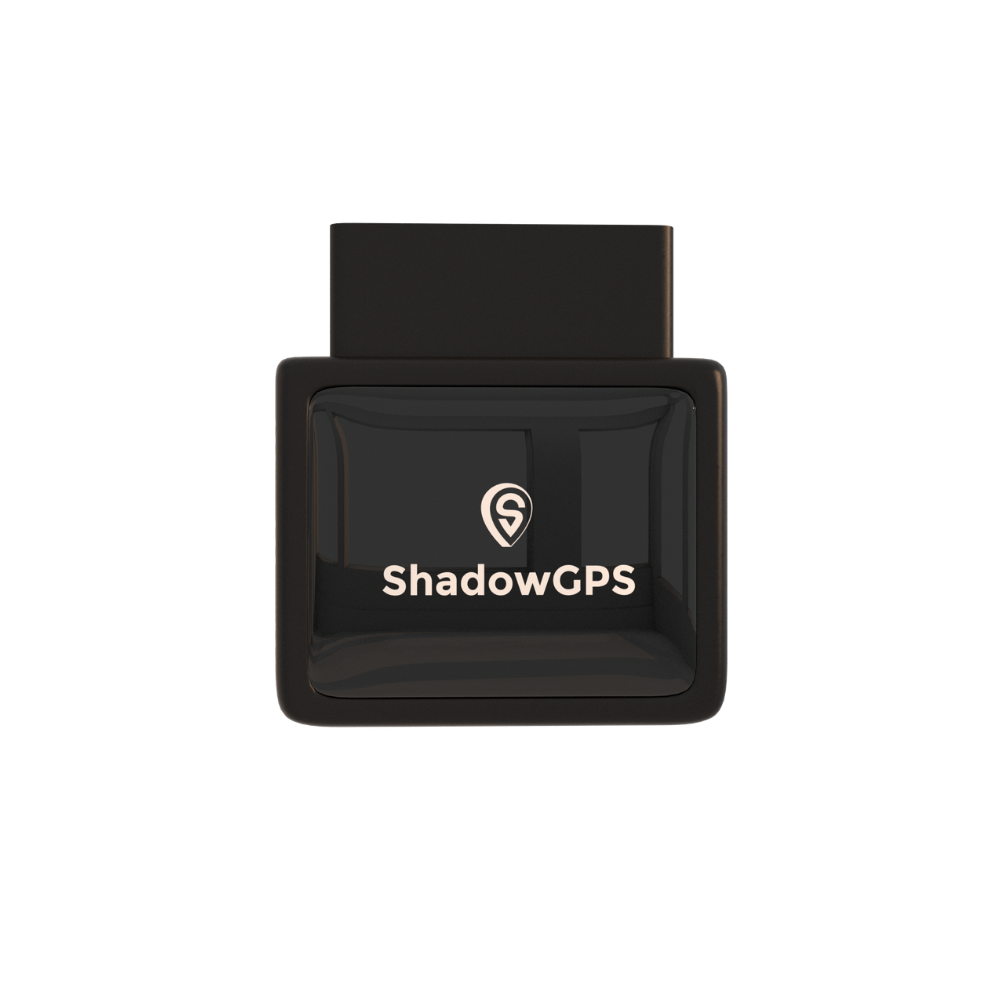
ShadowAuto
- Plug it in, under 2 minutes, no tools
- Powered by your car, never needs charging
- Car Alarm, trip replay and engine codes


ShadowTrack is the battery-powered option. It's small enough to tuck under a seat, inside a panel, or on a trailer, and it runs up to about 15 days per charge. On its own it covers cars without an easy OBD-II port, trailers, and equipment. Paired with ShadowAuto, it's your backup if a thief finds and pulls the plug-in tracker.
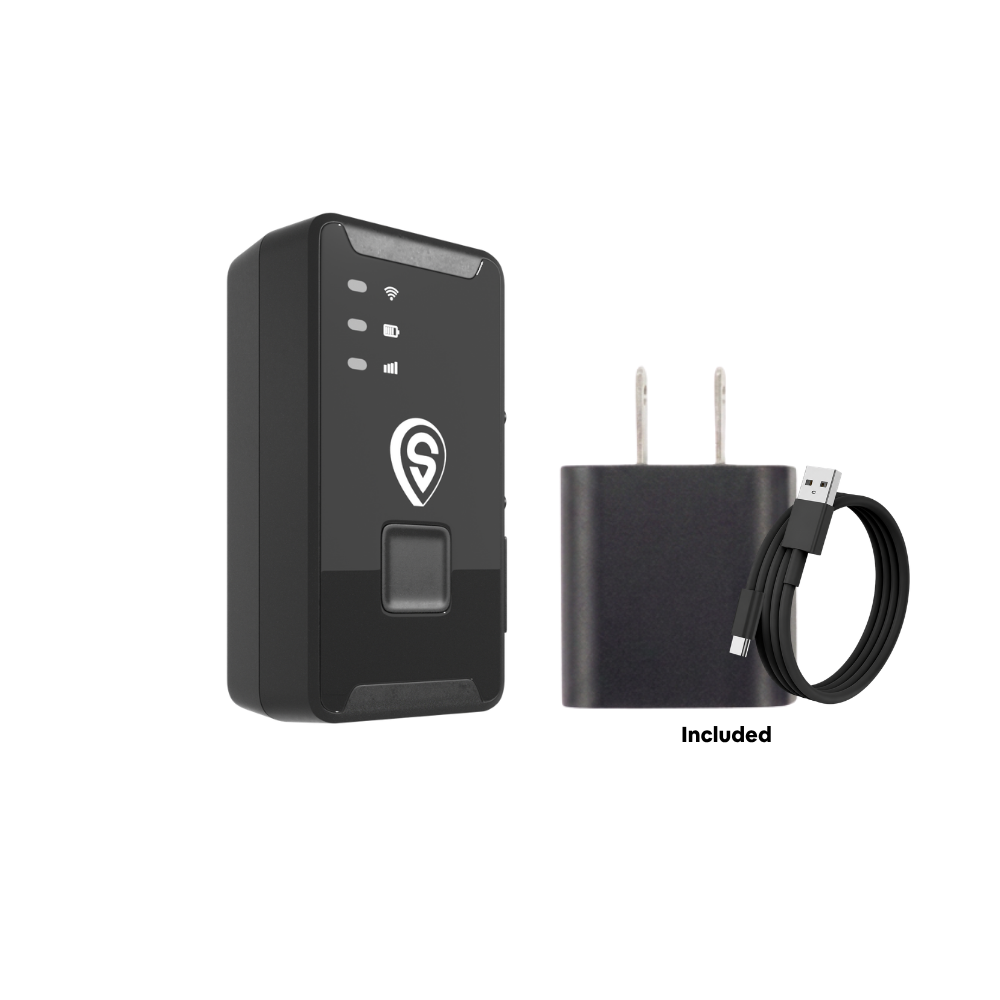
ShadowTrack
- Up to about 15 days per charge
- Tucks away in your car, truck or trailer
- Share Location and trip replay built in
Best for: ShadowAuto if you want set-and-forget tracking on your car or truck. ShadowTrack if your car has no easy OBD-II port, you're tracking a trailer or equipment, or you want a hidden second layer. Both work in the same app, so running one of each is simple.
GPS tracker vs. AirTag vs. factory apps: what helps police most
A lot of police stories you'll read involve AirTags, and they do help sometimes. But an AirTag has no GPS of its own. It reports only when a nearby Apple device passes by, and it can alert a thief's iPhone that it's traveling with them. We break this down further in why AirTags fall short for cars.
Here's how the main options compare on the things that matter to a recovery.
| Option | How it finds your car | Live updates while moving | Form factor | Trip history for police | Contract |
|---|---|---|---|---|---|
| Apple AirTag | Nearby Apple devices, no GPS | No, only when an iPhone passes | Coin-size tag | No | None (no fee) |
| Factory connected-car app | Built-in cellular | Varies by automaker | Built into your car | Varies | Often a paid plan |
| LandAirSea 54 | GPS + cellular | 3 min to 3 sec, by plan tier | Battery, magnetic | Yes | 2-year for best rate |
| Bouncie | GPS + cellular | Every 15 sec | OBD-II only | Yes | None |
| ShadowAuto / ShadowTrack | GPS + cellular | Every 5 sec | OBD-II plug-in or battery | Yes, with trip replay | None, ever |
Competitor details from public product information as of September 2026. Plans change, so check current terms before you buy.
Who this matters most for
Parents of teen drivers
You bought the tracker to know your kid got to school. If that car is ever taken from a parking lot, you already have a live location ready for police.
Turo hosts
Your car is your income. A tracker helps you spot a car that's gone off-plan and gives officers a location if a rental turns into a theft. See our Turo host page.
Small fleets (2 to 5+)
One app for every truck and van. If one goes missing overnight, you can hand police its location without waiting for the crew to come in.
Is it legal to share your tracker data with police?
Yes, if it's your car. Tracking a vehicle you own and choosing to share its location with officers is generally legal, and police don't need a warrant to use information you hand them. Warrant rules apply when police place a tracker themselves: in United States v. Jones (2012), the Supreme Court held that attaching a GPS device to a suspect's car is a search.
Only track cars you own or have a legal right to track. If other people drive your car, like a teen, a renter, or an employee, let them know. State laws vary, so check yours or read our guide on GPS tracking laws for employee vehicles. This isn't legal advice.
Can a thief beat a GPS tracker?
Sometimes, and it's better to know how. Being honest about the limits helps you set things up right.
-
Unplugging an OBD-II tracker. Experienced thieves know where the port is. A tamper alert tells you the moment it happens, and a hidden battery tracker keeps reporting.
-
Signal jammers. They exist, but they're illegal to use in the U.S. under FCC rules. They also tend to show up as a sudden gap in your trip history, which is a clue in itself.
-
Parking in a metal garage or container. Heavy shielding can block signals. The last reported location still tells officers where to start.
The best setup is layered. NICB recommends simple habits like parking in well-lit areas, locking up, and never leaving your keys inside. Add a steering wheel lock if you like, and let the tracker handle the part those can't: finding your car after it's gone. For more ideas, see why hidden trackers make a strong second layer.
Beyond theft: everyday reasons owners keep it plugged in
Most days, your tracker isn't catching anyone. It's just quietly useful.
-
Teen drivers. See that they arrived, and review trips together instead of guessing. More in our family safety guide.
-
Collision alerts. Know quickly if something happens, with a location to send help to.
-
Engine codes. ShadowAuto can read check engine codes, so you know whether that light is serious.
-
Insurance. Some insurers offer discounts for anti-theft devices. Ask your agent whether a GPS tracker qualifies on your policy.
The bottom line
GPS tracking doesn't replace police work. It gives officers what they need most on a stolen-car call: a real location, a direction of travel, and a record of where your car has been.
For you, it replaces helplessness with a plan. Confirm, call, share, and stay back. The live map does the rest.
FAQs
How does GPS help law enforcement recover stolen cars?
A GPS tracker gives officers your car's live location and direction of travel, so they can find it quickly and plan a safe stop instead of searching blind. Afterward, the trip history helps document the theft for the police report and your insurance claim.
Is there a monthly fee for a ShadowGPS tracker?
Yes. Each tracker is $69.90, and plans run $12 to $15 a month, or $10 to $13 a month with 4 or more trackers. No contract. Month-to-month, or prepay and save, and you can cancel any time. See all options on our pricing page.
Does a GPS tracker need a SIM card?
A real-time tracker needs a cellular connection to send its location, but with ShadowGPS that connection is built in and covered by your plan. You don't buy or insert a SIM card yourself. More on this in does your GPS tracker need a SIM card.
Is it hard to set up?
No. ShadowAuto plugs into your car's OBD-II port, usually under the dashboard near the steering wheel, in under two minutes. ShadowTrack just needs a charge and a hiding spot. If you can't find your port, here's where your OBD2 port is.
Can police track my stolen car through my GPS tracker?
Police don't log into your account. You see the location in your app and share it with them, either by reading it out to dispatch or sharing a live location view if they ask for it. That's why reporting quickly and staying reachable matters.
Do police need a warrant to use my GPS data?
Generally no, when you're the owner and you choose to share your own car's location. Warrant requirements come into play when police want to place a tracker on someone else's car. Laws vary by state, so this isn't legal advice.
Should I go get my stolen car myself if I can see where it is?
No. Police departments advise against it because confronting a suspect can be dangerous. Call 911, share the location, and let officers handle the recovery.
Can a thief disable a GPS tracker?
A thief who knows where to look can unplug an OBD-II tracker, which is why tamper alerts matter. Pairing it with a hidden battery tracker like ShadowTrack gives you a second source of location if the first one is found.
Do GPS trackers prevent car theft?
Mostly they help you get your car back, and fast alerts can catch a theft in its first minutes. For prevention, combine a tracker with basics like locking up, parking in well-lit areas, and never leaving keys inside.
Is an AirTag good enough to track a stolen car?
It's better than nothing, but it only updates when an Apple device passes nearby and it can alert the thief's iPhone. A GPS tracker with its own cellular connection reports continuously, which is what officers need to act on a moving car.
Plug it in. See it move. Cancel any time.
Give yourself a live location to hand police if you ever need it, and peace of mind every day you don't.
Pricing as of September 2026: $69.90 per tracker plus $12 to $15 a month, no contract, with a 30-day money-back guarantee. Some links in this post are Amazon affiliate links, and we may earn a commission at no extra cost to you. This article is general information, not legal advice. If you are in danger, call 911.

